He drowned his kin in waves of cheer, Their hearts rejoiced when he drew near. By every act, both sweet and grand, He spread his joy through Vraja’s land.
(Damodarashtakam — Verse 3, Line 2)
My dear Lord, through your loving pastimes you reveal the luminous life of love and joy that you offer to all who choose to love you and live with you. The topmost among such souls are the residents of Vrindavan, and when you manifest your ecstatic pastimes with them, you reveal your desire: you want me to be a part of your family. Actually, I am eternally a part of you, though I have forgotten this timeless truth. I, being fallible, have neglected you for many lifetimes; yet you, being infallible, have never neglected me.
O beloved Lord, when I begin my spiritual journey, I make you a part of my life—by praying to you, seeking your strength, and turning to you for guidance as I face life’s challenges. Yet my overall life still runs on the tracks of my own desires, often disconnected from your divine plan and purpose for me.
Please, O merciful Lord, lift me from the threshold of devotion to its higher sanctum, where you become not just a part of my life but its very essence and purpose. When my life becomes wholly dedicated to loving and serving you, you will mercifully grant me entrance into your divine life—so that, by your mercy, I too may one day delight in the boundless ocean of ever-blissful pastimes.
By such pastimes in joy’s pure sea, He bathed the world in ecstasy. Each act revealed his love profound, Where bliss and beauty both abound.
(Damodarashtakam — Verse 3, Line 1)
My dear Lord, you offer an ocean of bliss in your realm of spiritual love, whereas in this world I chase mundane things that offer mere drops of pleasure. What’s worse, many of those drops soon swell into oceans of trouble.
O merciful Lord, please strengthen my head with your wisdom so I may turn away from this desperate, doomed pursuit of worldly pleasure and turn toward you. Grant me the conviction that you can and will provide all the joy I need—indeed, far more than I can ever seek.
O infallible Lord, knowing what is right with my head yet failing to do it due to weakness of heart has been my predicament for years, decades—perhaps lifetimes. Please, therefore, complement the strengthening of my head with the enriching of my heart. Grant me the devotional realization that the sweetness in your pastimes is oceanic. Let me become curious about your delightful pastimes, thus opening my heart for a trickle of your joyous love to flow in. Let me go further and learn to cherish those pastimes as having the potential to fulfill my heart’s highest aspiration for love. Then that trickle will—by your mercy—become a mighty flow that fills and floods my heart.
With my head and heart thus fixed in you, O all-attractive Lord, may the joy of such absorption in you render all material temptations pale and stale.
There unfolded the wondrous sight, Behold the Lord of love and light. He could not be by rope confined, Yet bound by love and hands so kind.
(Damodarashtakam — Verse 2, Line 4)
My dear Lord, you are always acting successfully at some level—even when I feel you are not helping me succeed in serving you.
You, O supreme lover, illustrated this truth when you churned mother Yashoda’s heart and led her emotions on an ecstatic journey as she tried to tie you, which she saw as her service to you. Being your mother, she felt duty-bound—indeed, love-bound—to discipline you.
O Lord of all emotion (rasa), first came annoyance at your mischievousness, then anger at its extent, followed by alertness to ensure that once she had caught you, her angry actions neither scared you too much nor scarred you permanently. Then, resolving to tie you instead of using a stick, she felt amazement at her inability to bind you—no matter how much she extended the rope—and finally admiration for how wonderful you truly were.
When her emotions thus turned from agitation to adoration, you reciprocated by allowing yourself to be bound. Though Yashoda struggled and faltered again and again in her attempts, even during that apparent failure, you were leading her toward an ever-deepening, emotionally multihued absorption in you.
Bless me, my well-wishing Lord, to remember that even when my service seems to falter, you are still churning my heart and drawing me, through my emotions, closer to you. Let me not be consumed by what I do or fail to do in the outer world; let me remain open and receptive to what you are doing within my heart.
His gentle neck in tremors slight, Three lines adorned his form of light. His breath came quick in quivering flow, Revealing love through fear’s soft glow.
(Damodarashtakam — Verse 2, Line 3)
My dear Lord, your beauty is enhanced by your fear, not diminished by it. We, with our temporary conditioned bodies, go out of our way to look attractive—and only when we are in a positive mood do we appear even slightly attractive. A person who is scared or crying doesn’t look attractive. Such a person may evoke tender, protective emotions in others, but not because they look beautiful—rather because they seem vulnerable.
You, my beloved Lord, are so extraordinarily and transcendentally beautiful that even while you are in a state of fear—indeed, even terror—as when you are crying fervently, your beauty becomes enhanced. The three lines formed on your neck as you breathe heavily in fear only add to your charm.
O inconceivable Lord, just as the fearful becomes beautiful in you, grant me the conviction that if I stay within you—acting in harmony with your will and living in the light of your words—then you can turn even the fearful things that happen to me into something meaningful, perhaps even something beautiful. Help me understand that my present experience is not destined to be my permanent one; you will lead me from this passing darkness into the eternal light of your unfailing love.
Wiping his eyes with tender lotus hands, Tears flowing down in shining strands. The Lord whom all seek through prayer, Now trembled at his mother’s glare.
(Damodarashtakam — Verse 2, Line 2)
My dear Lord, you display endearing human emotions such as fear, though you are the supreme superhuman being. When you, who are indestructible, invincible, and infinite, reveal vulnerability, that softness flows from your overflowing love. Your love eclipses your omnipotence and allows your devotees to experience a deeper, more intimate connection with you.
O all-embracing Lord, you desire that every soul feel accepted by you—and not just accepted, but also valued and cherished. For your most intimate devotees, you draw them into your innermost circle of affection, where they even feel needed by you. Though you are complete and need no one, you play the role of a delicate child—a tiny, tender toddler needing protection, discipline, and care from your devoted mother. Thus you create a sublimely sweet stage for the overflowing of her maternal love toward you and your divine love toward her. The mutual outpouring of affection between your heart and hers creates a flood of ecstasy that nourishes not only those present in that divine moment but also all who contemplate it later through prayerful remembrance.
O merciful Lord, grant me a deeper appreciation of your loving pastimes. Let the memory of your boundless love guide my choices in this illusion-filled world, so that I may march toward you—steadily and swiftly.
He wept and rubbed his tear-filled eyes, His cries rose loud with aching sighs. The Lord who wipes everyone’s tears, Now cried, his heart filled with fears.
(Damodarashtakam — Verse 2, Line 1)
My dear Lord, you have the power to remove the tears of everyone. Indeed, when life brings me to tears and takes away my power to remove them, that’s when I turn to you—not merely as a cultural custom or religious ritual, but as an existential necessity.
O all-good Lord, you can do what I cannot—wipe away my present tears. Beyond that, with your glance, you can destroy all the desires that impel me to actions that end in distress. With your gentle smile, you can infuse my heart with such joy that whatever distress remains becomes weightless.
O omnipotent Lord who can remove the tears of all beings, how can you be moved to tears by the fear of your mother’s chastisement? Help me, my Lord, to appreciate this wondrous mystery that reveals how much you seek and savor love. Indeed, to facilitate loving pastimes with your devotees such as mother Yashoda, you readily conceal your supremacy so that love can reign supreme. When you cry, your tears do not diminish your greatness; they magnify your glory, for they reveal the supreme power of love—the love that subordinates divinity to elevate intimacy.
O infinitely loving Lord, please bless me to take pleasure in and taste that divine love above everything else in this world.
She chased him round the courtyard square, With teasing smile and loving glare. The Lord no yogi’s mind could meet, Was caught by her with tender feet.
(Damodarashtakam — Verse 1, Line 4)
My dear Lord, when you ran in fear of Mother Yashoda, it is supremely astonishing that she caught you—for catching you, even with one’s thoughts, let alone with one’s hands, is well-nigh impossible. Yogis renounce the world with all its temptations and train their thoughts to focus single-mindedly on the ultimate reality. Yet even the strongest and swiftest of their thoughts cannot reach you. Even if they come to know of you, they fail to understand how the all-powerful, all-pervading supreme truth could manifest in a human-like form—let alone as a child who ran away from his mother and was caught by her.
Indeed, O all-attractive Lord, while you cannot be reached by the strongest austerity or the sharpest analytical acumen, you can be reached through love. Mother Yashoda caught you by running toward you, though she was neither austere nor intellectually astute. What is astonishing is not just that she caught you externally, but that she had already caught you internally: you were residing in her heart, perennially and joyfully.
O supremely loving Lord, if you are caught, it is only because you allow yourself to be caught—and because you delight in being caught, not by hands and legs but by the heart: by love itself.
From the mortar he fled in fear, As mother Yaśodā drew near. Her call of love still filled the air, As he ran—here, there, everywhere.
(Damodarashtakam — Verse 1, Line 3)
My dear Lord, please bless me to appreciate the wondrous nature of your love, as demonstrated in the pastime where you run in fear from your mother.
O beloved Lord, in this world I sometimes glimpse love’s power to invert normal hierarchies—where an extremely wealthy, powerful, or popular person, under the spell of love, risks it all or even renounces it all to be with someone they love, who may possess none of those attributes. While such worldly love often turns out to be mere infatuation, it still contains a grain of truth—it points to the heart’s innate conviction that love is the truth that transcends all other truths.
That conviction is realized, O all-attractive Lord, in your own love, revealed in your astonishingly affectionate pastimes. In them, the normal hierarchy of you being the supreme, feared by all creation, is wondrously inverted—when you, O ultimate creator, appear to fear one of your own creations. Of course, it is not just any creation—it is your intimate devotee, who manifests the pinnacle of maternal love for you.
O supreme lover, please bless me with ever-deepening conviction in the supreme reality of your love, and thus guide me on the path that leads into that world of divine affection with you—in this life and forever beyond.
Early Inspirations and Family Roots Roshni Choudhary, a graphic designer and devotee living near the ISKCON Houston temple, has released her debut children’s book, Radha’s Magic Mantra, designed to help young devotees develop a deeper connection with the practice of chanting the Hare Krishna maha-mantra through storytelling and illustration. Growing up in a devotee family […]
Adorned with earrings swinging free, He shines in Gokul’s ecstasy. Their golden glow on cheeks divine, Outglasses the stars that softly shine.
(Damodarashtakam — Verse 1, Line 2)
My dear Lord, your beauty is not generic—it is exquisitely specific. When you descend into this world and enact your pastimes, you reveal your captivating charm in delightful detail. Each limb, each gesture, each ornament—every feature of your divine being—joins together in a symphony of radiant enchantment.
Here, O all-attractive Lord, your earrings shine stunningly as you run from your mother through the courtyards of Vṛndāvana. They sway and dance in delight, seizing the chance to caress your tender cheeks—their gentle touch heightened by the rhythm of your movement.
O ocean of all beauty, your ornaments form an ecstatic ensemble that enhances your radiant splendor—categorically distinct from and infinitely superior to all other beauty. Others wear ornaments to become beautiful, but your beauty is self-contained and self-sufficient. When you wear ornaments, it is not to adorn yourself but to adorn them. You grant them the supreme privilege of service, perfecting their existence by letting them decorate your divine form.
O my beloved Lord, I too am meant to be an ornament—more precisely, an instrument of your will—a small yet purposeful part of your grand divine plan. I have no beauty or worth of my own, yet bless me to find meaning and joy in being used as you desire—in your service, for your glory, within your eternal symphony of beauty and love.
I bow to the Lord of truth and grace, Whose form all time cannot erase. Eternal joy, pure, ever bright, The boundless bliss, the soul’s delight.
My dear Lord, please help me realize and relish the supreme reality—your supremely beautiful, all-attractive form. Your form is unlike any I have ever known.
O inconceivable Lord, all forms I know are temporary; yours is eternal. All forms I know subject their possessors to ignorance and illusion, whereas your form is the pinnacle and source of enlightenment for all who are drawn to it. All forms I know become causes of distress; but your form is the very embodiment of bliss. Its peerless, timeless beauty bestows joy upon all who are either blessed to be drawn to it or wise enough to cultivate attraction toward it.
O Lord, please free me from attachment to the fleeting forms of this world, however appealing they may seem. Let me remember that such infatuation leads only to lamentation. More importantly, my beloved Lord, bless me to be irresistibly drawn to you. Through that sacred attraction, open for me the gates to a life and love that are glorious—imperishably, inexhaustibly, infinitely glorious.
"There is no difference between Rādhā-kuṇḍa and Rādhārāṇī. So how you can jump over Rādhārāṇī? Rādhā-kuṇḍa and Rādhārāṇī nondifferent. How you can enjoy Rādhā-kuṇḍa by swimming? You cannot touch with your feet even Rādhā-kuṇḍa. You can take little water and keep it on the head. That is respectful to Rādhā-kuṇḍa. Of course, things are going on like that, but strictly speaking, Rādhā-kuṇḍa should be respected as Rādhārāṇī herself. That is Rādhā-kuṇḍa consciousness. Highest Rādhā-kuṇḍa consciousness." Continue reading "Highest Radha-kunda consciousness → Dandavats"
Listen to a class given by Akuti devi dasi on text 28 of the Srimad-Bhagavatam (Bhagavata Purana), canto 3, chapter 19, entitled "The Killing of the Demon Hiraṇyākṣa" given on October 13, 2025 at the Hare Krishna temple in Alachua, Florida.. Continue reading "ATL 2025-10-13 Akuti devi dasi SB 3.19.28 → Dandavats"
Yavat is the village where Radharani resides with Her so-called husband, Abhimanyu, Her mother-in-law, Jatila, and Her sister-in-law, Kutila. Our first stop was the main temple, where we had the joy of darshan of the enchanting Deities of Radha Radhakanta. Afterward, we walked through the village, chanting Harinam, and made our way to Kishori Kunda, where the charming temple of Radha Brajkishorji stands. There, we peacefully delighted in hearing the pastimes of Javat, as narrated in Chamatkar Chandrika by Srila Visvanath Chakravarti Thakur. Continue reading "Visit to Yavat & Kokilavan (photos) → Dandavats"
Have you ever seen such beautiful transcendental smiles? It simply does not get better than this! As Krishna Kumar Prabhu put it: "Hare Krishna! This devotee came with me on books and he got the mercy. They were flying out. And people were giving donations. He could feel the special purification of this Arabic book distribution and was so fired up. We became spiritual brothers by the mercy of this service!" Continue reading "Arabic book distribution! → Dandavats"
Karthik yatra 2025 led by HH Radhanath Swami Maharaja starting today at Govardhan, Mathura. Grateful to get one more opportunity to cook prasadam for the thousands of devotees who are coming from all over the world to hear from HH Radhanath Maharaja. Continue reading "Karthik yatra 2025 at Govardhan, Mathura (photos) → Dandavats"
Haridev Das opens the evening with a warm welcome to guests and participants. Durban’s Pavilion Hotel and Conference Centre came alive recently with an evening that blended elegance, culture, and spiritual depth. The occasion was a Bhagavad-gita Banquet hosted by Haridev Das, drawing 240 guests from across South Africa. With Jayadvaita Swami as the keynote […]
Dear Devotees and Friends, Please accept my humble obeisances All Glories to Srila Prabhupada This fundraiser is for my friend and dear God Brother Jivananda Prabhu to enable him to continue his amazing service of traveling as part of the Harinam Ruchi group and spreading the Holy Names of Lord Krishna all over the world. Read More...
Posted by Ramai Swami Sri Viracandra or Virabhadra Prabhu appeared on the ninth day of the dark fortnight of the month of Kartik. Krsna dasa Kaviraja Gosvami has given this description of Him in the C.c. Adi 11.8-12: “After Nityananda Prabhu, the greatest branch is Virabhadra Gosani, who also has innumerable branches and sub-branches. It Read More...
Buddha was once asked, “What’s the greatest mistake that a human being can make?” He answered, “The greatest mistake we human beings make is that we think we have time.” At any moment, the end could come close. This theme runs throughout the Vedic scriptures: that we human beings, in fact all beings, are walking Read More...
Sri Viracandra or Virabhadra Prabhu appeared on the ninth day of the dark fortnight of the month of Kartik. Krsna dasa Kaviraja Gosvami has given this description of Him in the C.c. Adi 11.8-12:
“After Nityananda Prabhu, the greatest branch is Virabhadra Gosani, who also has innumerable branches and sub-branches. It is not possible to describe them all. Although Virabhadra Gosani was the Supreme Personality of Godhead, He presented Himself as a great devotee. And although the Supreme Godhead is transcendental to all Vedic injunctions, He strictly followed the Vedic rituals. He is the main pillar in the hall of devotional service erected by Sri Caitanya Mahaprabhu.
He knew within himself that He acted as the Supreme Lord Visnu, but externally He was pride-less. It is by the mercy of Sri Virabhadra Gosani that people all over the world now have the chance to chant the names of Caitanya and Nityananda. I there take shelter of the lotus feet of Virabhadra Gosani so that by His mercy my great desire to write Sri Caitanya-Charitamrta will be properly guided.”
Sri Virabhadra Gosvami is the son of Sri Nityananda Prabhu and the disciple of Sri Jahnava Mata. His mother is Srimati Vasudha Devi. In the Gaura-ganoddesa-dipika it is described that Sri Viracandra Prabhu is an incarnation of Ksirodakasayi Visnu – one of the expansions of Sri Sankarsana. He is thus not different from Lord Caitanya Himself.
Hare Krishna Hare Krishna Krishna Krishna Hare Hare Hare Rama Hare Rama Rama Rama Hare Hare Srila Prabhupada Lilamrita / H.G. Daivi Shakti Mataji / 12.10.2025 Read More...
(RNS) — For Goodall, the sacred was not confined to ritual spaces; it was alive in the luminous weave of life itself. Jane Goodall saw nature as a spiritual sanctuary Read More...
Enjoy the videos and music you love, upload original content, and share it all with friends, family, and the world on YouTube. Liquid Love: Sri Radha Kund ❤️ #shorts Read More...
Experience the mesmerizing beauty of the Kartik Deep Daan — an ancient tradition where thousands of lamps are offered in devotion, illuminating hearts and the holy land of Mayapur. Each glowing diya symbolizes faith, gratitude, and surrender to the Supreme. Witness the Divine Kartik Deep Daan Ceremony ✨ Read More...
This morning our parikrama party visited Shantipur, the sacred residence of Advaita Ācārya. There I spoke on the glories of this great personality who fervently prayed for the Lord to descend in the age of Kali. Later we journeyed to Birnagar, the birthplace of Śrīla Bhaktivinoda Ṭhākura, the visionary pioneer of the Krishna Consciousness movement. Read More...
Parasuram das: These Vrajavasi school children are determined to prove beyond doubt that indeed — every word is a song and every step is a dance!!! Enjoy the videos and music you love, upload original content, and share it all with friends, family, and the world on YouTube. school program in vraja Read More...
In this thoughtful reflection for Religious News Service (RNS), Joshua M. Greene (Yogeshvara Dasa) recalls his memorable 90-minute conversation with Jane Goodall during the 2000 United Nations World Peace Summit. Though surrounded by religious dignitaries in robes and rituals, Goodall stood out by speaking of nature itself as sacred rather than relying on institutional affiliations. […]
Brahmacari group photo on the final day of the EBC. Sixteen years had passed since the last European Brahmacari Maha Sanga. In July 2025, the convention was joyfully revived and hosted at Bhaktivedanta Manor. The week-long retreat began with the grand celebration of Lord Jagannatha’s Ratha Yatra in London. Devotees from all over the world […]
The ISKCON of Washington, D.C. temple came alive with lights, colors, and joyous devotion as over 7,000 devotees, families, and guests gathered to celebrate Dussehra 2025 — honoring the victory of Lord Rama over Ravana and the timeless triumph of virtue over vice. This year’s celebration was graced by an impressive roster of dignitaries, including […]
On September 14, 2025, ISKCON Birmingham welcomed around 150 devotees to their annual Patrons and Volunteers Appreciation event. The gathering, which has grown over the past four years into a highlight of the temple calendar, offered more than music, prasadam, and speeches. It was a chance to recognize the service and sacrifice that sustain the […]
Understanding a person’s character is very difficult. When somebody does something wrong, how much should we hold them responsible?
At a basic level, when dealing with people, we have two approaches: positive and negative. On the positive side, we give empowerment. Empowerment means authorizing someone to take responsibilities—for example, giving classes, leading kirtan, or taking care of devotees. On the negative side, we give punishment.
Some may think that withholding empowerment itself is a punishment. But generally, punishment means taking something away, whereas empowerment is giving something positive. For example, if someone is misusing their phone, a form of punishment could be restricting their phone usage.
The first principle is to set clear expectations for empowerment. These expectations must be realistic. If someone wants to take up a service, they need to meet certain standards. If they fail to meet them, they cannot perform that service. Once expectations are clear, it is less likely that the person will feel targeted personally.
How much punishment to give is a more delicate question. Generally, empowerment cannot be granted without a basic level of impulse control. This principle applies everywhere. For example, a policeman who is short-tempered and abuses his authority may be reassigned to a desk job rather than immediately fired. The empowerment—the ability to interact with the public—is withdrawn until he can demonstrate accountability.
Similarly, if a preacher behaves inappropriately with others, they cannot continue in a leadership role. They may remain a devotee, but empowerment in leadership requires a certain level of self-control.
Where it gets tricky is determining how much punishment is appropriate. Empowerment can be taken away, but excessive punishment may lead the person to give up bhakti entirely, which can worsen their conditionings.
Another consideration is whether the wrongdoing affects others or oneself. For example:
Approaching a woman inappropriately in the community affects others.
Watching pornography mainly affects oneself.
Self-harm may not disqualify someone from being a devotee, but it may disqualify them from leadership roles depending on its impact on others. For instance, stealing Mahaprasad is wrong, but stealing from ordinary households or shops is a bigger problem. The severity of punishment depends on the harm caused to others and oneself.
Other factors include:
Remorse: Does the person feel regret for their actions?
Reform: Are they making efforts to improve themselves?
If there is no remorse and no effort at reform, severe punishment may be necessary. If there is remorse but no immediate reform, a reduction in empowerment may be appropriate—for example, assigning tasks that do not involve interaction with others, such as graphic design or remote work.
Technology today can both help and hinder people in managing their conditionings. Constant exposure to temptation can make self-control very difficult, especially for younger generations. Therefore, understanding and empathy are important, alongside clear standards for empowerment and careful consideration of punishment.
In summary:
Empowerment should come with clear expectations.
Punishment should be based on whether the wrongdoing affects others or oneself, and on the person’s remorse and willingness to reform.
Finally, in situations where there are more responsibilities than qualified people, sometimes individuals with certain limitations are asked to take on service. In such cases, the one assigning the service must carefully consider whether the person is capable, and the person accepting the service should honestly assess their ability to perform it.
TOVP Chairman Ambarisa Das, his wife and TOVP Creative Director Svaha Devi Dasi, and TOVP Vice Chairman Braja Vilasa Das express their gratitude to the entire worldwide ISKCON devotee congregation and well-wishers for their prayers, yajnas and support over the last two months during Ambarisa prabhu’s health challenges.
They also speak about the TOVP and the new Prabhupada 50 Campaign, the final and most important campaign as we approach the Grand Opening of the TOVP during a three-month celebration starting on Srila Prabhupada’s 50th disappearance anniversary, November 1, 2027.

 By Srila Prabhupada
.jpg) By Iskcon Alachua
By Iskcon Alachua By Deena Bandhu Das
 By Satyanarayana Bbt Feme
 By Jahnavi Harrison
 By Gauranga Das
 Day 07 Radhakund to Deeg, VMP 2025 Posted by Vrajmandal Parikrama on Tuesday, October 14, 2025
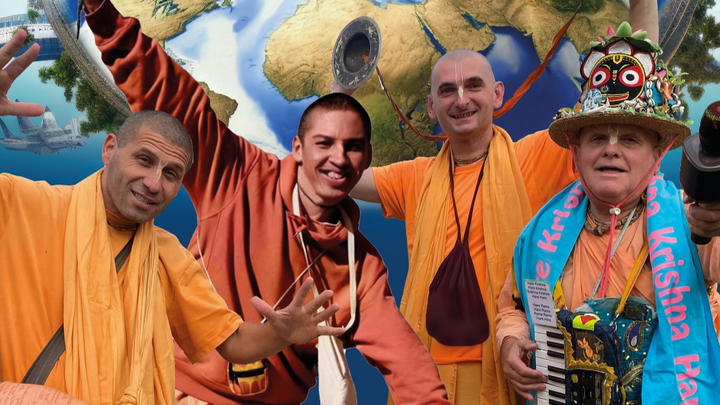 Dear Devotees and Friends, Please accept my humble obeisances All Glories to Srila Prabhupada This fundraiser is for my friend and dear God Brother Jivananda Prabhu to enable him to continue his amazing service of traveling as part of the Harinam Ruchi group and spreading the Holy Names of Lord Krishna all over the world.
 Posted by Ramai Swami Sri Viracandra or Virabhadra Prabhu appeared on the ninth day of the dark fortnight of the month of Kartik. Krsna dasa Kaviraja Gosvami has given this description of Him in the C.c. Adi 11.8-12: “After Nityananda Prabhu, the greatest branch is Virabhadra Gosani, who also has innumerable branches and sub-branches. It
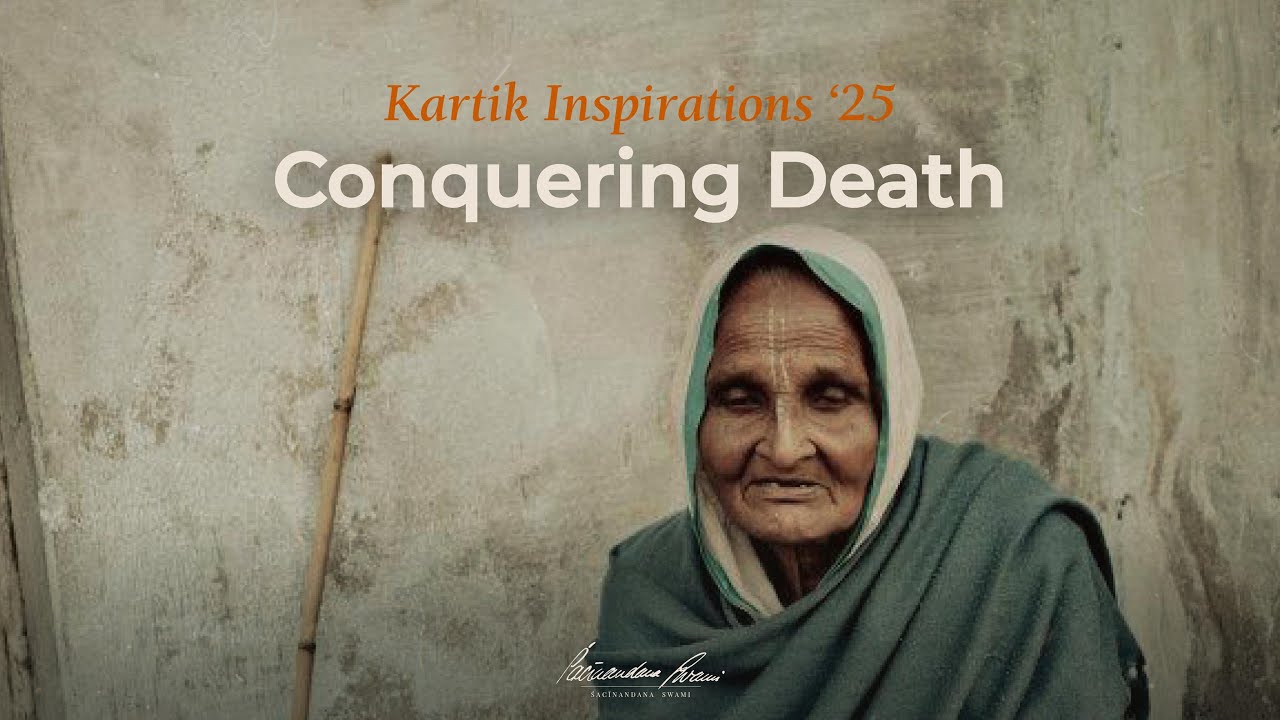 Buddha was once asked, “What’s the greatest mistake that a human being can make?” He answered, “The greatest mistake we human beings make is that we think we have time.” At any moment, the end could come close. This theme runs throughout the Vedic scriptures: that we human beings, in fact all beings, are walking


 Hare Krishna Hare Krishna Krishna Krishna Hare Hare Hare Rama Hare Rama Rama Rama Hare Hare Srila Prabhupada Lilamrita / H.G. Daivi Shakti Mataji / 12.10.2025
 Hare Krishna Hare Krishna Krishna Krishna Hare Hare Hare Rama Hare Rama Rama Rama Hare Hare SB 4.11.29-30 | HG Rāma Rāya Dāsa
 Krishna Calling out the Cows in Vrindavan | HH Radhanath Swami
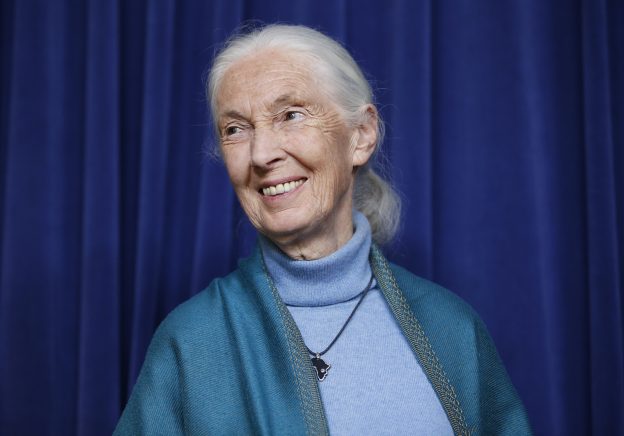 (RNS) — For Goodall, the sacred was not confined to ritual spaces; it was alive in the luminous weave of life itself. Jane Goodall saw nature as a spiritual sanctuary
 Enjoy the videos and music you love, upload original content, and share it all with friends, family, and the world on YouTube. Liquid Love: Sri Radha Kund ❤️ #shorts
 Experience the mesmerizing beauty of the Kartik Deep Daan — an ancient tradition where thousands of lamps are offered in devotion, illuminating hearts and the holy land of Mayapur. Each glowing diya symbolizes faith, gratitude, and surrender to the Supreme. Witness the Divine Kartik Deep Daan Ceremony ✨
 This morning our parikrama party visited Shantipur, the sacred residence of Advaita Ācārya. There I spoke on the glories of this great personality who fervently prayed for the Lord to descend in the age of Kali. Later we journeyed to Birnagar, the birthplace of Śrīla Bhaktivinoda Ṭhākura, the visionary pioneer of the Krishna Consciousness movement.
 Parasuram das: These Vrajavasi school children are determined to prove beyond doubt that indeed — every word is a song and every step is a dance!!! Enjoy the videos and music you love, upload original content, and share it all with friends, family, and the world on YouTube. school program in vraja


