Hindi – Chapter 8 Bhagavad Gita And Decision Making  Bhagavad Gita Overview – Chaitanya Charan
→ The Spiritual Scientist

तस्मै श्री गुरवे नमः।
नमः ओं विष्णुपादाय।
कृष्ण प्रेष्ठाय भूतले।
श्रीमते भक्ति वेदांत स्वामी इति नामिने।
नमस्ते सारस्वते देवे गौरवाणी प्रचारिणे।
निर्विशेष शून्यवाद पाश्चात्य देश तारिणे।
वाञ्छा कल्पतरुभ्यश्च कृपा-सिंधुभ्य एव च।
पतितानां पावनभ्यो वैष्णवेभ्यो नमो नमः।
जय श्रीकृष्ण चैतन्य प्रभु नित्यानंद।
श्री अद्वैत गदाधर श्रीवासादि गौर भक्तवृंद।
हरे कृष्ण हरे कृष्ण कृष्ण कृष्ण हरे हरे।
हरे राम हरे राम राम राम हरे हरे।

हरे कृष्ण।
तो आज हम भगवद गीता का आठवां अध्याय देख रहे हैं।
तो quick recap करें कि गीता के तीन विभाग हैं और हम उसके बीच वाले विभाग में हैं – अध्याय 7 से 12 तक।
इस विभाग में भक्ति-योग पर ज़ोर दिया गया है।

क्यों ज़ोर दिया गया है?
क्योंकि हमारे ब्रेन में भी एक सिस्टम होता है: reward and punishment.
Reward यानी अगर आप कुछ करेंगे तो क्या लाभ होगा।
Punishment यानी अगर नहीं करेंगे तो क्या हानि होगी।

सातवें अध्याय में भगवान rewards बताते हैं,
आठवें अध्याय में punishment नहीं, पर उससे होने वाले loss पर फोकस है।

इस अध्याय में भी स्मरण पर ही ज़ोर है।

गिता में एक अध्याय से दूसरे अध्याय का ट्रांज़िशन दो तरह से होता है:

  1. अर्जुन सवाल पूछते हैं।
  2. कृष्णा अपनी बात को नेचुरल फ्लो में अगले विषय पर ले जाते हैं।

कृष्ण कभी खुद से ‘अतः तृतीय अध्याय’ जैसे नहीं बोलते — यह व्यासदेव द्वारा अध्याय विभाजन है।

कभी-कभी भगवान ऐसी स्टेटमेंट देते हैं जो स्वयं ही सवाल आमंत्रित करती हैं।
उन्हें English में “question-begging statement” कहा जाता है।

जैसे कोई कहे: “मैं तीन बातें बताऊँगा” – और केवल दो ही बताए, तो तीसरी के बारे में सुनने वाले के मन में सवाल उठता है।

सातवें अध्याय के अंत में भगवान कुछ terms इस्तेमाल करते हैं — familiar शब्द लेकिन unfamiliar meanings.
उदाहरण: “You are on the money.” – इसका मतलब होता है “आप सही हैं,” न कि “पैसे पर बैठे हैं।”

अर्जुन उन terms को ठीक उसी क्रम में दोहराते हैं जैसे कृष्ण ने कहे थे।
इससे लगता है जैसे भगवान अर्जुन का attention टेस्ट कर रहे हैं।

भगवान इन terms का बहुत संक्षेप में उत्तर देते हैं, लेकिन जिन terms को ज़रूरी समझते हैं, उन्हें विस्तार से समझाते हैं — जैसे ‘प्राणकाल’।

भगवान जवाब देते हैं: अक्षरं ब्रह्म परमं…
यहाँ ब्रह्म का अर्थ है – अक्षर। दिव्य, स्थायी तत्व।

‘कर्म’ की भगवान एक विशेष परिभाषा दे रहे हैं:
भूतभावोdbhव karo visargah कर्मसंज्ञितः।
अर्थात वह क्रिया जो आत्मा की मनोवृत्तियों और अगले शरीर के निर्माण में सहायक होती है।

इसका implication है: जैसी हमारी वृत्ति, वैसी हमारी स्थिति।

तो कर्म न केवल शरीर, बल्कि मानसिकता को भी उत्पन्न करता है।

आगे भगवान आदि भूत, आदि यज्ञ आदि शब्दों की व्याख्या करते हैं — और अंत में सबको अपने में केंद्रित कर देते हैं।

यह अध्याय technical शब्दों से भरा है, लेकिन उसका केंद्रीय भाव है: स्मरण।

भगवान श्लोक 8.5 में कहते हैं:

“अन्तकाले च मामेव स्मरन्मुक्त्वा कलेवरम्।
यः प्रयाति स मद्भावं याति नास्त्यत्र संशयः॥”

इस श्लोक में तीन बातें हैं:

  1. अंत समय
  2. भगवान का स्मरण
  3. कलेवर त्याग

‘भाव’ शब्द का अर्थ भावना से अधिक है — वह प्रकृति या प्राप्त परिस्थिति को दर्शाता है।

भगवान यहाँ सिर्फ सूचना नहीं दे रहे, वह आश्वासन भी दे रहे हैं।

Guidance बुद्धि के लिए है, और Assurance हृदय के लिए।

डॉक्टर सिर्फ दवा न दे, ये भी कहे — “यह ज़रूर काम करेगी” — यही आश्वासन है।

भगवान मार्गदर्शन भी करते हैं और प्रोत्साहन भी देते हैं।

आगे श्लोक 8.6 में भगवान कहते हैं:

“यं यं वापि स्मरन्भावं त्यजत्यन्ते कलेवरम्।
तं तमेवैति कौन्तेय सदा तद्भावभावितः॥”

यहाँ ‘भाव’ तीन बार आता है — इसका ज़ोर स्मरण पर है।

आजकल का popular शब्द है ‘Manifest’।
2024 का Oxford Word of the Year भी यही था — manifest।
लोग सोचते हैं — सोचो, visualise करो, और वह सच हो जाएगा।

पर गीता कहती है: अंत समय में जो भाव होगा, वही वास्तविकता बन जाएगी।

तो, आप अपने सपनों को कैसे मैनिफेस्ट कर सकते हैं?

कई बार मुझसे पूछा गया कि “क्या भगवद्गीता में मैनिफेस्टेशन (manifestation) का कोई सिद्धांत है?”
अक्सर हम मैनिफेस्टेशन को एक छोटे स्तर पर समझते हैं — मैं कुछ चाहूँगा, प्रार्थना करूंगा, और वह चीज़ हो जाएगी।
लेकिन भगवद्गीता उससे बहुत ऊँचे स्तर की बात करती है — जो आप चाहेंगे, उसी के अनुरूप आपका संपूर्ण जीवन, शरीर और दुनिया ढल जाएगी।

“भाव भावित:” — इसका अर्थ है कि आपकी जो प्रवृत्ति है, वही आपकी अगली वास्तविकता बन जाती है।
आपका जो “disposition” है, यानी आपकी मनोवृत्ति, वही “manifestation” के रूप में प्रकट होती है।
यह मानसिक स्तर पर शुरू होता है, पर अंततः यह शरीर और परिस्थिति के रूप में मूर्त होता है।

एक मित्र अमेरिका की एक कंपनी में काम करते हैं।
वहाँ उनके इंटरव्यू में एक अजीब सवाल पूछा गया:
“अगर आपको जानवर के रूप में पुनर्जन्म लेना हो, तो कौन सा जानवर बनना चाहेंगे?”
अधिकतर लोगों ने कहा: कुत्ता या बिल्ली।

क्योंकि लोग सोचते हैं — कुत्तों का जीवन बहुत आरामदायक होता है, उन्हें चिंता नहीं होती।
लेकिन अगर कोई मनुष्य जीवन भर कुत्तों से इतना आकर्षित और आसक्त हो जाए, तो अगला जन्म उसी रूप में हो सकता है।

भगवान कहते हैं — “सदा तत्भाव भावितः” — व्यक्ति जिस भावना में जीवन भर डूबा होता है, अंत समय में वही भाव उसके अगले शरीर का कारण बनता है।

यह स्मरण केवल “एक बार” का नहीं है। यह एक “नियमित साधना” है।

कुछ लोग सोचते हैं: “मैं जीवन भर भोग करूंगा और अंत में भगवान को याद करूंगा और मुक्त हो जाऊंगा।”
और कुछ तो यह सोचते हैं — मृत्यु से पहले भगवान का नाम लेकर आत्महत्या कर लेंगे और मुक्त हो जाएंगे।

लेकिन क्या ऐसा होगा? नहीं।
क्योंकि भगवान जिस स्मरण की बात कर रहे हैं वह केवल बाहरी नहीं, बल्कि हमारी अंतःप्रवृत्ति से जुड़ा होता है।

हम जिसे जीवन भर सबसे ज़्यादा चाहते हैं, सबसे ज़्यादा याद करते हैं — वही अंत में स्मरण में आता है।

स्मरण भी दो तरह का होता है:

  1. Factual Remembrance – जानकारी पर आधारित: जैसे पानीपत का युद्ध कब हुआ?
  2. Personal Remembrance – भावना और संबंध पर आधारित।

भगवान जिस स्मरण की बात कर रहे हैं, वह व्यक्तिगत स्मरण है।

यह स्मरण रिश्ते पर आधारित होता है।

जैसे अगर किसी व्यक्ति का एक्सिडेंट हो गया और वह ICU में है, तो बाहर खड़े परिवारजन को flashbacks आने लगते हैं —
“वह दिन ऐसा था, वह घटना वैसी थी…” — उसमें भावना होती है, केवल तथ्य नहीं।

भगवान कहते हैं: अंत समय का स्मरण वही होता है जो हमारे लिए जीवन भर सबसे मूल्यवान रहा हो।

हम भक्ति में कृष्ण को स्मरण कर रहे हैं — इसका अर्थ है हम उनके लिए लड़ रहे हैं, किसी के विरुद्ध नहीं।

भक्ति के कुछ विरोधी हो सकते हैं — लेकिन हमारा युद्ध “किसके लिए” है, “किसके विरुद्ध” नहीं, यह मुख्य बात है।

भगवान ने अर्जुन को युद्ध का आदेश दिया, लेकिन एक बार भी कौरवों की क्रूरता को याद करने को नहीं कहा।

उन्होंने कभी नहीं कहा: “द्रौपदी की वस्त्रहरण को याद करो और बदला लो।”
बल्कि उन्होंने कहा: “मेरी योजना का स्मरण करो और उसी के अनुसार कार्य करो।”

कुछ समय पहले मैं एक हिंदू सम्मेलन में गया था। वहां एक व्यक्ति ने कहा — “आप ISKCON वाले हिंदू धर्म के लिए कुछ करते नहीं, आप बस भक्ति करते हैं।”

मैंने उन्हें कई उदाहरण दिए, लेकिन पूछा — “आप किस ‘हिंदू कारण’ की बात कर रहे हैं?”
उन्होंने कहा — “मुसलमानों की गतिविधियों को रोकना।”
मैंने जवाब दिया: “हमें कृष्णभावनामृत में रहना है, न कि ‘anti-Muslim consciousness’ में।”

हिंदू धर्म का अर्थ यह नहीं कि हम किसी अन्य समुदाय के विरोध में जिएं।
अगर कोई केवल उस नफरत में ही डूबा रहेगा, तो वह नफरत ही उसका भाव बन जाएगा।

भगवान कहते हैं — “यम यम वापि स्मरन् भावम्” — अंत समय का भाव ही अगली यात्रा तय करता है।

इसलिए हमें देखना है — हम किस भावना को जीवन भर पोषित कर रहे हैं?
वह भावना ही अंततः हमारा स्मरण बनेगी और स्मरण ही हमारा गंतव्य तय करेगा।

एक तरह से देखा जाए तो भगवान की भक्ति जागृत करना आसान नहीं होता, समय लगता है। लेकिन इस भौतिक जगत में अगर किसी के प्रति शत्रुता जगानी हो या नफरत फैलानी हो, तो वह बहुत जल्दी और आसानी से हो जाती है।
राजनीति में एक कहावत है—“The easiest speech is hate speech,” यानी सबसे आसान भाषण वह होता है जो दूसरों के प्रति घृणा को भड़काए। पर भगवान कभी भी ऐसी कोई घृणा आधारित प्रक्रिया को समर्थन नहीं करते।

हमारे जीवन में खतरे होते हैं और उनका सामना करना पड़ता है, पर हमें उन्हें अपनी चेतना का केंद्र नहीं बनाना है। हमारा फोकस कृष्ण-स्मरण पर होना चाहिए।

इस अध्याय (अध्याय 8) में जो मुख्य विषय है, वह है—कैसे मन को भगवान में लगाया जाए।
भगवान स्वयं कहते हैं कि मृत्यु के समय स्मरण कितना ज़रूरी है (8.27) और इसलिए वह आग्रह करते हैं कि हम जीवनभर स्मरण का अभ्यास करें।

अध्याय 8 के श्लोक 2 से 14 तक में भगवान यह स्पष्ट करते हैं कि भक्ति-योग करना ध्यान-योग से सरल है।
भगवद गीता में केवल एक ही स्थान है जहाँ भगवान विशेष रूप से कहते हैं कि “यह आसान है”—वह है श्लोक 8.14, जहाँ ‘सुलभः’ शब्द आता है।
यहाँ आचार्यगण बताते हैं कि भक्ति-योग बहुत आसानी से सिद्ध किया जा सकता है, जबकि ध्यान-योग के लिए कठोर तपस्या और ब्रह्मचर्य की आवश्यकता होती है।

मैंने एक बार किसी भक्त से पूछा था कि ‘सुलभः’ शब्द कहाँ सुना है?
वह बोले—“सुलभ शौचालय!”
यह एक हँसी की बात थी, लेकिन इसका गहरा अर्थ यह है कि कुछ शब्द परिस्थिति से इतने जुड़ जाते हैं कि उनका अर्थ संकुचित हो जाता है।
पर यहाँ ‘सुलभः’ का अर्थ है—‘ईज़िली अटेनेबल’, यानी सहजता से प्राप्त होने योग्य।

भगवान छठे अध्याय में अर्जुन को जवाब देते हुए कहते हैं कि ध्यान-योग कठिन है, लेकिन अभ्यास और वैराग्य से संभव है।
अर्जुन के दो मुख्य संशय थे—(1) यह साधना बहुत कठिन है (2) इसमें बहुत समय लगेगा।
इन दोनों का उत्तर भगवान क्रमशः श्लोक 8.14 (सुलभः) और अध्याय 12 के श्लोक 6–7 में देते हैं—जहाँ वह कहते हैं कि भक्ति करने वालों को मैं जल्दी मुक्ति देता हूँ। (न चिरात)

भगवान पहले अर्जुन की बात को स्वीकार करते हैं और फिर समाधान देते हैं।
जैसे एक डॉक्टर कोई मुश्किल ट्रीटमेंट बता दे और फिर कहे, “अगर यह कठिन लगता है, तो मैं एक आसान विकल्प भी देता हूँ।”
ठीक वैसे ही भगवान ध्यान-योग की जगह भक्ति-योग का सरल विकल्प देते हैं।

भगवद गीता के सातवें अध्याय में भक्ति-योग का आरंभिक परिचय आता है, और आठवें अध्याय में उसकी ध्यान-योग से तुलना करते हुए भक्ति की महिमा बताई जाती है।

ध्यान-योग के लिए कठिन तप, ब्रह्मचर्य, जंगल वास, वेदों का अध्ययन आवश्यक है।
पर भक्ति के लिए यह सब अनिवार्य नहीं है।
भक्ति सभी के लिए संभव है—गृहस्थों के लिए भी।
सन्यास भक्ति के लिए अनुकूल है, लेकिन आवश्यक नहीं।

आजकल लोग जो योग करते हैं, वह अक्सर स्व-प्रसन्नता या आकर्षण के लिए होता है, न कि आत्म-साक्षात्कार के लिए।
आधुनिक योग का उद्देश्य है self-attraction, न कि self-realization.
यह भले ही स्वास्थ्यवर्धक हो, परंतु यह प्राचीन योग से भिन्न है, जो आत्मिक उन्नति और ब्रह्म-प्राप्ति के लिए किया जाता था।

ऋषिकेश की एक योगशाला में जब मैंने एक योग शिक्षक से पूछा कि ब्रह्मचर्य का क्या अर्थ है, तो उन्होंने उत्तर दिया—“Don’t do non-consensual sex.”
यह उत्तर क्रीएटिव तो था पर शास्त्र-सम्मत नहीं था।
शास्त्रों में ब्रह्मचर्य का अर्थ केवल जबरदस्ती न करना नहीं है, बल्कि इंद्रियों को संयम में रखना है।

आज के समय में जो योग किया जा रहा है, वह भक्ति के मार्ग से अलग दिशा में जा रहा है।
इसीलिए भगवान कहते हैं कि भक्ति का मार्ग सरल भी है और स्थायी भी।

इसके बाद भगवान कर्मकांड और भक्ति की तुलना करते हैं।
कर्मकांड से स्वर्ग मिलता है, लेकिन फिर पुनर्जन्म भी निश्चित होता है।
भक्ति से जो फल मिलता है, वह शाश्वत होता है।

भगवान ब्रह्मा के जीवन चक्र की बात करते हैं—दिन, रात, प्रलय, आदि—यह सब बताने का उद्देश्य यह है कि इस संसार में कुछ भी स्थायी नहीं है।

जब भगवान कहते हैं कि यह संसार दुखालय है, तो वह निराशावादी नहीं हैं, बल्कि यथार्थवादी हैं।
किसी मित्र को अगर आप कहें—“The world is full of suffering,” तो वह बोलेगा—”कितने निराशावादी हो!”
पर अगर कहें—“Life is tough,” तो वह बोलेगा—”बिलकुल सही बात है।”

तो सन्देश वही है—पर प्रस्तुतिकरण से अर्थ की अनुभूति बदल जाती है।

अधिकांश लोग मानते ही नहीं कि इस जगत के परे भी कोई और जगत है, इसलिए जब कहा जाता है कि “यह जगत दुखमय है,” तो उन्हें कोई आशा नहीं दिखती।
लेकिन भक्ति में यह आशा है—यह जीवन ही नहीं, अगला जीवन भी सुंदर हो सकता है।

अंत में यह चार विश्व-दृष्टिकोण (worldviews) के रूप में समझा जा सकता है:

  1. यह जगत ही सत्य है, और दूसरा जगत कुछ नहीं है — भौतिकवाद
  2. दोनों ही मोह हैं — निर्विशेषवाद (Impersnalism)
  3. केवल परलोक सत्य है, यह जगत नहीं — कुछ मतों में ऐसा माना गया
  4. यह जगत भी सत्य है, और परलोक भी सत्य है — भगवद गीता का दृष्टिकोण

तो अभी जब भगवान बोलते हैं कि आपको भक्ति करनी है, तो वह कहते हैं — वीतराग-भय-क्रोध। इसका अर्थ है कि अगर यह जगत ही सत्य है, तो हम उसमें सुख ढूंढने लगते हैं — यह चाहिए, वह चाहिए, यानी worldview of desire जाग उठता है।
लेकिन अगर कोई कहे कि यह जगत भी सत्य नहीं है, दूसरा जगत भी सत्य नहीं है, तो वहाँ से एक प्रकार का क्रोध (निरर्थकता से उपजा आंतरिक विद्रोह) जागता है — जीवन का अर्थ ही क्या है?

यह क्रोध, केवल anger नहीं है, बल्कि एक गहरी निराशा है — despair। जैसे एक तत्वज्ञानी अल्बर्टो कामू ने कहा था, “The only real philosophical question is whether to commit suicide today or tomorrow.” — जीवन व्यर्थ है, और उसमें कोई आशा नहीं है।

अब चार तरह के worldviews माने जा सकते हैं:

  1. यह जगत सत्य है, दूसरा नहीं — materialism (भौतिकवाद)
  2. यह जगत सत्य नहीं, दूसरा ही सत्य — impersonalism (निर्विशेषवाद)
  3. यह दोनों जगत असत्य — nihilism (नैहिलिज़्म)
  4. दोनों जगत सत्य हैं — Bhagavad Gita’s worldview

नैहिलिज़्म सबसे ख़तरनाक है — वहाँ जीवन का कोई अर्थ नहीं माना जाता। निर्विशेषवाद में इस जगत से भय उत्पन्न होता है — अरे! यह सब मोह है, बंधन है। इसी trade और डर की भावना ने भारत में medieval समय में भक्ति को प्रभावित किया — अद्वैतवाद के प्रभाव से कुछ भक्तिभाव वाले भी इस जगत को नकारने लगे।

पर भगवान इस जगत को इतना महत्वपूर्ण मानते हैं कि वे स्वयं इसमें अवतार लेते हैं।
धर्मसंस्थापनार्थाय संभवामि युगे युगे — “मैं बार-बार आता हूँ।”

तो भक्ति का दृष्टिकोण यह है कि यह जगत भी सत्य है और दूसरा जगत भी सत्य है।
हम इस जगत में सकारात्मक कर्म करते हुए, उस शाश्वत धाम की ओर अग्रसर होते हैं।

जब भगवान अर्जुन से कहते हैं “यह जगत दुखालय है”, तो उसका अर्थ यह नहीं कि “अर्जुन, तुम्हारे साथ अन्याय हुआ है, बस स्वीकार कर लो”।
नहीं! भगवान कहते हैं — दुख हैं, पर कुछ दुख अटल हैं (जैसे मृत्यु), और कुछ दुख बदले जा सकते हैं (जैसे अधर्म का शासन)।

B.O.D.D (Birth, Old Age, Disease, Death) — ये अटल हैं, पर त्रिविध ताप (आध्यात्मिक, आधिभौतिक, आधिदैविक) को हम कर्म करके कुछ हद तक बदल सकते हैं।
इसलिए भगवान अर्जुन को युद्ध करने को कहते हैं — अन्याय को स्वीकार मत करो।
यह जगत दुखालय है, पर इसका अर्थ निराशावाद नहीं है।
भगवान कहते हैं — इस जगत में भी हमें जिम्मेदारी से कार्य करना चाहिए।

फिर अध्याय के अंत में आता है आखिरी सेक्शन — 23 से 30 तक — इसमें आता है:
Less dependence on uncontrollables — यानी अन्य मार्गों (जैसे कर्मकांड या ध्यान योग) में मुक्ति का मार्ग मृत्यु के समय के शुभ-अशुभ काल पर निर्भर होता है।

भगवद गीता 8.27–28 में भगवान कहते हैं —
“न ही अर्जुन, तुम इन सब मार्गों से मोहित हो। अगर तुम मेरा स्मरण करते हो, तो तुम किसी भी समय मर जाओ — तुम्हारा कल्याण निश्चित है।”
“सर्वेषु कालेषु मामनुस्मर युध्य च” — यही भक्ति का मार्ग है।

अंतिम श्लोकों में भगवान कहते हैं —
“यत पुण्यफलम प्राप्य…”
— जितना पुण्य यज्ञ, दान, तप आदि से मिलता है, उससे कहीं अधिक फल भक्ति से मिलेगा।
और भक्ति के साथ-साथ परम स्थान भी मिलेगा।

सारांश में चार प्रमुख बिंदु:

  1. अर्जुन के प्रश्न दिखाते हैं कि वे attentive हैं।
    और भगवान के उत्तर focus करते हैं — remembrance at time of death।
  2. इस अध्याय का मुख्य विषय है: Remembrance of Krishna
    — पिछले अध्याय में attachment बताया गया, इस अध्याय में remembrance।
    Remembrance को deepen करने के लिए चार सेक्शन हैं:
    • 1–4: Question-answer
    • 5–14: Bhakti vs. Dhyana Yoga
    • 15–22: Lasting result — Permanent benefit
    • 23–30: Safety at death — बिना uncontrollables पर निर्भर हुए
  3. Remembrance कैसा होना चाहिए?
    • Regular
    • Personal
    • Based on what we value most and where we take emotional shelter
  4. Worldview:
    • अगर केवल यह जगत सत्य — तो desire (राग)
    • अगर कोई भी सत्य नहीं — तो despair (क्रोध)
    • अगर केवल परलोक सत्य — तो fear (भय)
    • लेकिन अगर दोनों सत्य हैं — तो balanced devotion (भक्ति) संभव है।

अंत में, हम भगवान से प्रार्थना कर सकते हैं कि वह हमें ऐसी श्रद्धा दें कि हम उनकी याद में एकाग्र हो जाएँ — यह समझते हुए कि इस जगत की हर वस्तु अस्थाई है, और केवल भगवान ही शाश्वत शरण हैं।

धन्यवाद। हरे कृष्णा।

बोलिए। हरे कृष्णा।
बहुत-बहुत धन्यवाद! आपने बहुत सुंदर तरीके से समझाया।

तो यह जो भक्ति योग है, वह ध्यान योग से श्रेष्ठ है — यह बात भगवद गीता के अध्याय 8, श्लोक 8 से 14 तक में आती है।
पर इसमें ध्यान देना ज़रूरी है कि श्लोक 8 से 13 तक मुख्यतः ध्यान योग की प्रक्रिया बताई गई है, जबकि श्लोक 14 में भक्ति योग का वर्णन होता है।

जब भगवान किसी अन्य साधना-पद्धति का वर्णन करते हैं, तो वे स्वयं के लिए “मैं” की बजाय तीसरे पुरुष (third person) में बात करते हैं — क्योंकि ध्यान योगी जब तक समाधि में न पहुंचे, तब तक उन्हें यह स्पष्ट नहीं होता कि परम सत्य कौन है।
इसलिए भगवान वहाँ कहते हैं:

“कविं पुराणमनुशासितारम…”
— वे स्वयं की बजाय, परम सत्य का लक्षण बताते हैं।

परम सत्य ध्यानयोगी को स्पष्ट नहीं होता — वह ब्रह्म हो सकता है, विष्णु हो सकता है, कोई निराकार सत्ता भी हो सकती है।
केवल जब सिद्धि की अवस्था आती है, तब वह समझते हैं कि परम सत्य वास्तव में भगवान हैं।

इसलिए जब भगवान ध्यान योगियों का मार्ग बता रहे हैं, तो वे “माम्” (मुझे) नहीं कहते, बल्कि “ओमित्येकाक्षरं ब्रह्म” आदि कहकर संकेत करते हैं।
केवल पूर्णता के समय वह भगवान को समझ पाते हैं।

जिव गोस्वामी बताते हैं कि जब किसी अन्य साधना से साधक व्यक्तिगत परमात्मा को समझता है, तब भी दो संभावनाएँ रहती हैं:

  1. उसे भगवान का सेवक बनना है — यह भक्तिभाव है।
  2. या उसमें एकाकार होना है — यह अद्वैत भाव है।

इसलिए, चाहे वे भगवान का स्मरण करें, पर वह स्मरण किस उद्देश्य से है, यह उनकी साधना और मानसिकता पर निर्भर करता है।
हर कोई जो भगवान का स्मरण करता है, जरूरी नहीं कि भगवान तक ही पहुँचे।

कई लोग भक्ति को साधना मानते हैं, पर ब्रह्म को साध्य — यानी उद्देश्य मानते हैं।
पर हम लोग, जब पानी का स्वाद देखते हैं और कहते हैं “यह कृष्ण हैं”, तो हम केवल स्मरण नहीं करते, हम भगवान को धन्यवाद भी देते हैं।
यह भाव केवल भक्ति में संभव है, ध्यान योग में नहीं।

हमें हर चीज़ में डरने की ज़रूरत नहीं है — जैसा भी हम भगवान का स्मरण कर सकते हैं, वैसा करें।
हमारा सम्पूर्ण worldview personalist है — हम भगवान को व्यक्ति के रूप में मानते हैं।

एक यूरोपीय भक्त का अनुभव था — वे बोले, “मुझे लगता है मेरे अंदर का पूर्व का मायावादी भाव फिर से जाग रहा है।”
पूछा क्यों?
तो उन्होंने बताया — “भक्तों से झगड़ा हो गया, एक प्रोजेक्ट में बहुत सेवा की, पर छोड़ना पड़ा। अब हिमालय में रहकर प्रकृति की शांति में बहुत सुख मिल रहा है — जो भक्तों के संग में भी नहीं मिला।”

मैंने उनसे कहा:

“The peace of nature is not the monopoly of the impersonalist.”
— प्रकृति से मिलने वाली शांति केवल निर्विशेषवादियों की बपौती नहीं है।

भागवत में शुकदेव गोस्वामी ने भी वृंदावन की निसर्ग की महिमा बताई है — वहां के वृक्ष, लताएं, पशु-पक्षी आदि — भक्ति में भी प्रकृति को सकारात्मक रूप से देखा जाता है।

अगर कोई व्यक्ति रजोगुण या तमोगुण में है, तो सत्त्वगुण की दिशा में बढ़ना भी अच्छा है।
मैंने उनसे पूछा — “क्या तुम्हारे भीतर ब्रह्म में लीन होने की इच्छा जागी है?”
बोले — “नहीं, वैसी कोई भावना नहीं है।”
तो फिर यह प्राकृतिक शांति भी भक्ति के अनुकूल है — उसे स्वीकार किया जा सकता है।

हम कुछ practices स्वीकार कर सकते हैं, पर उनका ultimate purpose नहीं।
जैसे — कोई भक्त स्वास्थ्य के लिए प्राणायाम करता है, तो वह उसकी साधना का हिस्सा नहीं, बल्कि साधक की सहायक क्रिया है।
इसलिए कोई भी प्रक्रिया को अपनाना गलत नहीं, जब तक कि हमारा उद्देश्य भगवान की सेवा है।

Thank you. Yes please.

Thank you प्रभु जी for the class.

अभी जैसे हम दुख की चर्चा कर रहे थे, आपने बताया कि यह विषय नवें अध्याय में और अधिक विस्तार से आएगा। लेकिन उसी संदर्भ में मेरा एक प्रश्न है।

व्यक्तिगत जीवन में जब किसी को दुख होता है या जब कोई व्यापक जनसमूह किसी आपदा से प्रभावित होता है, तो हमारा सामान्य दृष्टिकोण यह होता है कि यह “कार्मिक परिणाम” (karmic consequence) है।
परंतु अभी हाल ही में जैसे Los Angeles में भीषण forest fire हुआ, जिसमें लाखों लोग प्रभावित हुए, या कुछ समय पहले South Korean plane crash हुआ जिसमें सैकड़ों की मृत्यु हुई — ऐसे घटनाओं के संदर्भ में क्या भगवद गीता का केवल एक ही दृष्टिकोण है कि “यह उनका कर्म है”, या फिर गीता में इन परिस्थितियों के लिए कोई holistic (समग्र) दृष्टिकोण भी है?

मैं स्वयं Palesoids नामक उस क्षेत्र में गया हूँ जहाँ यह forest fire हुआ। वहाँ मैंने lectures भी दिए थे। वह क्षेत्र opulent जरूर है, पर एक शांत और relatively सात्विक इलाका लगा।

तो सबसे पहले, किसी के भी जीवन में जब दुख आता है, एक भक्त का पहला भाव होना चाहिए – करुणा (compassion)।
एक भक्त ने मुझे बताया कि उन्हें वहां से evacuate किया गया, लेकिन यह तक नहीं पता कि उनका घर अब भी है या जल गया है। संपूर्ण communication breakdown हो गया है। यह बहुत ही कठिन स्थिति है।

इसलिए सबसे पहले, हमारा दृष्टिकोण “सहानुभूति और सहायता” का होना चाहिए, न कि कारण खोजने का। कारण बाद में देखा जा सकता है। Our focus should be more on solutions than explanations.

यदि कोई विपत्ति हो जाती है, और हम तुरंत कह देते हैं कि “यह उनका कर्म है”, तो हम बहुत heartless और headless लगते हैं — न करुणा दिखती है, न बुद्धि।

श्रीमद्भागवतम के पहले स्कंध में, जब परीक्षित महाराज धर्म से पूछते हैं, “तुम्हारे दुख का कारण क्या है?” — तो धर्म कहता है:

“वाक्यभेद विमोहिता” – अनेक मत हैं, मैं भ्रमित हूँ।

और परीक्षित महाराज उसे मूर्ख नहीं कहते, बल्कि “बधाई” (Congratulations) देते हैं कि तुम किसी को दोष नहीं दे रहे हो।

भगवद गीता भी कहती है: दुख का कारण और समाधान – दोनों देखने योग्य हैं। परंतु जब स्पष्ट दृश्य कारण मौजूद हो, तो तुरंत अदृश्य कारण (कर्म) को ले आना बुद्धिमानी नहीं है।

उदाहरण: California की यह जगह वैसे ही एक सूखा और गर्म क्षेत्र है, जो पहले भी forest fires के लिए संवेदनशील रही है।
इस बार जो हुआ वह केवल प्रकृति की लीला नहीं, बल्कि सरकारी लापरवाही (negligence) भी थी। मेरे एक मित्र के अनुसार, वहाँ fire fighters को बिल्कुल आवश्यक संसाधन नहीं मिले — hydrants काम नहीं कर रहे थे, पानी नहीं था।

शास्त्रों में कहा गया है:

पहले दृश्य कारण देखो, फिर अदृश्य की ओर जाओ।
जैसे – यदि AC की हवा से ठंड लग रही है, तो पहले AC बंद करो, न कि पिछले जन्म के कर्म की चिंता करो।

इसी तरह, सीता हरण के समय अगर कोई केवल “यह उनके कर्म का फल था” कहे, और रावण का प्रतिकार न करे, तो वह मूर्खता होगी।

अतः जब दृश्य कारण स्पष्ट हो, जैसे:

  • खराब तैयारी,
  • fire safety में negligence,
  • साफ-सफाई की कमी (पेड़ के पत्ते नहीं हटाना),
  • inadequate infrastructure –
    तो हमें पहले उसे सुधारना चाहिए।

कुछ लोग कह सकते हैं कि वह क्षेत्र godless है, immoral है, पर यह judgmental व्याख्या करना हमें शोभा नहीं देता।
उनका भी जीवन है, परिवार है। अगर ऐसा भारत में हो जाए, और कोई कहे “यह तुम्हारा कर्म था”, तो हमें कैसा लगेगा?

“Karma explanation” is not always the most urgent need.

हाँ, अलग-अलग क्षेत्रों में अलग-अलग प्राकृतिक जोखिम होते हैं — जैसे Japan में earthquake zone, coastal India में cyclones.
लेकिन भगवान ने हमें बुद्धि दी है, जिससे हम उन जोखिमों के अनुसार तैयारी करें। अगर हम तैयार नहीं हैं, तो हम दोषी हैं।

आज अमेरिका में कुछ लोगों का मानना है कि वहां की “diversity quota policies” के कारण ज़िम्मेदार पदों पर सही व्यक्ति नहीं आते — जैसे fire chief का चयन केवल diversity के आधार पर होना चाहिए या दक्षता के आधार पर?
Efficiency matters more than ideological balance in crisis management.

गीता कहती है:

“लोकसंग्रहार्थ कार्यं कर्म समाचर”
“समाज की स्थिरता हेतु, हर व्यक्ति को अपनी ज़िम्मेदारी से कर्म करना चाहिए।”

अगर कोई व्यक्ति जिम्मेदार पद पर होकर गैर-जिम्मेदार बन जाए, तो उसे उत्तरदायी ठहराना ज़रूरी है, ताकि भविष्य में ऐसी आपदाएँ टल सकें।

हमारी प्रार्थना है कि पीड़ितों को जल्द राहत मिले, और समाज, प्रशासन, और व्यक्ति — सभी भविष्य में और जागरूक बनें।

श्रीमद्भगवद्गीता की जय।
श्रील प्रभुपाद की जय।
गौर भक्त वृंद की जय।
हरे कृष्ण।

The post Hindi – Chapter 8 Bhagavad Gita And Decision Making  Bhagavad Gita Overview – Chaitanya Charan appeared first on The Spiritual Scientist.

Hindi – Chapter 6 Bhagavad Gita And Decision Making  Bhagavad Gita Overview – Chaitanya Charan
→ The Spiritual Scientist

हरे कृष्णा।
तो आज हम भगवद गीता का छठा अध्याय शुरू कर रहे हैं।

इसे शुरू करने से पहले, हम अब तक भगवद गीता के पहले पाँच अध्यायों का एक संक्षिप्त पुनरावलोकन करेंगे। भगवान श्रीकृष्ण का उद्देश्य है अर्जुन को यह समझाने में मदद करना कि उन्हें क्या करना चाहिए – युद्ध करना या नहीं करना। अर्जुन जो प्रश्न पूछते हैं, वह एक विश्वव्यापी (universal) प्रश्न है: “सही कार्य क्या है? धर्म क्या है?” इसके उत्तर में भगवान अलग-अलग दृष्टिकोणों से बताते हैं कि कर्म योग करना, कर्म संन्यास से बेहतर है।

अर्जुन उस समय एक ऐसे समाज में रह रहे हैं जहाँ संन्यास का बहुत सम्मान था। ऋषि-मुनि, जिन्होंने वैराग्य स्वीकार किया है, उन्हें समाज में विशेष सम्मान मिलता था। इसलिए भगवान जो कह रहे हैं – कि कर्म योग श्रेष्ठ है – वह ऐसा प्रतीत होता है मानो वे संन्यास का विरोध कर रहे हों। परंतु वास्तव में भगवद गीता का संदेश दो स्तरों पर कार्य करता है – एक है विशेषतः अर्जुन के लिए दिया गया संदर्भ (contextual), और दूसरा है सार्वभौमिक (universal)।

भगवान ने अर्जुन की स्थिति और उसकी प्रवृत्ति (disposition) को ध्यान में रखते हुए उपदेश दिया है। बाद में, भगवान भक्ति योग के बारे में भी बताएंगे। जो सार्वभौमिक सत्य है, वह यह है कि वैराग्य के मार्ग को भी महत्त्व दिया गया है, यद्यपि गीता में उस पर ज़्यादा ज़ोर नहीं दिया गया है।

इसका अर्थ यह नहीं है कि उसका महत्त्व नहीं है, बल्कि गीता की चर्चा उस पर केंद्रित नहीं है। सांस्कृतिक रूप से, जो व्यक्ति संसार का त्याग करता है, उसे सामान्यतः ज़्यादा सम्मान मिलता है, क्योंकि उसने संसार की चकाचौंध के परे जाने की आकांक्षा को दृढ़ता से अपनाया है।

अभी, अध्याय 5 और 6 का संबंध बहुत रोचक है। इसमें हमें यह समझने को मिलता है कि अलग-अलग योगों के माध्यम से व्यक्ति भौतिक चेतना से आध्यात्मिक चेतना की ओर बढ़ सकता है। अध्याय 5 के अंत में और अध्याय 6 की शुरुआत में भगवान उसी विषय को दोहराते हैं – कि संन्यास और योग (यहाँ योग से आशय कर्म योग से है) दोनों ही अच्छे हैं, परंतु योग श्रेष्ठ है।

भगवान कहते हैं – “ना ही असंयस्त संकल्पो योगी भवति कश्चन” – अर्थात जो व्यक्ति अपनी इंद्रियों और मन को नियंत्रित नहीं करता, वह न योगी बन सकता है, न संन्यासी। इसलिए यह आवश्यक है कि केवल बाहरी रूप से संन्यास लेने से कुछ नहीं होता, बल्कि आंतरिक रूप से भौतिक चेतना से ऊपर उठना ज़रूरी है।

हर योग से सिद्धि प्राप्त की जा सकती है, परंतु यह आवश्यक नहीं कि सारे योग पूर्णतः अलग-अलग हों। एक व्यक्ति कर्म योग की साधना करके आगे ध्यान योग या भक्ति योग की ओर भी बढ़ सकता है।

भगवान अध्याय 5 के श्लोक 25 से 29 तक यह स्पष्ट करते हैं। फिर अध्याय 6 में वही बात को विस्तार से बताते हैं।

समझने के लिए हम एक पर्वत का उदाहरण ले सकते हैं, जिसकी चोटी तक पहुँचने के कई मार्ग हैं। कोई इस रास्ते से, कोई उस रास्ते से, कोई दूसरे रास्ते से ऊपर जा सकता है। वैसे ही ब्रह्म स्थिति – “मैं शरीर नहीं आत्मा हूं” – को अलग-अलग मार्गों से प्राप्त किया जा सकता है।

परंतु भगवान को समझना और उनसे प्रेमपूर्वक संबंध बनाना – यह केवल भक्ति योग से संभव है। भक्ति योग एक सीधा मार्ग है जो आत्मा को भगवान से जोड़ता है। अन्य योग भी उन्नति में सहायक हैं, पर परम पूर्णता – भगवान की प्राप्ति – भक्ति योग से ही होती है।

अध्याय 5 के अंत में भगवान बताते हैं कि कर्म योग से भी ब्रह्म निर्वाण संभव है। और अध्याय 18 में वे फिर इसे दोहराते हैं। इसका ढांचा भी रोचक है – जैसे अध्याय 6 के अंत में प्रश्नोत्तर रूप में कई श्लोक आते हैं (श्लोक 32–36 में) और फिर 37–45 में उनका उत्तर।

शुरुआत के श्लोकों में बताया गया है कि योगी बनने के लिए क्या पात्रता होनी चाहिए – मन पर नियंत्रण अनिवार्य है।

अध्याय का ढांचा देखें तो, श्लोक 10 से 23 तक भगवान बताते हैं कि ध्यान योग का अभ्यास करते हुए व्यक्ति कैसे पूर्णता की ओर जाता है। इसमें परिपूर्णता का अर्थ चेतना की स्थिति से है – व्यक्ति की internal consciousness क्या है।

इसको समझना थोड़ा तकनीकी है – जैसे जब हम किसी व्यक्ति को देखते हैं, तो उसके चेहरे के भावों से अनुमान लगाते हैं – डर, गुस्सा, आनंद आदि। पर एक चीज़ है उसका अनुभव और दूसरी चीज़ है वह किसे देख रहा है।

आध्यात्मिक अनुभव की चर्चा करते हुए, भगवान पहले योगी की अंतर की अनुभूति बताते हैं – यानी उसका subjective अनुभव – और फिर वह किसे अनुभव कर रहा है – object of realization – उसका उल्लेख करते हैं।

यहाँ भगवान स्पष्ट रूप से ब्रह्म, परमात्मा और भगवान शब्दों का उपयोग नहीं करते, पर उनके सिद्धांतों का वर्णन ज़रूर करते हैं – श्लोक 28 में ब्रह्म, 29 में परमात्मा और फिर आगे भगवान का संकेत मिलता है।

आध्यात्मिक चेतना के विभिन्न स्तर होते हैं, जिन्हें योग शास्त्र (विशेषकर पतंजलि योग सूत्र) में बताया गया है – जैसे मूढ़, विक्षिप्त, एकाग्र, और निरोध। भगवान इनका विस्तार से उल्लेख नहीं करते, पर ध्यान योग की सिद्ध अवस्था – एकाग्रता और फिर निरोध – का संकेत देते हैं।

निरोध का अर्थ है – चित्तवृत्तियों का पूर्ण निरोध – और यह योग का उच्चतम स्तर माना जाता है। गीता के अंतिम अध्याय में भी भगवान एकाग्रता का ज़िक्र करते हैं।

भगवद गीता अध्याय 6 – मन का नियंत्रण और संन्यास की पात्रता

अध्याय 18 के श्लोक 72 में भी भगवान इसी विषय का उल्लेख करते हैं।

अब “निरोध” का क्या अर्थ है?
“एकाग्रता” का अर्थ होता है – जब व्यक्ति पूरी तरह से एक चीज़ पर ध्यान केंद्रित करता है। यह हम सामान्य जीवन में भी अनुभव करते हैं। लेकिन “निरोध” उससे आगे की अवस्था है – जब मन पूरी तरह से भौतिक प्रलोभनों और विकर्षणों से अप्रभावित हो जाता है।

उस स्थिति में मन एक तरह से materially inert हो जाता है – वह किसी भी चीज़ की ओर आकर्षित नहीं होता, उसमें कोई विकार नहीं आता, वह किसी भी प्रकार के दोष (गुण-दोष) से रहित होता है। यह पूर्णतया शांत और निर्विकार स्थिति होती है।

भगवान यहाँ दो बार “practice to perfection” का उल्लेख करते हैं – लेकिन दोनों बार अलग-अलग दृष्टिकोण से। इसलिए हम उस पर थोड़ी चर्चा करते हैं।

भगवान बार-बार इस बात पर ज़ोर देते हैं कि वैराग्य लेने से पहले मन पर नियंत्रण बहुत ज़रूरी है।

भगवान कहते हैं कि परिपूर्णता प्राप्त करने के लिए दो मार्ग हैं – पहला है आरुरुक्षु अवस्था (शुरुआती साधक) और दूसरा है आरूढ़ अवस्था (सिद्ध साधक)। यह वैसा ही है जैसे कोई सीढ़ी चढ़ रहा हो – नीचे की सीढ़ियाँ आरुरुक्षु के लिए हैं और ऊपर की सीढ़ियाँ आरूढ़ के लिए।

आरुरुक्षु को कर्म करना ज़रूरी है – क्योंकि उसके द्वारा ही वह अपने मन को शुद्ध करता है। लेकिन आरूढ़ अवस्था में व्यक्ति कर्म त्याग की ओर बढ़ता है – वहाँ “शम” आवश्यक होता है। “शम” का अर्थ है – केवल शरीर को ही नहीं, बल्कि मन को भी शांत रखना।

तो जब मन नियंत्रण में आ जाता है, तभी कोई आरूढ़ अवस्था के योग्य होता है।

यह मन का नियंत्रण इतना आवश्यक क्यों है?

हम आत्मा हैं – हमारे पास मन है – और हमारे चारों ओर समाज है।
आज की दुनिया में, हमारे मन की सबसे बुरी प्रवृत्तियाँ समाज द्वारा नियंत्रित होती हैं।

उदाहरण के लिए, अगर किसी को गुस्सा आता है, तो वह गाली देना चाहता है। परंतु अगर उसके आसपास लोग हैं, तो वह सोचता है – “लोग क्या कहेंगे?” – और वह खुद को रोक लेता है।

मन हर क्षण हज़ारों विचार प्रस्तुत करता है। अगर हम हर प्रस्ताव पर विचार भी करने लगें, तो हम मानसिक रूप से बहुत थक जाएंगे। लेकिन समाज का प्रभाव हमें उन विचारों को क्रियान्वित करने से रोकता है।

मान लीजिए, कोई प्रवचन ऑनलाइन सुन रहा है – अकेले अपने कमरे में। अगर उसे नींद आ जाए तो वह आराम से लेट सकता है – कौन देख रहा है? लेकिन वही व्यक्ति अगर सत्संग में बैठा हो तो वह थोड़ा-सा भी झपकी लेने में झिझकता है – समाज की उपस्थिति उसका नियंत्रण करती है।

कभी-कभी समाज का प्रभाव हमारे मन की बुरी प्रवृत्तियों को बढ़ा भी देता है।
जैसे अगर कोई शराब नहीं पीना चाहता, पर उसके दोस्त सब पीते हैं, तो वह दबाव में आकर पी लेता है। इसलिए समाज के प्रभाव से हम या तो नियंत्रित रहते हैं, या भटकते हैं।

अब सवाल है – समाज का त्याग कब करना चाहिए?

केवल तब, जब मन पूर्णतया नियंत्रण में हो।
अन्यथा, समाज के बिना, मन हमें पागल बना सकता है।

भक्ति मार्ग में भी ब्रह्मचारी और संन्यासी होते हैं – लेकिन वहाँ समाज का त्याग नहीं किया जाता।
भक्त संन्यास लेते हैं, परंतु भक्तों के संग में रहते हैं। यह भक्ति का संन्यास है – अलग प्रकार का।

ज्ञान और ध्यान के मार्ग में जो संन्यास लिया जाता है, वह सामान्यतः एकाकी संन्यास होता है – जैसे किसी योगी की अपनी एकांत गुफा होती है, जहाँ वह अकेले ध्यान करता है। हर योगी की अपनी जगह होती है, जिसे वह साझा नहीं करता।

बौद्ध परंपरा में भी यही होता था – हर साधु की अपनी कुटिया या गुफा होती थी।

क्यों?
क्योंकि ध्यान और अष्टांग योग के मार्ग में संबंधों को मोह का कारण माना जाता है।
वहाँ पूर्णता का अर्थ है – सभी संबंधों से परे हो जाना।
लेकिन भक्ति मार्ग में संबंधों का त्याग नहीं, भगवान से प्रेममय संबंध का विकास किया जाता है।

इसलिए भक्ति में संन्यास लेने के बाद भी हम भक्तों के संग में रहते हैं – क्योंकि वहाँ संग ज़रूरी है।

अब समाज के जो मानक होते हैं, वे भी नियंत्रण के लिए उपयोगी हैं।
उदाहरण के लिए, शराब पीने वालों के बीच भी एक नैतिक सीमाएं होती हैं।
यदि किसी पार्टी में युवकों का समूह शराब पी रहा है, तो वे तय करते हैं – “आज तुम ड्राइवर हो, तुम नहीं पिओगे।” – ताकि सब सुरक्षित घर लौट सकें।

यह एक तरह की तपस्या है – शराबियों में भी!

यहाँ तक कि शराब पीने वाले भी उन लोगों को बुरा कहते हैं जो नशे में गाड़ी चलाते हैं – “वे सबको बदनाम कर देते हैं।”

इसका अर्थ यह नहीं कि शराब पीना अच्छा है, लेकिन इससे भी अधिक बुरा है – शराब पीकर वाहन चलाना।

यानी समाज के अपने मानक होते हैं, जो व्यक्ति के भीतर की बुराइयों को नियंत्रित करते हैं।

अब अगर कोई व्यक्ति पूरी तरह समाज का त्याग कर दे – जबकि उसका मन अभी भी प्रबल है – तो वह 5 पत्नियों और 1 इंद्रिय के साथ पथभ्रष्ट हो सकता है।
(यह प्रतीकात्मक भाषा है – 5 मन = पंचेंद्रियाँ, और 1 इंद्रिय = मन)

इसलिए भगवान बार-बार यह कहते हैं कि – संन्यास की पात्रता के लिए दो बातें आवश्यक हैं:

  1. मन का नियंत्रण (Control of the Mind)
  2. समान दृष्टि (Equal Vision)

जब तक व्यक्ति को शराब में आसक्ति है – तब तक वह किसी विकल्प को तुच्छ समझेगा।
लेकिन जब उसकी दृष्टि समान हो जाती है – चाहे वह गन्ने का रस हो, दूध हो, या शराब – तब उसका मन शांत रहता है।

इसका अर्थ यह नहीं कि सब एक समान है, परंतु मन का कोई विशेष आकर्षण नहीं रह जाता।

इसका पहला स्तर है – मन को जबरदस्ती नियंत्रित करना।

लेकिन दूसरा, और सच्चा स्तर है – मन का स्वाभाविक रूप से शांत हो जाना।

जब व्यक्ति को सब में ईश्वर दिखाई देता है – सब वस्तुएँ उसे ईश्वर से जुड़ी लगती हैं – तब उसकी दृष्टि सम हो जाती है।
तभी सच्चा संन्यास संभव होता है।

प्रवचन: श्रीमद्भगवद्गीता — अध्याय 6 (ध्यान योग)

जब हमारे मन में किसी के प्रति शत्रुता हो, तो मन शांत कैसे रह सकता है? यदि मन में द्वेष है, तो वह बेचैन रहेगा। इसीलिए भगवान कहते हैं कि मन की शांति का अर्थ है — वस्तुओं और व्यक्तियों के प्रति समान दृष्टि विकसित करना।

वस्तुओं के प्रति समान दृष्टि प्राप्त करना अपेक्षाकृत सरल है, परंतु व्यक्तियों के प्रति यह दृष्टि प्राप्त करना कहीं अधिक कठिन है। भगवान पहले यह बताते हैं कि जो व्यक्ति वस्तुओं को समदृष्टि से देख पाता है, वह मन पर विजय पाने में सफल हो सकता है। लेकिन उससे भी ऊंचा वह है जो व्यक्तियों को भी समान दृष्टि से देख पाता है। ऐसा व्यक्ति आध्यात्मिक दृष्टि से प्रगति करता है, और तभी वह एकांत जंगल में भी मन के साथ शांति से रह सकता है।

क्योंकि जब हम अकेले होते हैं, तो वास्तव में हम अकेले नहीं होते — हम अपने मन के साथ होते हैं। और यदि मन भोग की इच्छाओं से भरा है, तो वह स्वयं हमारे लिए शत्रु बन जाता है।

इसलिए कहा जा सकता है कि “जब तक मन शत्रु है, तब तक समाज हमारी रक्षा करता है।”
और समाज के इस संरक्षण को हम तभी छोड़ सकते हैं जब मन हमारा मित्र बन जाए।

भगवान पहले समझाते हैं कि ध्यान योग का अभ्यास करने से पहले मन का शत्रु-पक्ष समाप्त होना चाहिए। जब तक मन भोग-सुख में आसक्त है — यह मिलेगा, उससे दुख होगा, इत्यादि — तब तक मन चंचल रहेगा और हम स्थिर नहीं हो पाएंगे। ऐसे में समाज का सहयोग आवश्यक है — विशेषकर उन लोगों का जो आत्मसंयमी हों, नैतिक हों, और भक्ति में तत्पर हों।

भगवान यहां यह संकेत दे रहे हैं कि संन्यास को जल्दबाज़ी में नहीं लेना चाहिए।
इसके बाद वे बताते हैं कि जब व्यक्ति परिपक्व होता है, तब वह ध्यान योग का अभ्यास कर सकता है।

ध्यान की विधि (श्लोक 10–14):

इन श्लोकों में भगवान पहले बाह्य विधियों का वर्णन करते हैं — जैसे शरीर, गला और सिर को एक सीध में रखना; इधर-उधर न देखना; दृष्टि को नासिका के अग्रभाग पर स्थिर करना। इसका अर्थ यह नहीं कि हमें नाक के किनारे कुछ विशेष देखना है, बल्कि यह केवल एक “बाह्य एकाग्रता का केंद्र” है।

जैसे-जैसे बाहर की वस्तु कम आकर्षक होती है, हमारी चेतना अंदर की ओर मुड़ती है। इसलिए ध्यान की बाह्य विधि हमें आंतरिक अनुभव के लिए तैयार करती है।

आहार-विहार का संयम (श्लोक 16–17):

भगवान कहते हैं — ना तो बहुत अधिक खाना चाहिए, ना बहुत कम; ना बहुत अधिक सोना चाहिए, ना अत्यंत कम। संतुलन ही साधना का मूल है।
यह संयम केवल गृहस्थों के लिए नहीं, बल्कि सन्यासियों के लिए भी आवश्यक है। शरीर यदि अस्वस्थ होगा, तो साधना नहीं हो सकेगी। इसलिए शरीर की देखभाल आवश्यक है।

समाधि की अवस्था (श्लोक 20–23):

जब मन भीतर स्थिर हो जाता है, तब साधक आत्मा को देखता है, परम सत्य को अनुभव करता है, और ऐसा सुख प्राप्त करता है जिसकी तुलना में कोई भी भौतिक सुख अर्थहीन लगता है।
यह अवस्था “योग” की पूर्णता मानी जाती है — “तं विद्याद् दुःख संयोग वियोगं योगसंज्ञितम्”।
योग का अर्थ है — उस स्थिति में पहुँचना जहां आत्मा का मिलन परमात्मा से होता है, और दुःखों से पृथकता होती है।

योग की जीवनशैली (युक्त आहार विहार, युक्त चेष्टा)

योग केवल एक आसन में बैठने की विधि नहीं है — यह एक जीवनशैली है। इसलिए भगवान कहते हैं — जीवन में संयम, संतुलन, और साधना का निरंतर अभ्यास आवश्यक है।

परमात्मा की सर्वव्यापकता (श्लोक 29–30):

भगवान कहते हैं — जो योगी सब प्राणियों में आत्मा को देखता है, और सब आत्माओं में परमात्मा को देखता है — ऐसा व्यक्ति वास्तव में परम योगी है।
श्लोक 30 में भगवान एक अद्भुत आश्वासन देते हैं:

“यो मां पश्यति सर्वत्र सर्वं च मयि पश्यति, तस्याहं न प्रणश्यामि स च मे न प्रणश्यति।”

जो मुझे सबमें देखता है और सबको मुझमें देखता है, वह मुझसे कभी विलग नहीं होता, और मैं उससे नहीं।

यह गीता के उन विरले श्लोकों में से है जहां भगवान ऐसा सीधा आश्वासन देते हैं।

सर्वश्रेष्ठ योगी कौन? (श्लोक 32):

जो व्यक्ति सब जीवों को अपने समान देखता है, और समझता है कि हर जीव भगवान से जुड़कर सुखी हो सकता है — ऐसा करुणा से भरा योगी ही “सर्वश्रेष्ठ योगी” है।

अर्जुन के प्रश्न (श्लोक 33–34):

इस गहन शिक्षण के बाद अर्जुन प्रश्न उठाते हैं —
“हे कृष्ण! यह जो आपने योग का मार्ग बताया है, वह मेरे लिए अत्यंत कठिन प्रतीत होता है। मेरा मन चंचल है, और उसे वश में करना कठिन है।”

यहाँ अर्जुन की समस्या साधारण नहीं है। वे वनवास के समय हिमालय में जाकर तप कर चुके हैं, योग साधना कर चुके हैं। फिर भी वे कहते हैं कि “मैं युधिष्ठिर और दुर्योधन को एक समान दृष्टि से नहीं देख सकता।”

यह मानसिक चुनौती है, न कि केवल शारीरिक। अर्जुन स्पष्ट कर रहे हैं कि समान दृष्टि प्राप्त करना — यह मेरे लिए संभव नहीं है।

यहाँ भगवान एक आदर्श शिक्षक की भांति प्रतिक्रिया देते हैं — वे न अर्जुन को डांटते हैं, न निराश करते हैं, बल्कि उन्हें एक ऐसा मार्ग बताते हैं जो प्रगतिशील है और व्यावहारिक भी।

श्रेष्ठ शिक्षक कौन होते हैं?

अक्सर हम किसी व्यक्ति को यह बताते हैं कि “ऐसे करो”, “ऐसा मत करो”—और यह ज़रूरी भी होता है। परंतु एक सच्चा शिक्षक केवल निर्देश नहीं देता, वह दृष्टिकोण (vision) देता है।
निर्देश (instruction) केवल कार्य करने के तरीके से संबंधित होता है—”यह करो”, “वह मत करो”—पर दृष्टिकोण यह समझाता है कि क्यों करना है, और उसका अर्थ क्या है।

जब हम किसी को केवल निर्देश देते हैं, तो वह व्यक्ति शायद कार्य तो कर लेता है, लेकिन उस कार्य का मर्म नहीं समझ पाता। पर जब उसे दृष्टिकोण मिल जाता है, तो वह स्वयं सोच सकता है:
“क्या यह कार्य मेरे लिए उपयुक्त है?”, “क्या मैं इसे कर पाऊँगा?”, और—”अगर नहीं, तो मुझे क्या करना चाहिए?”

भगवान श्रीकृष्ण भी अर्जुन को सीधे यह नहीं कहते कि “तुम ध्यान योग मत करो।”
बल्कि वह ध्यान योग का वर्णन करते हैं, जिससे अर्जुन स्वयं यह निष्कर्ष निकालता है कि — “यह मार्ग मेरे लिए कठिन है।”
इससे स्पष्ट होता है कि भगवान ने उसे सोचने का दृष्टिकोण दिया, निर्णय लेने की स्वतंत्रता दी।

भगवान का उत्तर क्या है?

भगवान श्रीकृष्ण ध्यान योग को न तो अस्वीकार करते हैं और न ही स्पष्ट समर्थन देते हैं।
वे कहते हैं:

“मन को नियंत्रित करना कठिन अवश्य है, लेकिन अभ्यास (abhyāsa) और वैराग्य (vairāgya) से यह संभव है।”

यह अभ्यास और वैराग्य, केवल ध्यान योग में ही नहीं, बल्कि हर आध्यात्मिक मार्ग के लिए आवश्यक सिद्धांत हैं।
इसलिए भगवान किसी एक मार्ग का पक्ष नहीं लेते, बल्कि हर मार्ग के लिए मूलभूत सिद्धांतों पर ज़ोर देते हैं।

अर्जुन का दूसरा प्रश्न:

अर्जुन पूछते हैं:
“यदि कोई व्यक्ति आध्यात्मिक मार्ग पर चलता है, परंतु पूर्णता प्राप्त करने से पहले मृत्यु हो जाए या उसका मन विचलित हो जाए, तो उसका क्या होगा?”

यह चिंता स्वाभाविक है। अर्जुन दो परिस्थितियाँ प्रस्तुत करता है:

  1. व्यक्ति का संकल्प कमज़ोर पड़ जाए और वह साधना अधूरी छोड़ दे।
  2. व्यक्ति की आयु पूरी हो जाए और वह मृत्यु को प्राप्त हो।

इस पर भगवान दो संभावनाएँ बताते हैं:

1. जो व्यक्ति थोड़ी आध्यात्मिक प्रगति करके मार्ग से हट गया:

  • ऐसे व्यक्ति को स्वर्ग की प्राप्ति होती है।
  • वह वहाँ पर लंबे समय तक पुण्य फल भोगता है।
  • फिर पृथ्वी पर जन्म लेता है, एक सुसंस्कृत और धनवान परिवार में (श्रीमतीं गेहे योगभ्रष्टोऽभिजायते)।

यह जन्म उसे भौतिक संघर्षों से मुक्त करता है, जिससे वह अपने अधूरे आध्यात्मिक पथ को फिर से आगे बढ़ा सकता है।

2. जो व्यक्ति अत्यधिक प्रगति कर चुका था पर पूर्णता नहीं मिली:

  • ऐसा योगी अत्यंत भक्तिपूर्ण परिवार में जन्म लेता है।
  • वह परिवार आध्यात्मिक रूप से प्रगाढ़ होता है, जिससे व्यक्ति को बाल्यकाल से ही ईश्वरभक्ति का वातावरण प्राप्त होता है।
  • वहाँ से वह अपने पूर्वजन्म की साधना को स्मरण करता है और शीघ्र ही पूर्णता प्राप्त करता है।

भगवान कहते हैं:

“नेहाभिक्रमणाशोऽस्ति” – इस मार्ग में कभी हानि नहीं होती।

कोई भी आध्यात्मिक प्रयास व्यर्थ नहीं जाता—न इस लोक में, न परलोक में।

अंत में भगवान स्पष्ट करते हैं:
सभी योगियों में भक्ति योगी श्रेष्ठ है।

“योगिनामपि सर्वेषां… भक्तियुक्तो मम”

जो योगी भगवान का निरंतर चिंतन करता है, वह सर्वोच्च योगी है।

भगवान अर्जुन को निर्देशात्मक रूप से नहीं कहते कि “तुम भक्ति योग अपनाओ”, बल्कि वे विभिन्न मार्गों का विश्लेषण करके यह स्पष्ट करते हैं कि भक्ति योग सबसे प्रभावशाली और व्यावहारिक मार्ग है। अगले अध्याय में वह बताते हैं कि कैसे बिना अन्य प्रक्रियाओं से गुज़रे, सीधे भक्ति योग में प्रवेश किया जा सकता है।

इस अध्याय का सारांश:

यह अध्याय पाँच भागों में विभाजित है:

  1. 1–10: मन नियंत्रण और वैराग्य की आवश्यकता।
  2. 11–32: ध्यान योग की प्रक्रिया और स्थिति।
  3. 33–36: अर्जुन की शंका – “ध्यान योग कठिन है”, और उसका समाधान – अभ्यास और वैराग्य।
  4. 37–45: योगभ्रष्ट व्यक्ति की गति – स्वर्ग, पुनर्जन्म और आगे की प्रगति।
  5. 46–47: विभिन्न योगियों में श्रेष्ठ – भक्ति योगी।

इस प्रकार, भगवान कर्म योग और ध्यान योग से भक्ति योग की ओर मार्गदर्शन करते हैं।

अंत में:

जब समाज में रहते हैं, तो सामाजिक मर्यादा हमें नियंत्रित करती है।
परंतु यह केवल “नियम” है—regulation, न कि purification।

शुद्धिकरण का अर्थ है:
मन में जो वासनाएं हैं, उनका उन्मूलन।
नियम से हम उन्हें दबा सकते हैं, पर हटाते नहीं।

“Regulation is control; purification is transformation.”

धन्यवाद।
हरे कृष्णा।

Regulation का अर्थ है कि जो अंदर है वह बाहर किस हद तक आ रहा है — उस पर कुछ नियंत्रण हो रहा है।
तो जब समाज होता है, तो अंदर बहुत कुछ हो सकता है, लेकिन उससे क्या बाहर आ रहा है — उस पर कुछ नियंत्रण रहता है।

भगवद गीता में ऐसे सीधे कोई श्लोक नहीं हैं जहाँ भगवान सकाम कर्मियों और निष्काम कर्मियों का स्पष्ट अंतर कर रहे हों।
ऐसा नहीं है कि भगवान कहते हैं, “अब मैं कर्मियों के बारे में बता रहा हूँ।”
भगवान तो एक समग्र वर्णन कर रहे हैं।
तो हम विश्लेषण के स्तर पर, या आचार्यों के मार्गदर्शन से देख सकते हैं कि — यह श्लोक निष्काम कर्मियों के लिए है, यह श्लोक सकाम कर्मियों के लिए है।
तो सामान्यतः भगवान कर्मियों और भक्तों — दोनों के बारे में बताते हैं।

अब फ़र्क क्या है? Terms of practice में —
एक तरह से देखा जाए तो कर्म योग में जो साधना होती है, उसका वर्णन भगवान ज़्यादा नहीं करते हैं।
But in general, it is more of meditation — मतलब वह व्यक्ति चिंतन करता है कि “मैं एक आध्यात्मिक प्राणी हूँ”, “I am a spiritual being”, — उस पर ध्यान देता है।
जैसे भगवान पाँचवें अध्याय में कहते हैं —
यहाँ ध्यान का मतलब केवल बैठकर ध्यान करना नहीं है — बल्कि चिंतन करना है कि मैं शरीर नहीं हूँ, मैं भौतिक नहीं हूँ।

पर भक्ति योग में जो ध्यान होता है, वह है meditation on God।
यहाँ ध्यान होता है — general spirituality पर नहीं — बल्कि realization of Krishna पर।

तो एक दृष्टिकोण से हम इसे ऐसे समझ सकते हैं:
मान लीजिए कोई व्यक्ति है, जिसने कोई गुनाह किया है — जैसे अपने परिवार से झगड़ा कर लिया — और वह इतना बड़ा झगड़ा हो गया कि उसे जेल भेज दिया गया।
अब वह व्यक्ति बहुत बुरी परिस्थिति में है — तो वह जेल से बाहर निकलना चाहता है।

अब जेल से बाहर आकर क्या करना है — वह बाद की बात है।
पहले उसे बाहर निकलना है।

दूसरी तरफ, वही व्यक्ति सोचता है — “मुझे बाहर निकलना है, पर मैं अपने परिवार से भी संबंध सुधारना चाहता हूँ।”
तो वह जेल से ही परिवार को खत लिखता है, कभी मिल भी लेता है — और धीरे-धीरे संबंध जोड़ता है।
तो जब वह बाहर जाता है, तो वह केवल जेल से बाहर नहीं आता — वह घर भी जा सकता है।

तो इसी का रूपक है —
कर्म योग का मतलब है: Just get out of the jail.
समझना कि यह भौतिक जगत एक बंधन है — यहाँ जो भी भोग होगा वह बंधन का कारण बनेगा।
इसलिए किसी भी तरह से मुझे इस जेल से बाहर निकलना है।

अब जेल से बाहर आकर क्या करना है — इसकी चिंता बाद में।
तो यह है कर्म योग।

पर भक्ति योग में क्या है? — Reunion with family.
जैसे कोई व्यक्ति जेल में है, पर उसका उद्देश्य केवल जेल से निकलना नहीं है —
बल्कि अपने परिवार से पुनः मिलना है।

तो उसके लिए जेल से बाहर निकलना ज़रूरी है — पर उद्देश्य अलग है — और स्पष्ट है।

तो वैसे ही —
कर्म योग का उद्देश्य है: Liberation, केवल मुक्ति।
पर भक्ति योग का उद्देश्य है: Loving union with Krishna.

कि भगवान — जो परम प्रेम के स्रोत हैं — न केवल इस भौतिक जगत से निकलना है,
बल्कि भगवान की प्राप्ति भी करनी है।

तो इस दृष्टिकोण से —
बाहरी रूप से कर्म योग और भक्ति योग दोनों ही “कर्म” में आते हैं — दोनों action में भाग लेते हैं।
ध्यान योग, अष्टांग योग आदि renunciation के मार्ग हैं।
पर कर्म योग और भक्ति योग — दोनों में बहुत समानता है।

और जो भिन्नता है — वह है purpose में, और goal की संकल्पना में।

हाँ, यह सत्य है कि भक्ति को किसी विधि में बाँधा नहीं जा सकता।
जैसे भगवान स्वराट हैं — स्वतंत्र हैं — वैसे ही भक्ति भी स्वतंत्र है।

तो जब हम कोई विद्या कर रहे हैं, तो उसका उद्देश्य महत्वपूर्ण होता है।

जैसे — जब हम किसी से प्रेम करते हैं,
तो हर संबंध में कुछ अपेक्षाएँ होती हैं, कुछ जिम्मेदारियाँ होती हैं।

उन जिम्मेदारियों को पूरा करना आवश्यक है,
पर किस भाव से उन्हें पूरा कर रहे हैं — यह भी उतना ही महत्वपूर्ण है।

जैसे एक माँ अपने बच्चे का ध्यान रखती है, और एक डेकेयर में भी कोई उसका ख्याल रखता है —
दोनों उसका ख्याल रखते हैं — लेकिन भावना में भारी अंतर होता है।

तो भक्ति में जो कार्य है — वह हमारी भगवान को प्राप्त करने की इच्छा की अभिव्यक्ति है।
तो क्या केवल उन कार्यों से ही भक्ति जागृत होगी? — ऐसा नहीं है।

भक्ति के कार्य — the practices of devotion — are expressions of our desire for devotion.

जब हम जप करते हैं, मंगल आरती करते हैं, कथा सुनते हैं, उपवास करते हैं —
तो हम भगवान की प्राप्ति के लिए अपनी इच्छा व्यक्त कर रहे होते हैं।
हम दिखाते हैं कि — “भगवान! मैं आपके लिए कितना उत्सुक हूँ, कितना आतुर हूँ!”
और यह देखकर भगवान प्रसन्न होते हैं।

Actions are important because actions are expressions of intentions.
हमारी अपेक्षाएँ, हमारी अभिलाषाएँ — इन कार्यों से प्रकट होती हैं।

तो भक्ति ऐसा नहीं है कि कोई कहे — “हे भगवान! मैं पाँच सालों से रोज़ जप कर रहा हूँ — अब तो आप मुझे शुद्ध भक्ति दे ही दो!”
ऐसे भगवान को बाध्य नहीं किया जा सकता।

पर इसका मतलब यह नहीं है कि भक्ति के नियमों का कोई मूल्य नहीं है।

वह जो नियम हैं — वे concrete माध्यम हैं भगवान को दिखाने के लिए कि —
“मैं आपकी भक्ति को कितनी तीव्रता से चाहता हूँ।”

जैसे कोई कहता है — “मैं राष्ट्रप्रेमी हूँ।”
पर उसके घर में कहीं राष्ट्रध्वज नहीं है, वह स्वतंत्रता दिवस पर कुछ नहीं करता,
उसे राष्ट्रगान की स्पेलिंग नहीं आती, गीत याद नहीं है, और झंडा पहचान भी नहीं पाता —
तो कैसा राष्ट्रप्रेम है वह?

जो अंदर है, वह बाहर भी दिखना चाहिए — और स्पष्ट रूप में दिखना चाहिए।

तो भक्ति में दो बातों की चर्चा होती है — नियम-आग्रह।

“नियम-आग्रह” के दो अर्थ हो सकते हैं:

  1. कोई नियमों पर ही आग्रह कर रहा है — “मैं नियम कर रहा हूँ, इसलिए मुझमें भक्ति है।”
  2. या दूसरा — “नियमों की ज़रूरत ही नहीं है।”

यह दोनों ही दृष्टिकोण unhealthy हैं।

तो हमें क्या करना है?
Devotion and rules — दोनों को समझना है।

Rules are ways to express our devotion.
नियम रास्ते के समान हैं।

मान लीजिए — आज मैं यहाँ से मुंबई जाना चाहता हूँ।
अगर मुझे रास्ता पता है — तो जाना आसान होगा।
रास्ता नहीं पता — तो मुझे खेतों, पहाड़ों से जाना पड़ेगा — जो मुश्किल होगा।

तो केवल रास्ते पर रहना काफी नहीं — मुझे रास्ते से मुंबई की ओर जाना है।
तो कोई अगर केवल नियमों पर ही टिका है — वह समझता है, “रास्ता ही सर्वश्रेष्ठ है।”
नहीं — रास्ते से जाना कहाँ है, यह महत्वपूर्ण है।

दूसरा कहे — “रास्ते की ज़रूरत नहीं” —
हाँ, रास्ते के बिना भी जा सकते हैं,
पर वह यात्रा बहुत कठिन होगी।

इसलिए —
नियम-आग्रह और नियम-वर्जन — दोनों से बचना चाहिए।
और नियमों को भक्ति के लिए साधन के रूप में अपनाना चाहिए।

ठीक?
तो बहुत-बहुत धन्यवाद।

श्रीमद् भगवद गीता की — जय।
श्रील प्रभुपाद की — जय।

The post Hindi – Chapter 6 Bhagavad Gita And Decision Making  Bhagavad Gita Overview – Chaitanya Charan appeared first on The Spiritual Scientist.

Hindi – Chapter 2 Part 2  Bhagavad Gita And Decision Making  Bhagavad Gita Overview – Chaitanya Charan
→ The Spiritual Scientist

भगवद्गीता का द्वितीय अध्याय: एक विवेचन

द्वितीय अध्याय निर्णय लेने में मार्गदर्शन करता है। इसमें कुल 72 श्लोक हैं, जिन्हें छह मुख्य भागों में बाँटा जा सकता है:

  1. श्लोक 1–10: अर्जुन का आत्मसमर्पण – अर्जुन शरणागत होकर पूछते हैं: “धर्म क्या है?”
  2. श्लोक 11–30: आत्मा का ज्ञान – भगवान आत्मा की अमरता और युद्ध न करने के कारणों का खंडन करते हैं।
  3. श्लोक 31–37: क्षत्रिय धर्म – श्रीकृष्ण अर्जुन को बताते हैं कि युद्ध करना उसका धर्म है, जिससे स्वर्ग की प्राप्ति होती है।
  4. श्लोक 38–53: कर्मकांड और कर्मयोग की तुलना – श्रीकृष्ण बताते हैं कि कर्मफल की आसक्ति त्याग कर युद्ध करना श्रेष्ठ है।
  5. श्लोक 54–72: स्थितप्रज्ञ के लक्षण – अंत में, भगवान उस व्यक्ति के गुण बताते हैं जो आत्मज्ञान में स्थित है।

मुख्य विषय: भगवान का उद्देश्य और शिक्षण पद्धति

भगवान अर्जुन को तीरंदाजी की उपमा से शिक्षा देते हैं। जैसे कोई कुशल धनुर्धर लक्ष्य को हर दिशा से भेदता है, वैसे ही श्रीकृष्ण अर्जुन को अलग-अलग दृष्टिकोणों से प्रेरित करते हैं कि उसे युद्ध करना चाहिए।

कभी वे कर्मकांड के आधार पर लाभ बताते हैं, तो कभी भावों से परे कर्मयोग का उपदेश देते हैं। यह शिक्षण पद्धति दर्शाती है कि श्रीकृष्ण न केवल दिव्य वक्ता हैं, बल्कि अत्यंत कुशल शिक्षक भी हैं।

कर्मकांड बनाम कर्मयोग

भगवान बताते हैं कि:

  • कर्मकांड के फल अस्थायी (क्षणिक) होते हैं।
  • कर्मयोग के फल शाश्वत और आत्मोन्नति की ओर ले जाते हैं।

श्लोक 40 में भगवान कहते हैं:

“नेहाभिक्रमनाशोऽस्ति प्रत्यवायो न विद्यते। स्वल्पमप्यस्य धर्मस्य त्रायते महतो भयात्॥”

इसका अर्थ है – कर्मयोग में कोई प्रयास व्यर्थ नहीं जाता, न ही इसका कोई नकारात्मक परिणाम होता है।

प्लॉट ट्विस्ट और रुचि की जागृति

भगवान 2.37 में कर्मकांड की तर्ज पर युद्ध के लाभ बताते हैं, पर अगले ही श्लोक 2.38 में कहते हैं:

“सुखदुःखे समे कृत्वा लाभालाभौ जयाजयौ।”

यहाँ वे अर्जुन से कहते हैं कि सुख-दुःख, लाभ-हानि, जय-पराजय की चिंता किए बिना युद्ध करो। यह प्रतीत होता है जैसे वे अपने पहले कथन से उल्टा कह रहे हैं – पर वास्तव में यह गहराई में ले जाने की रणनीति है। इस विरोधाभास (Plot Twist) से श्रोता की रुचि और गहराई से जुड़ जाती है।

शिक्षा का क्रम और श्रोता की पात्रता

भगवान वहीं से शिक्षा शुरू करते हैं जहाँ अर्जुन स्थित है – यानी कर्मकांड के स्तर से। वैदिक संस्कृति में अधिकांश लोग धर्म, अर्थ, और काम तक सीमित रहते हैं – मोक्ष का मार्ग गिने-चुने ज्ञानी या वैरागी अपनाते हैं।

इसीलिए गीता में भगवान क्रमशः:

  • कर्मकांड
  • कर्मयोग
  • ज्ञानयोग
  • ध्यानयोग
  • और अंततः भक्ति योग

का वर्णन करते हैं।

आसक्ति और उत्तरदायित्व में अंतर

भगवान कभी यह नहीं कहते कि फल की परवाह मत करो, बल्कि वे यह कहते हैं कि फलों में आसक्त मत हो। ‘परवाह न करना’ गैर-जिम्मेदारी है, जबकि ‘अनासक्ति’ का अर्थ है निष्काम सेवा भावना से कार्य करना।

उदाहरण:

अगर एक बच्चा परीक्षा के समय पढ़ाई नहीं करता और कहता है “मैं अनासक्त हूं”, तो यह अनासक्ति नहीं, बल्कि गैर-जिम्मेदारी है।

भगवद्गीता का संदेश है – कर्तव्य करो, पर आसक्त मत हो।

भगवद्गीता केवल एक शास्त्र नहीं, बल्कि एक कुशल संवाद है, जो उद्देश्य (Purpose) की पूर्ति हेतु विभिन्न प्रक्रियाओं (Processes) को प्रस्तुत करता है। इसका उद्देश्य है – व्यक्ति को भावबंधन से मुक्त करना। यह मुक्ति विभिन्न मार्गों से संभव है: कर्मयोग, ज्ञानयोग, ध्यानयोग, और सर्वोच्च रूप में – भक्ति योग।

श्रीकृष्ण एक शिक्षक के रूप में यह सिद्ध करते हैं कि हर शिष्य की स्थिति से संवाद शुरू कर, उसे धीरे-धीरे सत्य की ओर ले जाना ही सच्चा मार्गदर्शन है।

भगवद्गीता में भगवान का संदेश: फ़ल से आसक्ति क्यों न रखें?

भगवान कहते हैं: “फ़ल से आसक्त मत हो।” इसका क्या अर्थ है?

इसका एक अर्थ यह है कि कर्तव्य करते समय यह मत सोचो कि परिणाम मिलेगा या नहीं, उसी आधार पर तुम्हारा समर्पण तय हो। अगर हम सोचें कि “फल नहीं मिलेगा तो कार्य क्यों करें?” — तो यह दृष्टिकोण गलत है।

हमें कर्तव्य करना ही है, क्योंकि वह हमारा उत्तरदायित्व है। हमें ऐसे कार्य करना है कि फल मिले, लेकिन केवल फल पाने के लिए नहीं करना है।

उदाहरण के लिए, माता-पिता बच्चों का पालन-पोषण करते हैं ताकि वे अच्छे नागरिक और भक्त बनें, लेकिन यदि बच्चा सही दिशा में न जाए, तो क्या वे उसे त्याग देंगे? नहीं — वे फिर भी उसे प्रेम से सुधारने का प्रयास करते रहते हैं। यही त्याग और निस्वार्थता का भाव है।

यहां हमें दो बातें समझनी होंगी: एक है लक्ष्य (Goal या ध्येय) और दूसरा है फल (Result)। दोनों समान नहीं हैं। लक्ष्य पहले तय होता है, फल बाद में आता है।
जैसे अर्जुन ने युद्ध में हर दिन कोई लक्ष्य तय किया — जैसे जयद्रथ वध का संकल्प। लेकिन फल उसके बाद ही आया। भगवान कहते हैं:
“Action comes first, result comes after.”

लक्ष्य पर ध्यान देने से हमारा उत्साह और संकल्प मज़बूत होता है। लेकिन यदि हम फल से आसक्त हो जाएं, तो वह हमें कर्तव्य से भटका सकता है।
मान लीजिए कोई क्रिकेटर आखिरी बल्लेबाज है और 150 रन चाहिए। अगर वह हर गेंद पर यही सोचता रहे कि “150 रन कैसे होंगे?” तो वह हतोत्साहित हो जाएगा। लेकिन अगर वह बस अगली गेंद पर ध्यान दे — तो वह खेल सकता है।

फल की संभावना जब बहुत कम हो, तो व्यक्ति निराश हो जाता है और कर्म ही छोड़ देता है। इसलिए फल को लक्ष्य की प्रेरणा मानो, पर आसक्ति मत बनाओ।

अर्जुन का दृष्टिकोण यही था — उन्हें युद्ध जीतने का लाभ दिख रहा था, लेकिन प्रियजनों की मृत्यु का हानि भी। वह सोच रहे थे कि ये राज्य का लाभ उस हानि के आगे अर्थहीन है।
इसलिए भगवान ने कहा —
“सुख-दुःख, लाभ-हानि, जय-पराजय — इन सबको समान मानकर कर्तव्य करो।”
क्योंकि हर कार्य के कई स्तर पर परिणाम होते हैं।

उदाहरण के लिए — यदि कोई प्रवचन कर रहा है और श्रोता रुचि नहीं दिखा रहे, तब भी वक्ता को यह सोचना चाहिए कि यह नेट प्रैक्टिस है, ताकि वह आगे और बेहतर बोल सके।
हो सकता है —

  • किसी एक को समझ में आ जाए
  • वक्ता का अभ्यास हो जाए
  • या भगवान का नाम प्रचारित हो जाए
    यह सब भी फल हैं — जिन्हें हम तुरंत न देख पाएं, पर होते अवश्य हैं।

इसीलिए, जब हम केवल तात्कालिक फल को ही देखने लगते हैं, तो हमारी दृष्टि सीमित हो जाती है।

जैसे किसी छात्र ने पढ़ाई की और उसे नंबर नहीं मिले, लेकिन उस पढ़ाई से मिली समझ आगे चलकर उसकी नौकरी या जीवन में मदद कर सकती है।
कई बार मार्क्स में औसत रहने वाले लोग जीवन में ऊँचे पद पर पहुंच जाते हैं — क्योंकि उन्होंने विषय को गहराई से समझा था।

अतः, कर्म करना हमारा धर्म है — और फल?
वह ईश्वर के हाथ में है।

हमारा ध्यान केवल इस पर हो कि हम कर्तव्य को श्रद्धा और समर्पण से करें — फल आए, न आए, उसकी चिंता नहीं।

जिस विषय का व्यावहारिक ज्ञान है, वह उन्होंने अच्छे से प्राप्त किया है। इससे उन्हें निश्चित रूप से लाभ हो सकता है।
कभी-कभी हमें ऐसा अनुभव होता है कि जो तत्काल फल मिलना चाहिए था, वह नहीं मिला — परंतु दीर्घकालीन रूप में उससे बड़ा फल मिल सकता है।

जब हम ‘कर्मयोग’ की बात करते हैं, तो शास्त्र यह सिखाते हैं कि कर्म करते समय उसके फल के प्रति आसक्त न हो। सामान्यतः जब शास्त्र ‘फल’ त्यागने की बात करते हैं, तो इसका आशय होता है भौतिक इच्छाओं और भौतिक आसक्तियों का त्याग। भगवान आगे स्पष्ट करते हैं कि आध्यात्मिक इच्छाएं अच्छी होती हैं — जैसे “भगवान की प्राप्ति” की इच्छा। ऐसी इच्छाएं त्याज्य नहीं, बल्कि वांछनीय हैं।

इसलिए जब भगवान कहते हैं कि “फल से आसक्त मत रहो”, तो उसका तात्पर्य है — भौतिक फल से आसक्ति न रखो।
तुम युद्ध कर रहे हो — उसमें तुम जीतोगे या हारोगे, लाभ होगा या हानि — इसकी चिंता मत करो।
युद्ध का फल चाहे जो हो, यदि तुम बिना फल की आसक्ति के कर्तव्य करोगे, तो उससे मुक्ति की प्राप्ति होगी — जो कि सर्वोच्च फल है।

भगवान कई स्थानों पर कहते हैं कि आध्यात्मिक फल उत्तम हैं। भक्ति, प्रेम, और भगवत्प्राप्ति — ये सब एक प्रकार की मुक्ति ही हैं। इसलिए मुक्ति को त्याज्य समझना उचित नहीं।

अब जब भगवान अर्जुन से कहते हैं कि “फल की अपेक्षा मत रखो”, तो अर्जुन के मन में यह प्रश्न उठता है कि:

“ऐसा व्यक्ति, जो इस तरह स्थित होता है, वह कैसा होता है?”

क्योंकि अर्जुन स्वयं द्वंद्व में है — उसे युद्ध करना है या नहीं, यह तय नहीं कर पा रहा है। पहले भगवान ने कहा — “युद्ध करो।” फिर कहा — “कर्तव्य करो पर फल की आसक्ति मत रखो।” अब वे कह रहे हैं — “ऐसे कर्तव्य करने से तुम शांत, स्थितप्रज्ञ हो जाओगे।”
तो अर्जुन पूछता है:

“स्थितप्रज्ञ व्यक्ति के लक्षण क्या हैं?”
“वह कैसे बोलता है?”
“कैसे बैठता है?”
“कैसे चलता है?”

यहां अर्जुन लाक्षणिक (non-literal) प्रश्न कर रहा है — जैसे “कैसे बोलता है?” से आशय है कि कठिनाइयों में उसकी वाणी कैसी होती है, “कैसे बैठता है?” का अर्थ है उसकी इंद्रियनिग्रह की अवस्था, आदि।

ये चारों प्रश्न प्रतीकात्मक हैं। भगवान भी इनका उत्तर प्रतीकात्मक और गहराई से देते हैं।

उदाहरणतः:

  • भाषिते किम्? → वह व्यक्ति सुख-दुख में कैसा बोलता है? उसकी वाणी कैसी होती है?
  • किं आसीत? → वह किस प्रकार इंद्रियों का संयम करता है?
  • किं ब्रजेत? → वह अपने कर्मों में इंद्रियों को कैसे लगाता है?

भगवान इन प्रश्नों का उत्तर क्रमशः श्लोकों 2.55 से लेकर 2.71 तक देते हैं:

  • 2.55 में स्थितप्रज्ञ की वाणी की विशेषता।
  • 2.58-61 में इंद्रियों को संयमित करने की विधि (कछुए के उदाहरण से)।
  • 2.62-71 में इच्छाओं की उत्पत्ति, विनाश, और अंततः मुक्ति की स्थिति का वर्णन।

मुख्य बिंदु यह है:
जब अर्जुन को युद्ध करना है, तो उसे अपने इंद्रियों को वश में रखते हुए कर्तव्य पर केंद्रित रहना है। यदि वह भीष्म या द्रोण की व्यक्तिगत पहचान के आधार पर युद्ध में भावुक हो गया, तो उसका कर्तव्यच्युत होना निश्चित है।

भगवान यही समझा रहे हैं:

  • कर्तव्य करो, फल की चिंता मत करो।
  • अपने चिंतन को विषयों से हटाकर भगवान में लगाओ।
  • जो इंद्रियों को नियंत्रित करके, आध्यात्मिक लक्ष्य पर केन्द्रित होता है, वही स्थितप्रज्ञ कहलाता है।

अंत में भगवान यह भी कहते हैं कि जब हम कोई कार्य करते हैं, तो यह न देखें कि लोग हमारे बारे में क्या सोचते हैं, बल्कि यह देखें कि कर्तव्य क्या है।
यही कर्मयोग का सार है —

“कर्तव्य पर ध्यान दो, न कि दुनिया की धारणा पर।”

मान लीजिए हम गाड़ी चला रहे हैं।
तो जब हम गाड़ी चला रहे होते हैं, तो हमें ध्यान कहाँ देना चाहिए? — सामने की ओर।
लेकिन कभी-कभी क्या होता है? जब मैं अमेरिका जाता हूँ, तो कई बार खुद ड्राइव नहीं करता, बल्कि कोई और ड्राइव कर रहा होता है और मैं पास वाली सीट पर बैठा होता हूँ।

ऐसे में कभी-कभी भक्त मुझसे कोई प्रश्न पूछते हैं।
मैं उनसे पूछता हूँ, “अगर मैं उत्तर दूँगा, तो क्या आप मेरा उत्तर सुनकर ध्यान भटकाओगे?”
तो कोई मज़ाक में जवाब देता है, “यह आपके उत्तर पर निर्भर करता है।”

अब, अगर कोई बहुत गंभीर प्रश्न है, तो हम कहते हैं — “ड्राइविंग किसी और को दे दीजिए, हम दोनों पीछे बैठते हैं और पूरी तरह चर्चा पर ध्यान देते हैं।”
क्योंकि अगर कोई गाड़ी चला रहा है, तो इंद्रियों को पूरी तरह सड़क पर केंद्रित करना होता है।
लेकिन “इंद्रियों को लगाना” का मतलब यह नहीं कि वे कहीं भी भटकें — बल्कि, ज़रूरत के अनुसार नियंत्रित रूप से लगाना है।

ठीक उसी तरह, भगवान अर्जुन को भी यही बता रहे हैं —
“जब तुम युद्ध करोगे, तो हो सकता है कोई तुम्हारी निंदा करे।”

अब शास्त्रों में “निशा” का जो उपयोग होता है, वह अक्सर उन लोगों के लिए किया जाता है जो भौतिक दृष्टि से सोचते हैं।
इस संदर्भ में, भगवान कह रहे हैं कि जो लोग कर्मकांड के स्तर पर सोचते हैं — वे तुम्हारे युद्ध को स्वार्थ या विजय की लालसा से प्रेरित मानेंगे।
वे यह नहीं समझ पाएंगे कि तुम धर्म की रक्षा के लिए युद्ध कर रहे हो।
लेकिन तुम्हें उनकी बातों की चिंता नहीं करनी है।

तुम्हें क्या करना है?
पूर्ण एकाग्रता से युद्ध करना है — अपने मन को अपने कर्तव्य से भर देना है।
लोग तुम्हारे बारे में क्या कहते हैं, क्या सोचते हैं, वह बातें कानों के रास्ते मन में आ सकती हैं,
पर उन्हें मन में टिकने मत देना।
मन को अपने कर्तव्य और लक्ष्य से पूर्णतः भर दो — तब ही तुम उनसे विचलित नहीं होगे।

अंततः भगवान कहते हैं —
“यदि तुम इस प्रकार जीवन जीते हो, और अंत समय तक इसी मनोभाव में स्थित रहते हो, तो तुम परम सिद्धि को प्राप्त करोगे।”

यहाँ पहली बार भगवान “अंतकाल” की महत्ता का उल्लेख करते हैं।
इस प्रकार भगवान अर्जुन को समझाते हैं — अर्जुन ने प्रश्न पूछा था, और भगवान ने उत्तर भी विस्तारपूर्वक दिया।

कभी-कभी ऐसा होता है कि जब प्रवचन चल रहा होता है, और कोई श्रोता बीच में कोई प्रश्न पूछता है, तो उत्तर देते-देते विषय थोड़ा इधर-उधर हो सकता है।
परन्तु एक कुशल शिक्षक वही होता है, जो चाहे प्रश्न किसी भी दिशा में जाए, उत्तर देकर मुख्य विषय पर वापस लौट आए।

यहाँ भी अर्जुन ने 2.54 में जो प्रश्न पूछा था — स्थितप्रज्ञ के लक्षणों को लेकर — भगवान 2.55 से लेकर 2.72 तक विस्तार से उत्तर देते हैं।
2.55 थोड़ा सा प्रसंग से हटकर प्रतीत हो सकता है, पर 2.58 से 2.72 तक भगवान उसी संदर्भ में अर्जुन को कर्तव्यपालन की स्पष्ट दृष्टि प्रदान करते हैं।

तो इस प्रकार हमने गीता के दूसरे अध्याय के अंतिम दो भागों को देखा।
पहले भाग (2.38–2.53) में कर्मकांड और कर्मयोग की तुलना हुई और उनका स्पष्टीकरण हुआ।
यहाँ भगवान ने यह स्पष्ट किया कि उद्देश्य रखना अच्छी बात है,
लेकिन अगर हम फल के प्रति आसक्त हो जाते हैं, तो वही हमें कर्तव्य से विचलित और भ्रमित कर सकता है।

फिर अर्जुन ने प्रश्न किया — “स्थितप्रज्ञ कौन है?”
तो भगवान ने स्थितप्रज्ञ के चार प्रमुख लक्षण बताए और यह भी समझाया कि इंद्रिय-संयम और समत्वबुद्धि ही स्थितप्रज्ञता की निशानी है।

इस पूरे संवाद में हमने देखा कि भगवान कितनी कुशलता से अर्जुन को उसके युद्ध धर्म की ओर लाते हैं।
भगवान विषय से भटकते नहीं हैं — वे जानबूझकर अर्जुन को उसके धर्म और कर्तव्य की ओर प्रेरित करते हैं।

और अब जबकि भगवान ने यह सब स्पष्ट किया है, फिर भी अर्जुन अभी भी भ्रम में रहेगा —
अर्जुन का यह भ्रम, और भगवान कैसे उस भ्रम को दूर करते हैं — इसकी चर्चा हम अगले प्रवचन में करेंगे।

बहुत-बहुत धन्यवाद।
श्रीमद्भगवद्गीता की जय।
श्रील प्रभुपाद की जय।
सभी गौर भक्तों की जय।

The post Hindi – Chapter 2 Part 2  Bhagavad Gita And Decision Making  Bhagavad Gita Overview – Chaitanya Charan appeared first on The Spiritual Scientist.

Hindi – Chapter 2 Part 1  Bhagavad Gita And Decision Making  Bhagavad Gita Overview – Chaitanya Charan
→ The Spiritual Scientist

Sorry I go late
तो हम जो अभी यहाँ पर भगवद गीता का सार देख रहे हैं, वह कई प्रवचनों की एक सीरीज़ का हिस्सा है। इसका मूल विषय यह है कि अर्जुन को एक बहुत बड़ा फ़ैसला करना है। दो धर्म हैं उनके सामने:

1. कुल धर्म – जिसके अनुसार उन्हें युद्ध नहीं करना चाहिए क्योंकि सामने वाले उनके रिश्तेदार हैं।
2. क्षत्रिय धर्म – जिसके अनुसार उन्हें युद्ध करना चाहिए क्योंकि दूसरे पक्ष आक्रामक हैं।

अब अर्जुन इस निर्णय को नहीं कर पा रहे हैं।

पहले अध्याय में अर्जुन की समस्या को दर्शाया गया है। शुरुआत में अर्जुन युद्ध करने आए हैं।
1.2 से 1.20 तक अर्जुन पूरी तरह तैयार हैं युद्ध के लिए।
पर 1.21 से 1.46 तक, अर्जुन कहते हैं कि यदि मैं क्षत्रिय धर्म का पालन करूंगा, तो मेरे कुल का नाश हो जाएगा।

यहाँ अर्जुन की दुविधा शुरू होती है:
क्या क्षत्रिय धर्म का पालन करूँ जिससे मुझे यश मिलेगा?
या कुल धर्म का पालन करूँ, जिससे अधोगति से बचा जा सके?

दूसरे अध्याय की शुरुआत में भगवान अर्जुन को शोक में देखकर उन्हें उपदेश देते हैं। अर्जुन कह रहे हैं कि ये मेरी हिचकिचाहट कमजोरी नहीं है – यह मेरी थॉटफुलनेस (विचारशीलता) है।
वे पूछते हैं:

क्या आप मेरे स्थान पर होते, तो अपने गुरु पर आक्रमण करते?
क्या आप ऐसा राज्य चाहते, जो अपने ही लोगों के खून से लथपथ हो?

तो अर्जुन यह नहीं कह रहे कि उन्हें युद्ध नहीं करना है, वह यह पूछ रहे हैं कि:

धर्म क्या है? सही निर्णय क्या है?

यह प्रश्न सर्वव्यापी है – वह यह नहीं पूछ रहे कि “मेरा धर्म क्या है”, बल्कि पूछ रहे हैं – धर्म क्या है? The right thing to do – सही कार्य क्या है?

अर्जुन कहते हैं कि अगर मैं क्षत्रिय धर्म का पालन करके सम्पूर्ण पृथ्वी का राजा बन जाऊं, या स्वर्ग प्राप्त कर लूं – फिर भी यह शोक जो मेरे अंदर है, वह नहीं जाएगा। इसलिए वह कहते हैं, “मैं युद्ध नहीं करूंगा” (2.9)।

पर अंतर क्या है?
पहले अध्याय में अर्जुन ने युद्ध न करने का निर्णय किया था।
दूसरे अध्याय में वह कहते हैं, “जब तक मुझे सही समझ न आए, तब तक मैं युद्ध नहीं करूंगा।”
यह एक inquiry है, एक जिज्ञासा – clarity के बिना कोई निर्णय नहीं।

जैसे कोई मरीज डॉक्टर से पूछता है:
“जब तक मुझे यह न समझ आ जाए कि chemotherapy और radiotherapy में क्या अंतर है, मैं कोई इलाज नहीं लूंगा।”
यह एक सोच-समझकर लिया गया निर्णय है – no treatment without understanding.

अब भगवान थोड़े प्रसन्न हो जाते हैं।
क्यों?
क्योंकि युद्धभूमि जैसी अनपेक्षित जगह पर उन्हें अर्जुन के और विश्व के कल्याण के लिए तत्वज्ञान देने का अवसर मिला है।
यहाँ से गीता की मुख्य शिक्षा शुरू होती है।

हम किसी शास्त्र का सार कैसे समझें?
शास्त्र का सार समझने के लिए पाँच बातें देखी जाती हैं:

  1. शुरुआत में क्या कहा गया है?
  2. अंत में क्या कहा गया है?
  3. किस बात पर ज़ोर (emphasis) दिया गया है?
  4. किस बात की बार-बार पुनरावृत्ति (repetition) की गई है?
  5. कोई वाक्य अगर कहा जाए – “अगर कुछ न भी समझे तो बस यही बात याद रखना” – तो वह क्या है?

इन्हीं सूत्रों को स्वामीजी भगवद गीता पर लागू करते हैं।

गीता में पहला उपदेश – 2.11 में मिलता है:

“अशोच्यानन्वशोचस्त्वं प्रज्ञावादांश्च भाषसे…”
यह पहला instructive वचन है।

अंतिम उपदेश – 18.66 में:

“सर्वधर्मान्परित्यज्य मामेकं शरणं व्रज…”

इसके बाद के श्लोक 67–71 में फलश्रुति (गीता की महिमा) है और 72 में अर्जुन का अंतिम उत्तर।
तो इन दो instructive वचनों से हम देख सकते हैं कि गीता का मुख्य सन्देश क्या है।

अब अर्जुन की समस्या क्या थी?
उन्हें यह नहीं पता था कि सही फ़ैसला क्या है?
यह अज्ञान और मोह के कारण हुआ।

तो गीता का उद्देश्य है अर्जुन के इस अज्ञान को दूर करना – ताकि वह जान सके:

सही निर्णय क्या है?
सही कार्य क्या है?

भगवान बताते हैं कि हमारी पहचान दो स्तरों पर होती है:

  1. Functional Identity (व्यावहारिक पहचान):
    जैसे – मैं इंजीनियर हूँ, ब्रह्मचारी हूँ, माता हूँ, पिता हूँ, डॉक्टर हूँ, भारतीय हूँ, इत्यादि।
  2. Spiritual Identity (आध्यात्मिक पहचान):
    भगवान के अंश, आत्मा के रूप में हमारी शाश्वत पहचान।

हर Functional Identity के साथ एक कर्तव्य जुड़ा होता है।
जैसे – एक माता का एक कर्तव्य होता है, एक डॉक्टर का एक अलग कर्तव्य होता है।

तो अर्जुन का प्रश्न है:

“धर्म क्या है?”
“मेरे लिए सही कार्य क्या है?”

लेकिन भगवान गीता के लगभग पूरे दूसरे अध्याय में धर्म शब्द का उपयोग ही नहीं करते।

क्यों?
क्योंकि वह पहले अर्जुन को उसकी आध्यात्मिक पहचान का ज्ञान देते हैं।
पहले आत्मा को समझो, फिर कार्य को समझो।

तो सार में:

पहले पहचान तय करो, फिर कार्य तय करो।
बिना सही पहचान के, सही कार्य संभव नहीं।

हां या ना — सीधा उत्तर देना हमेशा उपयुक्त नहीं होता।
कभी-कभी कुछ सवाल इतने जटिल, संवेदनशील और उत्तेजक (provocative) होते हैं कि उनका उत्तर देने से पहले संदर्भ (background) समझाना ज़रूरी हो जाता है।

उदाहरण के लिए:
अगर कोई पूछे, “क्या हम चंद्रमा पर गए थे या नहीं?”
तो कोई वैज्ञानिक हां कह सकता है, और कोई व्यक्ति कह सकता है नहीं।

लेकिन श्रील प्रभुपाद जी का जो दृष्टिकोण है, वह इतना सरल और सीधा नहीं है। उन्होंने अलग-अलग स्थानों पर अलग-अलग संदर्भ में चंद्रमा विषय पर बात की है।

तो जब सवाल संवेदनशील हो, तो बेहतर होता है कि पहले उसकी पृष्ठभूमि (background) स्पष्ट की जाए, ताकि उत्तर को ठीक से समझा जा सके। यदि बिना संदर्भ के उत्तर दे दिया जाए, तो सुनने वाले का मन बंद हो सकता है।

उत्तर ऐसा होना चाहिए जो श्रोता के मन को खोले, न कि बंद करे।

इसीलिए भगवान कृष्ण भी गीता में पहले अर्जुन को पृष्ठभूमि समझा रहे हैं, ताकि वह उत्तर ग्रहण करने के लिए तैयार हो सकें।

पहले पहचान समझो, फिर कर्तव्य।
To understand what duty or dharma is, one must first understand their identity.
Identity → Duty.
पहचान → कर्तव्य।

भगवान क्या कहते हैं?
आपकी एक मूलभूत पहचान (fundamental identity) है — आप आत्मा हैं।
और केवल आप ही नहीं, प्रत्येक जीव आत्मा है।
भगवान कभी भी व्यावहारिक पहचान (functional identity) को अस्वीकार नहीं करते।

उदाहरण:
श्लोक 2.30 और 2.12-13 में, भगवान आत्मा की बात करते हैं, लेकिन 2.40 में वह अर्जुन को “कौन्तेय” कहते हैं — यह अर्जुन की व्यावहारिक पहचान को स्वीकार करना है।

Function identity is not rejected — it is subordinated to fundamental identity.

यहाँ एक और उदाहरण देखें:
अगर मैं अमेरिका जाऊँ और वहाँ प्रवचन दूँ कि हम आत्मा हैं, तो यह ठीक है।
लेकिन इमिग्रेशन ऑफिसर के सामने अगर मैं कहूं “I am a soul, I don’t belong to this world,” तो वह स्वीकार नहीं करेगा।
मुझे अपना भारतीय पासपोर्ट दिखाना ही पड़ेगा।

तो निष्कर्ष यह है:
हमें व्यावहारिक पहचान को नहीं ठुकराना है, पर उसके आधार पर ही सारे कार्य नहीं करने हैं।
हमें अपनी मूलभूत आत्मिक पहचान को भी याद रखना है।

यह है गीता की multi-level identity की अवधारणा।
हमारी पहचान अनेक स्तरों पर होती है — और सबसे पहले हमें यह समझना चाहिए कि:

हम आत्मा हैं।

लेकिन आत्मा का ज्ञान क्यों दिया जा रहा है?

क्योंकि अर्जुन शोक कर रहे हैं।
उनका कहना है कि युद्ध करने से मेरे रिश्तेदार, गुरु, वरिष्ठ जन, सब मारे जाएंगे।
तो भगवान आत्मा की उस विशेषता पर बल देते हैं जो शोक का समाधान कर सके — और वह है:

आत्मा का विनाश नहीं होता।

भगवान कई श्लोकों में यही बात कहते हैं — आत्मा न जल सकती है, न कट सकती है, न मारी जा सकती है।

इसलिए जिनके लिए अर्जुन शोक कर रहे हैं, वे वास्तव में नष्ट नहीं होंगे।

पर प्रश्न आता है — शरीर तो नष्ट होगा, और उससे तो दुख होगा?
तो भगवान यह भी बताते हैं कि:

शरीर का विनाश एक कपड़े बदलने जैसा है।
जैसे पुराने कपड़े छोड़कर नए कपड़े पहने जाते हैं।

इस प्रकार आत्मा का ज्ञान, अर्जुन के कुल के प्रति शोक को दूर करने में सहायक होता है।

आगे बढ़ते हुए, भगवान आत्मा के अविनाशी होने के दो मुख्य परिणाम (implications) बताते हैं:

  1. 2.31–2.37 – स्वर्ग की प्राप्ति का दृष्टिकोण
  2. 2.38–2.53 – मुक्ति की प्राप्ति का दृष्टिकोण

आत्मा का ज्ञान सिर्फ सैद्धांतिक नहीं है, उसे प्रयोग में लाना पड़ता है।

भगवान अर्जुन से कहते हैं:

यदि तुम इस धर्म युद्ध में मारे गए, तो स्वर्ग जाओगे।
यदि तुम विजयी हुए, तो पृथ्वी का राज्य पाओगे।
दोनों ही स्थिति में तुम्हारा कल्याण है।

इस प्रकार भगवान अर्जुन की कुल धर्म वाली चिंता को पहले आत्मा के ज्ञान से शांत करते हैं, और फिर कर्तव्य (duty) के स्तर पर समझाते हैं कि युद्ध करना क्यों उचित है।

यहाँ हमें एक बात और समझनी चाहिए — श्रोता की योग्यता के अनुसार स्पष्टता (clarity) दी जाती है।
Audience का स्तर जितना ऊँचा होगा, उतना गहराई से स्पष्टीकरण की आवश्यकता होगी।

जैसे किसी नए डॉक्टर को इलाज की बुनियादी बातें पता होती हैं,
लेकिन जटिल केस में उसे भ्रम हो सकता है।

उसी प्रकार अर्जुन को तत्वज्ञान था,
लेकिन युद्ध के उस क्षण में वह यह नहीं समझ पा रहे थे कि किस ज्ञान को अपनाना है और किसे छोड़ना है।

पहले अध्याय में भी अर्जुन स्वर्ग और नरक का उल्लेख करते हैं।
तो वह अगले जन्म को मानते हैं।

पर मोह का अर्थ है — सम्यक रूप से भ्रम।
जब ज्ञान होते हुए भी निर्णय नहीं हो पा रहा हो, वही मोह है।

अब क्या हो रहा है?
हो सकता है कि जो ज्ञान एक वरिष्ठ डॉक्टर के पास है, वही ज्ञान एक कनिष्ठ डॉक्टर के पास भी हो। पर अंतर कहाँ है? अंतर अनुभव का है। कौन सी चीज़ कब देखनी है, यह अनुभव से आता है। यही मुख्य बात है — कि सिर्फ जानकारी होना पर्याप्त नहीं, अनुभव से समझना होता है कि किस क्षण कौन-सी बात महत्वपूर्ण है।

उदाहरण के लिए, जब कोई वरिष्ठ डॉक्टर कहता है, “अरे, ऐसा भी हो सकता है। मैंने पहले देखा है कि इसका यह असर हुआ था,” तब वह अनुभव से बोलता है। और शायद वह निर्णय लेता है कि यह दवाई नहीं देनी है, बल्कि दूसरी देनी है।

इसी तरह, श्रीकृष्ण अर्जुन को गीता में इतना कुछ “नया” नहीं बता रहे हैं — वह उसे स्मरण करा रहे हैं, जगाने का प्रयास कर रहे हैं।

जैसे कोई अच्छा प्रशिक्षित नया डॉक्टर भी हो सकता है — उसे किताबों से ज्ञान तो है, पर वह अनुभव नहीं है कि उस ज्ञान को कब, कहाँ और कैसे लागू करना है। यही भूमिका गीता में श्रीकृष्ण निभा रहे हैं।

गीता का उद्देश्य केवल सूचना देना नहीं है — बल्कि अर्जुन की दृष्टि को शुद्ध और स्पष्ट करना है।

अर्जुन, युद्ध के परिणामों को लेकर भ्रमित हो चुका है — विशेषकर अगले जन्म के परिणामों को लेकर। वह सोचता है कि युद्ध करने से पाप लगेगा और नरक प्राप्त होगा। पहला अध्याय (1.44) में वह नरक का उल्लेख करता है, और दूसरे अध्याय (2.8) में स्वर्ग की बात करता है।

तो हम कह सकते हैं:
“Arjuna’s vision is farsighted, but not farsighted enough.”
अर्जुन दूर की सोच तो कर रहा है, लेकिन वह अभी भी आध्यात्मिक रूप से अपरिपक्व है।

जब भगवान कहते हैं — “वासांसि जीर्णानि यथा विहाय…” (2.22)
तो वह समझा रहे हैं कि मृत्यु का अर्थ अंत नहीं है। भीष्म और द्रोण जैसे वृद्ध योद्धाओं का शरीर छूटेगा, पर आत्मा को नया शरीर मिलेगा। और चूंकि वे धार्मिक और नीतिमान हैं, इसलिए उनकी अधोगति नहीं होगी। वे या तो स्वर्ग जाएंगे या भगवत-प्राप्ति करेंगे।

ज्ञान का एक महत्त्वपूर्ण लाभ है:
“Knowledge gives clarity about the future — as much as it can be seen.”
भविष्य कोई पूर्ण रूप से नहीं जान सकता, पर ज्ञान से हम संभावना और दिशा समझ सकते हैं।
उदाहरण: अगर किसी को पता न हो कि सिगरेट पीना नुकसानदायक है, तो वह फैशन समझकर पीता रहेगा। पर जिसे ज्ञान है, वह समझता है कि इससे फेफड़े खराब हो सकते हैं — भले ही वह नुकसान 5 साल में हो या 50 साल में।

अर्जुन की जो पहले की समझ थी, उसमें वह सोचता था —
“मैं इन सबको मारूंगा, इसलिए मैं पापी बनूंगा और नरक में जाऊंगा।”
पर श्रीकृष्ण उसे यह दृष्टिकोण बदलकर बता रहे हैं —
“अगर तुम युद्ध नहीं करोगे, तब तुम्हें पाप लगेगा।”

यहाँ अर्जुन की समस्या हिंसा से घृणा नहीं है, बल्कि अपनों के प्रति हिंसा करने की हिचकिचाहट है।
कई लोग कहते हैं कि अर्जुन शांतिप्रिय था, और भगवान ने उसे युद्ध के लिए उकसाया।
पर यह ऐसा कहना है जैसे कोई सेना का कमांडर हो और कहे, “मैं हमेशा शांति से रहूंगा।”

योद्धा का धर्म है कि वह न्याय के लिए युद्ध करे।
अर्जुन ने कई युद्ध लड़े हैं, यह उसका स्वभाव और धर्म दोनों है।
पर इस बार उसका संघर्ष आंतरिक है —
“मैं अपनों पर, जिनका मुझे आदर है, कैसे शस्त्र उठाऊँ?”

इसीलिए भगवान अर्जुन को बताते हैं —
“तुम्हारा युद्ध करना ही उन सबका कल्याण करेगा।”

गीता के इस खंड में तीन मुख्य बातें स्पष्ट होती हैं:

  1. मूल पहचान का ज्ञान (Self-realization):
    हम आत्मा हैं, शरीर नहीं — यह ज्ञान अर्जुन को दिया गया।
  2. कुल धर्म के प्रति स्पष्टीकरण:
    अर्जुन की चिंता थी कि कुल का नाश होगा, पर भगवान बताते हैं कि आत्मा न नाश होती है, न उत्पन्न — इसलिए कुल का “विनाश” नहीं हो रहा है।
  3. धर्म के साथ व्यावहारिकता:
    आत्मा का ज्ञान हमें यह नहीं कहता कि व्यावहारिक जीवन से भागें। हमें समाज में अपने धर्म अनुसार कार्य करना है — अर्जुन को क्षत्रिय धर्म निभाना है।
    अगर वह क्षत्रिय धर्म करेगा, तो या तो पृथ्वी प्राप्त करेगा या स्वर्ग — दोनों ही स्थिति में उसका कल्याण निश्चित है।
    पर अगर वह युद्ध से पीछे हटता है, तो उसे पाप और बदनामी दोनों मिलेगी।

अंततः, भगवान अर्जुन को केवल कर्म नहीं, बल्कि सही भावना और दृष्टिकोण से कर्म करने के लिए प्रेरित कर रहे हैं —
“Do the right thing, with the right intention.”
भगवान चाहते हैं कि अर्जुन न केवल धर्म का पालन करे, बल्कि मुक्ति के मार्ग पर भी आगे बढ़े।

अगले प्रवचन में हम गीता के दूसरे अध्याय के दूसरे भाग में देखेंगे कि भगवान मुक्ति और स्थिरबुद्धि व्यक्ति के लक्षण कैसे समझाते हैं।

बहुत-बहुत धन्यवाद!
श्रीमद् भगवद्गीता की जय!

The post Hindi – Chapter 2 Part 1  Bhagavad Gita And Decision Making  Bhagavad Gita Overview – Chaitanya Charan appeared first on The Spiritual Scientist.

Hindi – Chapter 1  Bhagavad Gita And Decision Making  Bhagavad Gita Overview – Chaitanya Charan
→ The Spiritual Scientist

शायद धृतराष्ट्र को यह आभास था कि उसका पुत्र (दुर्योधन) युद्ध में पराजित होगा, पर वह उस अपरिहार्य परिणाम से डर रहा था।
वह जानता था कि जो होना है, उसे टाल नहीं सकता, फिर भी वह उसका सामना नहीं करना चाहता था।

कमज़ोरी और क्रूरता में क्या अंतर है?
कमज़ोरी में व्यक्ति जानता है कि सही क्या है, लेकिन उसे करने की शक्ति नहीं होती।
जबकि क्रूरता में व्यक्ति सही और गलत का बोध ही खो देता है — जो गलत है, वही उसे सही प्रतीत होता है।
धृतराष्ट्र की दुविधा इसी सीमारेखा पर खड़ी है — वह केवल भ्रम या मोह नहीं है, बल्कि गहराई में जाकर एक नैतिक संकट है।

तीन प्रकार की शुरुआतें — गीता की समझ के लिए:

  1. Textual शुरुआत – गीता का पहला श्लोक: “धर्मक्षेत्रे कुरुक्षेत्रे…”, जो 1.1 से आरंभ होता है।
  2. Conceptual शुरुआत – जहाँ से गीता का मूल विषय शुरू होता है: अर्जुन का प्रश्न और उसका मानसिक संघर्ष।
  3. Speaker-centered शुरुआत – जहाँ से श्रीकृष्ण का उपदेश शुरू होता है: अध्याय 2, श्लोक 11 से।

गीता के पांच लक्षण (लक्षण पंचक):

  1. उत्पत्ति (Origin) – ग्रंथ की शुरुआत कहाँ से होती है?
  2. उपसंहार (Conclusion) – अंत में क्या निष्कर्ष निकलता है?
  3. अपूर्व (Uniqueness) – क्या कुछ ऐसा है जो इस ग्रंथ को विशेष बनाता है?
  4. अभ्यास (Repetition) – कौन-सी बात बार-बार दोहराई गई है?
  5. उद्धार (Emphasis) – कौन-सी बात को विशेष रूप से ज़ोर देकर कहा गया है?

धृतराष्ट्र का पहला प्रश्न — गीता की शुरुआत का रहस्य:
धृतराष्ट्र का प्रश्न — “धर्मक्षेत्रे कुरुक्षेत्रे समवेता युयुत्सवः…” — सिर्फ एक साधारण सवाल नहीं है।
यह उसके भीतरी द्वंद्व को प्रकट करता है। वह जानता है कि उसका पुत्र धर्म से विचलित है, लेकिन फिर भी उसे रोक नहीं पाता।
उसका एक भय यह भी है कि कुरुक्षेत्र का “धर्म क्षेत्र” होना कहीं दुर्योधन पर प्रभाव न डाल दे — शायद वह युद्ध से पीछे हट जाए या हार जाए।

धर्मक्षेत्र क्यों कहा गया?
क्योंकि वहां धर्म प्रकट होने वाला है — न केवल उपदेश के रूप में, बल्कि व्यवहार के रूप में भी।
गीता का पहला शब्द “धर्म” है और यह दर्शाता है कि यह ग्रंथ धर्म के उद्घाटन और प्रदर्शन का माध्यम है।

वक्ता का उद्देश्य और ईश्वर की योजना:
कई बार वक्ता एक बात कह रहा होता है, लेकिन श्रोता उसी बात में कुछ अलग, गहराई वाला संदेश अनुभव करता है।
भगवद्गीता में ज्ञान केवल वक्ता (कृष्ण) के माध्यम से नहीं आता — बल्कि श्रोता की प्रामाणिकता और भगवान की कृपा से वह और गहराई में प्रकट होता है।

कमज़ोरी और क्रूरता — विवेक और संकल्प:
हर व्यक्ति में दो शक्तियाँ होती हैं:

  1. Conscience (विवेक बुद्धि) – जो बताती है क्या सही है।
  2. Willpower (संकल्प शक्ति) – जो सही कार्य करने की शक्ति देती है।
    कमज़ोरी में विवेक होता है, पर संकल्प कमज़ोर होता है।
    क्रूरता में विवेक ही नहीं होता, इसलिए गलत को सही समझा जाता है।

दुर्योधन की राजनीतिक चतुराई:
युद्ध शुरू होने से पहले दुर्योधन द्रोणाचार्य के पास जाता है — भीष्म के पास नहीं, क्योंकि भीष्म को वह उकसा नहीं सकता था।
लेकिन द्रोण को वह उनके पुराने शत्रु द्रुपद का स्मरण दिलाकर उकसाता है।
यह एक राजनेता की मानसिकता है — वह जानता है कि किसको कैसे प्रेरित करना है।

कृष्ण बनाम दुर्योधन — प्रेरणा की भिन्नता:
जब अर्जुन कहता है कि वह युद्ध नहीं करेगा, तब कृष्ण उसे गहराई से मार्गदर्शन देते हैं — तर्क, भावना और अध्यात्म के साथ।
जबकि दुर्योधन केवल उकसाता है, भावनाओं से खेलता है।
गीता में यह स्पष्ट दिखाया गया है कि कैसे कृष्ण और दुर्योधन के प्रेरणास्रोत और प्रेरणा के तरीक़े बिल्कुल भिन्न हैं।

दुर्योधन एक भौतिकवादी दृष्टिकोण वाला व्यक्ति था, इसलिए वह लोगों को भौतिक दृष्टिकोण से उकसाने की कोशिश करता है।
वह तुलना करता है, संख्या गिनता है, और सेनाओं की ताक़त का विश्लेषण कर यह दर्शाना चाहता है कि उसकी सेना श्रेष्ठ है। लेकिन यह तुलना उसके भीतर चल रही असुरक्षा को भी दर्शाती है। जब वह अपनी सेना को “अपर्याप्त” या “असीमित” कहता है, तो स्पष्ट नहीं होता कि वह आत्मविश्वास से बोल रहा है या भ्रमित होकर।

इसके विपरीत, कृष्ण कभी भी अर्जुन को उकसाते नहीं हैं।
वे केवल उसे समझाते हैं, प्रेरित करते हैं — आध्यात्मिक दृष्टिकोण से।
यहाँ से भगवद गीता एक गहरा अंतर दिखाती है: दुर्योधन लोगों को manipulate करता है, जबकि कृष्ण उन्हें elevate करते हैं।

दुर्योधन बार-बार द्रोणाचार्य और भीष्म को उकसाता है।
भीष्म एक समय के बाद इस बात से थक जाते हैं। संजय बताते हैं कि जब दुर्योधन बार-बार बोलता है, तो अचानक सबकुछ रुकता है — जैसे फुटबॉल में कोच बहुत बातें कर रहा हो और अचानक रेफरी सीटी बजाकर खेल शुरू कर देता है।
भीष्म शंख बजाते हैं, और इसके साथ ही बाकी कौरव पक्ष भी शंख बजाता है।

अब दूसरी ओर, पांडव पक्ष की एंट्री होती है — और इसी समय भगवान श्रीकृष्ण की पहली बार गीता में उपस्थिति होती है (श्लोक 1.14)।
यह दृश्य एक नाटकीय एंट्री जैसा है — जैसे किसी फ़िल्म में नायक की पहली झलक। लेकिन यहाँ कृष्ण नायक नहीं, नायक के सारथी के रूप में आते हैं।

सिर्फ एक ही सारथी का उल्लेख किया गया है — श्रीकृष्ण का।
बाकी किसी सेनापति या सारथी का उल्लेख नहीं किया गया, क्योंकि कृष्ण की उपस्थिति ही इतनी महत्वपूर्ण है।
दुर्योधन ने पहले कृष्ण का नाम तक नहीं लिया — क्योंकि उसकी दृष्टि में कृष्ण युद्ध नहीं कर रहे थे, तो उनका कोई महत्व नहीं था।
लेकिन संजय जब वर्णन करता है, तो सबसे पहले कृष्ण का नाम लेता है।
यह अंतर संजय और दुर्योधन की दृष्टि का है — एक में दिव्य दृष्टि है, दूसरे में भौतिक दृष्टि।

दुर्योधन पांडवों का वर्णन करते हुए पहले भीम का नाम लेता है, क्योंकि भीम से उसका व्यक्तिगत द्वेष था।
कृष्ण, अर्जुन के रथ में बैठे थे, लेकिन दुर्योधन उन्हें अनदेखा करता है।
संजय उन्हें सबसे पहले स्थान देता है — यह भागवत दृष्टि की महिमा है।

अब शंख बजाए जाते हैं — कौरव पक्ष भी और पांडव पक्ष भी।
लेकिन पांडवों की शंखध्वनि इतनी ज़ोरदार होती है कि शत्रुओं के हृदय विदीर्ण हो जाते हैं (1.19)।
“स घोषो धार्तराष्ट्राणां हृदयानि व्यदारयत्” — यह युद्ध का मनोवैज्ञानिक पक्ष दर्शाता है।

यह ऐसा है जैसे क्रिकेट में कोई टीम बड़े आत्मविश्वास से खेल रही हो, लेकिन अचानक एक विकेट गिर जाए —
against the run of play — जैसे अपेक्षा के विपरीत कुछ घटित हो जाए।

गीता की शुरुआत में यह मनोवैज्ञानिक युद्ध स्पष्ट दिखता है:

  • पहले श्लोक में धृतराष्ट्र की असुरक्षा दिखाई गई है।
  • फिर दूसरे से ग्यारहवें श्लोक तक दुर्योधन की असुरक्षा दिखती है।
  • इसके बाद शंखध्वनि होती है — जिसमें पांडव पक्ष की ध्वनि प्रभावशाली होती है, कौरव पक्ष हतोत्साहित होता है।

फिर भी अर्जुन के भीतर संघर्ष पैदा होता है।
और यहीं से गीता का असली संवाद शुरू होता है।

यह दिखाया गया है कि अर्जुन को किसी बाहरी भय से नहीं, बल्कि आंतरिक द्वंद्व से हिचकिचाहट होती है।
जो भी भ्रम या शंका उसे आती है, वह गहरी और मानवीय है।
इसलिए श्रीकृष्ण का मार्गदर्शन आवश्यक बनता है।

तो अब कृष्ण से अर्जुन क्या कहते हैं?

जब अर्जुन ने अपना धनुष उठाया, तो वह कृष्ण से कहते हैं — “हे कृष्ण! मैं देखना चाहता हूँ — कौन युद्ध करने आया है? मैं अपनी आँखों से देखना चाहता हूँ।”

यहाँ पर, श्लोक 21 से 24 तक की जो बातचीत है, उसमें eyes (आंखों) का कई बार उल्लेख आता है। अर्जुन बार-बार कहते हैं: “मैं देखना चाहता हूँ”, लगभग तीन बार। आगे भी दृष्टि और देखने का विषय आएगा। बाद में ‘skin’ (त्वचा) का भी उल्लेख होगा — इस पर चर्चा आगे होगी।

लेकिन यहाँ अर्जुन देखना क्या चाहते हैं?

ऐसा नहीं है कि जैसे क्रिकेट मैच में आख़िरी समय में टीम बदल गई हो और अब बल्लेबाज़ आ गया है — तो कोई कहे: “अरे, मुझे देखना है कि कौन-कौन टीम में है? कौन फील्डिंग में है? कौन बॉलिंग कर रहा है?” — युद्ध की तैयारी तो कई महीनों से चल रही थी, और यह भी तय था कि कौन-कौन कौरवों की ओर से लड़ रहा है। अर्जुन को सब पहले से मालूम था।

तो फिर अर्जुन युद्धभूमि के बीच में आकर देखना क्यों चाहते हैं?

इसका कारण है — अर्जुन के हृदय के एक कोने में अभी भी यह भाव था कि शायद युद्ध टल जाए।

पांडवों की ओर से युद्ध टालने के प्रयास पहले भी हुए थे। जब कृष्ण शांति दूत के रूप में गए थे, तब भीम ने कृष्ण से कहा था: “जहाँ तक हो सके, शांति से सुलझाने की कोशिश कीजिए।” तब कृष्ण हँसते हैं और कहते हैं: “अरे, अब जब युद्ध सामने आ गया है, तो तुम भी डर गए? पहले तो बड़े-बड़े शपथ लिए थे — कि उसे मार दूँगा, उसे जला दूँगा!” भीम जवाब देते हैं: “अगर युद्ध हुआ, तो मैं ज़रूर करूंगा… पर मैं युद्ध नहीं चाहता। यह हमारा ही कुल है।”

तो पांडव अंत तक युद्ध टालने का प्रयास कर रहे थे।

अर्जुन के मन में भी यही भाव था कि शायद युद्ध टल जाए — और यदि हो भी, तो इतना भीषण युद्ध न हो।

लेकिन जब अर्जुन रथ को दोनों सेनाओं के बीच में लाकर खड़ा करते हैं और सामने देखते हैं, तब एक कड़वा सत्य उनके मन में गहराई से उतरता है:

“बाप रे! यह तो बहुत भयानक होने वाला है!”

यह स्थिति वैसी है जैसे दो भाइयों के बीच संपत्ति को लेकर झगड़ा हो रहा हो। पिता का देहांत हो चुका हो और अब संपत्ति के बंटवारे को लेकर दोनों पक्ष कोर्ट में पहुँच गए हों। एक भाई धमकी देता है: “मैं कोर्ट में ले जाऊँगा।” लेकिन जब वह कोर्ट में देखता है कि सामने उसका ही भाई और परिवार के अन्य लोग उसके विरुद्ध बैठे हैं, और उसे घृणा से देख रहे हैं — तभी उसे एहसास होता है कि “अरे, यह सच में होने वाला है!”

उसी तरह अर्जुन के मन में बैठता है कि यह तो रक्त की नदी बहने वाली है — और वह भी अपने ही रिश्तेदारों के बीच।

इसे अंग्रेज़ी में कहा जाता है: “Fratricide” — यानी भाई-भाई एक-दूसरे को मार डालें।

अर्जुन योद्धा थे, उन्हें पता था युद्ध क्या होता है। लेकिन जब वे यह सब अपने सामने देखते हैं, तब उन्हें पहली बार यह पूरी गंभीरता से “Register” होता है — यह एक भयावह यथार्थ है।

यहीं से अर्जुन का मन डगमगाने लगता है।

वे कहते हैं: “कृपया रथ को यहाँ खड़ा करें।” और उसके बाद उनकी भावनाएं फूट पड़ती हैं। वे पूरी तरह से मानसिक और भावनात्मक उथल-पुथल में आ जाते हैं।

अब यहाँ पर प्रश्न उठता है — अर्जुन यह निर्णय क्यों नहीं ले पा रहे?

क्या यह करुणा थी?
क्या यह आसक्ति थी?
क्या यह मोह या वासना थी?

इन कारणों का विश्लेषण करने से अर्जुन का द्वंद्व पूरी तरह समझ में नहीं आता।

अगर हम इसे निर्णय लेने की समस्या के रूप में देखें — तो सवाल यह बनता है कि:

“अर्जुन के लिए यह निर्णय इतना कठिन क्यों था?”

क्योंकि जब हम किसी दुविधा में होते हैं, तो वह दुविधा कई प्रकार की हो सकती है।

1. Informational Confusion (जानकारी की दुविधा):

जहाँ हमें बस सही जानकारी नहीं होती — क्या करना है, कहाँ जाना है।
इसका समाधान है: सही जानकारी मिल जाए।

2. Moral Confusion (नैतिक भ्रम):

जहाँ हमें पता नहीं होता कि क्या सही है और क्या गलत।
इसमें मदद मिलती है मार्गदर्शन से — कोई हमें बताए कि क्या उचित है।

3. Ethical Conflict (नैतिक संघर्ष):

जहाँ दोनों विकल्पों में कुछ सही भी है और कुछ गलत भी।

अर्जुन की स्थिति यही थी।

उन्हें न तो जानकारी की कमी थी, न ही यह कि सही क्या है पता नहीं था।
बल्कि दोनों ओर कुछ सही था, कुछ गलत था — और यह निर्णय करना कठिन था कि किसे चुना जाए।

इस तरह के नैतिक संघर्ष का समाधान सिर्फ ज्ञान या इच्छाशक्ति से नहीं होता — इसके लिए Insight (आंतरिक दृष्टि) चाहिए।

जैसे कोविड महामारी के समय कई देशों ने लॉकडाउन किया।
एक ओर लोगों की जान बचाना ज़रूरी था, दूसरी ओर उनकी आजीविका भी महत्वपूर्ण थी।
दोनों ही विकल्प ज़रूरी थे — लेकिन उनमें संतुलन बनाना कठिन था।

ऐसे समय में कोई साफ़ जवाब नहीं होता — निर्णय के लिए चाहिए:
गहरी समझ, विवेक, और आत्मदृष्टि।

और यही अर्जुन को गीता में मिलने वाला था — श्रीकृष्ण के माध्यम से।

तो अर्जुन का जो अभी भ्रम था, वह एक गहरा नैतिक द्वंद्व (ethical confusion) था।
हमारे जीवन में सबसे कठिन फैसले तब आते हैं जब हम नैतिक दुविधाओं में फँसते हैं।

नैतिक दुविधा का मतलब क्या होता है?
यही कि — मेरे लिए कौन सी चीज़ ज़्यादा महत्वपूर्ण है? किसका अधिक मूल्य है?

मान लीजिए कोई व्यक्ति नौकरी कर रहा है। उसे किसी और जगह बेहतर नौकरी मिलती है, पर उसका परिवार वहाँ शिफ्ट नहीं हो सकता। तो अब क्या वह पैसे को ज़्यादा महत्व दे या परिवार के साथ रहने को?
कभी-कभी निर्णय लेना बहुत कठिन हो जाता है कि क्या सही है और क्या नहीं।

अर्जुन की जो दुविधा थी, वह भी एक नैतिक दुविधा थी।
एक तरफ था उनका क्षत्रिय धर्म — कि एक योद्धा को युद्ध करना ही चाहिए।
दूसरी ओर था कुल धर्म — अपने परिवार और समाज के प्रति जिम्मेदारियाँ।

अब युद्ध किससे हो रहा है?
अपने ही परिवार वालों से — अपने गुरु, अपने बंधु-बांधवों से।

इसे समझने के लिए एक उदाहरण लीजिए:
मान लीजिए कोई पुलिसवाला है जो बहुत ईमानदार है और उसने कई खतरनाक अपराधियों को पकड़ा है।
अब उसे आदेश मिलता है कि एक अपराधी इस इलाके में छिपा है — पकड़ो या ज़रूरत पड़े तो गोली मारो।
वह वहाँ पहुँचता है, दौड़ के पकड़ने लगता है — तभी वह व्यक्ति गिर जाता है और जब वह उसका चेहरा देखता है, तो पता चलता है — वह उसका छोटा भाई है।

अब क्या करे?
क्या पुलिस धर्म निभाकर गोली मार दे? या भाई धर्म निभाकर उसे बचाए?

यही अर्जुन की स्थिति है।
वह जानते हैं कि क्षत्रिय धर्म है युद्ध करना। पर वह जिनसे युद्ध कर रहे हैं — वे उनके अपने ही हैं।
इसलिए अर्जुन कहते हैं: “स्वजनं हि कथं हत्वा सुखिनः स्याम माधव?”
(हम अपने ही स्वजनों को मारकर कैसे सुखी रह सकते हैं?)

यह कोई भोग की भावना नहीं है, यह एक धार्मिक भ्रम है।

फिर वह कहते हैं:
कुल क्षय प्रणश्यन्ति कुल धर्मः सनातनाः
(जब कुल नष्ट हो जाते हैं, तो उनके धर्म भी नष्ट हो जाते हैं।)

अर्जुन के तीन मुख्य चिंतन हैं —
1. व्यक्तिगत (Personal)
2. सामाजिक (Sociological)
3. वंशगत / भाविष्यगत (Genealogical)

1. व्यक्तिगत:
उन्हें डर है कि युद्ध करने से पाप लगेगा और वे नरक में जाएँगे। यह डर मृत्यु का नहीं, बल्कि आध्यात्मिक पतन का है।

2. सामाजिक:
यदि इतने सारे कुल नष्ट हो जाएँगे तो धर्म का पालन कौन करेगा?
धार्मिक रीति-रिवाज़ों का पालन करने वाले, धर्म के मार्गदर्शक लोग समाप्त हो जाएँगे।
इससे समाज में अराजकता (disruption) और विनाश (destruction) आ जाएगा।

3. वंशगत:
वे कहते हैं कि वर्णसंकर (intermixture of varnas) उत्पन्न होगा।
यदि नैतिक सीमाएँ न रहें, तो समाज दिशाहीन हो जाएगा।

जैसे एक यूरोपीय नेता ने कहा था:
“Most of Europe and America is born in the back of a car over a bottle of beer.”
(अर्थात् बहुत से बच्चे आकस्मिक संबंधों से पैदा होते हैं, बिना जिम्मेदारी के।)

अगर परिवार में कोई देखभाल करने वाला नहीं होगा, तो बच्चों को सही संस्कार नहीं मिलेंगे, और वे गलत मार्ग पर चले जाएँगे।
आज अमेरिका जैसे देशों में बहुत से अपराधी, टूटी हुई या अव्यवस्थित (dysfunctional) परिवारों से आते हैं।

तो अर्जुन का डर यह नहीं है कि उन्हें मार दिया जाएगा,
बल्कि यह है कि कहीं उनके कर्मों से उनका कुल, समाज और भविष्य की पीढ़ियाँ बर्बाद न हो जाएँ।

इसलिए कहा जा सकता है —
Arjuna is far-sighted but not far-sighted enough.
(अर्जुन दूर की सोच रखते हैं, पर उतनी दूर नहीं जितनी गीता उन्हें दिखाने वाली है।)

और यही दूसरे अध्याय में श्रीकृष्ण उन्हें समझाने वाले हैं।

अर्जुन की यह दुविधा एक महान नैतिक संघर्ष है —
जहाँ वह कह रहे हैं — “मैं युद्ध नहीं करूंगा।”
पर यह पलायन नहीं है, यह नैतिक उलझन का परिणाम है।

सारांश:
आज हमने पाँच मुख्य बिंदुओं पर चर्चा की।

1. भगवद गीता की संरचना को कैसे समझें:
किसी भी ग्रंथ का सार समझने के लिए उसकी शुरुआत, अंत और उनके बीच की repetition पर ध्यान देना चाहिए। जहाँ भी कोई बात अपूर्व रूप से दोहराई जाए, वहाँ यह समझना चाहिए कि उस पर विशेष ज़ोर दिया जा रहा है।

2. गीता की शुरुआत ‘धर्मक्षेत्रे कुरुक्षेत्रे’ से क्यों होती है:
यह केवल एक भौगोलिक स्थान नहीं है, बल्कि एक धार्मिक युद्धभूमि है। गीता का मुख्य उद्देश्य इस धर्मक्षेत्र में क्या धर्म है — यह स्पष्ट करना है।

3. दुर्योधन का वर्णन क्यों विस्तृत रूप में हुआ है:
क्योंकि दुर्योधन यह दर्शाता है कि कैसे कोई व्यक्ति दूसरों को manipulate कर सकता है, और इसके विपरीत कृष्ण यह दिखाते हैं कि कैसे सही तर्क और मार्गदर्शन से अर्जुन जैसे महान योद्धा को persuade किया जाता है। गीता में दोनों के दृष्टिकोणों की तुलना की गई है।

4. कृष्ण की सरल लेकिन प्रभावशाली एंट्री:
जब संजय कृष्ण का वर्णन करते हैं, तो वह बहुत ही विनम्र ढंग से होता है — एक सारथी के रूप में। लेकिन जैसे-जैसे कथा आगे बढ़ती है, कृष्ण की भूमिका का वास्तविक महत्व उजागर होता है। पहले धृतराष्ट्र की असुरक्षा, फिर दुर्योधन की और अंत में कौरवों की demoralized स्थिति दिखती है। इसके बावजूद अर्जुन युद्ध से पीछे हटते हैं — जो पूरी expectation के विपरीत है।

5. अर्जुन का नैतिक द्वंद्व:
अर्जुन के भीतर जो संघर्ष है, वह केवल डर या अज्ञान का नहीं, बल्कि ethical confusion का है। जब दोनों ओर सही बातें हों और दोनों ओर कुछ गलत भी हो — तब निर्णय लेना कठिन हो जाता है।
क्षत्रिय धर्म कहता है कि युद्ध करो, लेकिन कुल धर्म कहता है कि अपनों का विनाश मत करो।
अर्जुन सोचते हैं कि यदि उन्होंने कुल का नाश किया, तो उन्हें नरक भोगना पड़ेगा। समाज में धार्मिक परंपराएँ नष्ट हो जाएँगी। यह कुल कोई साधारण कुल नहीं है, बल्कि राजघराना है — जिसके नष्ट हो जाने से पूरे राज्य और समाज पर असर पड़ेगा।

इस प्रकार, पहले अध्याय में अर्जुन की दुविधा एक गहरी नैतिक चिंता के रूप में सामने आती है।
लेकिन जैसे हम दूसरे अध्याय में प्रवेश करेंगे, वहाँ कृष्ण दिखाते हैं कि —
“अर्जुन दूरदर्शी हैं, लेकिन पर्याप्त रूप से दूरदर्शी नहीं हैं।”इसी के साथ:
श्रीमद् भगवद्गीता की जय!
श्रील प्रभुपाद की जय!
गौर भक्तवृंद की जय!
तत् गौर प्रेमानंदे — हरि हरि बोल!

The post Hindi – Chapter 1  Bhagavad Gita And Decision Making  Bhagavad Gita Overview – Chaitanya Charan appeared first on The Spiritual Scientist.

MAN-tra Retreat Returns to New Vrindaban This September
→ ISKCON News

Devotee men from across North America will gather at ISKCON New Vrindaban, West Virginia, for the 8th annual MAN-tra Retreat, happening from Friday, September 19 to Sunday, September 21, 2025. Conceived in 2018 by Bhaktimarga Swami and Anuttama Dasa, the retreat aims to empower Krishna-conscious men to live with greater integrity, devotion, and purpose. The […]

The post MAN-tra Retreat Returns to New Vrindaban This September appeared first on ISKCON News.

ISKCON Gurugram Hosts 13 Rathayatras in 11 Days
→ ISKCON News

For the second year in a row, ISKCON Gurugram organized a Rathayatra marathon, hosting 13 Rathyatras across the city over just 11 days, from June 26 to July 6. The celebrations, held in various housing societies, neighborhoods, and city sectors, provided devotees with a powerful opportunity to share Krishna Consciousness with thousands of residents. According […]

The post ISKCON Gurugram Hosts 13 Rathayatras in 11 Days appeared first on ISKCON News.

Srila Lokanatha Dasa Gosvami’s Disappearance Day
Giriraj Swami

Today is Srila Lokanatha dasa Gosvami’s disappearance day. Some of his pastimes are described in Sri Caitanya-caritamrta, Madhya-lila, Chapter 18:

TEXT 48

tabe rupa gosani saba nija-gana lana
eka-masa darasana kaila mathuraya rahiya

TRANSLATION

Srila Rupa Gosvami and his associates stayed in Mathura for one month and saw the Gopala Deity.

TEXT 49

sange gopala-bhatta, dasa-raghunatha
raghunatha-bhatta-gosani, ara lokanatha

TRANSLATION

When Rupa Gosvami stayed at Mathura, he was accompanied by Gopala Bhatta Gosvami, Raghunatha dasa Gosvami, Raghunatha Bhatta Gosvami and Lokanatha dasa Gosvami.

PURPORT

Sri Lokanatha Gosvami was a personal associate of Sri Caitanya Mahaprabhu and a great devotee of the Lord. He was a resident of a village named Talakhadi in the district of Yasohara (Jessore), in Bengal. Previously he lived in Kancadapada. His father’s name was Padmanabha, and his only sibling was a younger brother named Pragalbha. Following the orders of Sri Caitanya Mahaprabhu, Sri Lokanatha went to Vrndavana to live. He established a temple named Gokulananda. Srila Narottama dasa Thakura selected Lokanatha dasa Gosvami to be his spiritual master, and Narottama dasa Thakura was his only disciple. Because Lokanatha dasa Gosvami did not want his name mentioned in the Caitanya-caritamrta, we do not often see it in this celebrated book. On the E.B.R. Railroad, the Yasohara station is located in Bangladesh. From the railway station one has to go by bus to the village of Sonakhali and from there to Khejura. From there one has to walk or, during the rainy season, go by boat to the village of Talakhadi. In this village there are still descendants of Lokanatha Gosvami’s younger brother.

COMMENT

The purport to text 52 states, “In the Bhakti-ratnakara (Sixth Wave), there is a list of many of the chief devotees who accompanied Srila Rupa Gosvami. . . . ‘The following Vaisnavas were present with Srila Rupa Gosvami: the merciful Gopala Bhatta Gosvami; Bhugarbha Gosvami; Sri Lokanatha dasa Gosvami, a reservoir of good qualities . . .’ ”

Discussing the song Sri-guru-vandana by Srila Narottama dasa Thakura, Srila Prabhupada commented, “Lokanatha lokera jivana. Narottama dasa Thakura’s guru’s name was Lokanatha Gosvami. You have seen, those who have gone to Vrindavan, there is Lokanatha Gosvami’s tomb.” And he took his disciples to Lokanatha Gosvami’s samadhi on parikrama.

According to Sri Gaura-ganoddesa-dipika (187), Lokanatha Gosvami was Lila-manjari in Krishna lila.

 On this auspicious occasion, we pray to Lokanatha Gosvami with the words of his disciple, Narottama dasa Thakura:

sri-guru karuna-sindhu, adhama janara bandhu,
lokanath lokera jivana
ha ha prabhu koro doya, deho more pada-chaya,
ebe jasa ghusuk tribhuvana

“O spiritual master, ocean of mercy and friend of the fallen souls, you are the teacher of everyone and the life of all people. O master! Be merciful unto me and give me the shade of your lotus feet. May your glories now be proclaimed throughout the three worlds.”

And:

ha ha prabhu lokanatha, rakha pada-dvandve
kripa-drishthye chaha yadi haiya anande

mano-vancha siddhi habe hana purna trishna
hethaya chaitanya mile setha radha-krishna

tumi na karile daya ke karibe ara
manera vasana purna kara ei bara

ei tini samsare mora ara keho nai
kripa kari nija pada-tale deha thani

sri radha-krsna-lila-guna gana ratri dine
narottama vancha purna nahe tuwa vine

“O Lokanatha, O Gurudeva! If you are pleased with me, please keep me in the shelter of your lotus feet and cast your merciful glance upon me. By your mercy I can find the perfection of inner fulfillment. And by your mercy I can someday meet Sri Chaitanya and Radha-Krishna. If you are not merciful to me, then what shall I do? Please, just once, fulfill my heart’s desire. In the three worlds of birth and death no one is more in need of your mercy. Please give me your mercy and give me a place at your lotus feet. Day and night I sing the qualities and pastimes of Radha and Krishna. Still, the inner aspirations of Narottama for the service of Sri Sri Radha-Govinda and Chaitanya Mahaprabhu can be realized only through your grace, O Lokanatha Gosvami Prabhu.”

srimad-radha-vinodaika-
seva-sampat-samanvitam
padmanabhatmajam srimal-
lokanatha prabhum bhaje

“I worship Sri Lokanatha Prabhu, the son of Sri Padmanabha, who possessed a great wealth of devotion to Sri Sri Radha-Vinoda and always engaged in Their service.”

Hare Krishna.

WSN May 2025 – World Sankirtan Newsletter
→ Dandavats

By Vijaya Das

Mayapur, Mumbai-Juhu, and Los Angeles were the top three large temples. Pune Camp, London-Soho and Bharuch were the top three medium temples. Atlanta Krishna Life, Swansea and Surat were the top small temples and Baltimore, Winnipeg and Kishinev were the top maha-small temples this month. Over 434,000 literatures were distributed this month. Continue reading "WSN May 2025 – World Sankirtan Newsletter
→ Dandavats"

A Sacred Ceremony for Leadership Transition at Avanti Schools Trust
→ ISKCON News

A beautiful and heartfelt yajna ceremony was held to honor a significant moment in the journey of the Avanti Schools Trust. The ceremony was conducted to express deep gratitude to Nitesh Gor OBE (Navina Krsna das), the Founding CEO, and to warmly welcome Dr James Biddulph MBE as the new CEO of the Trust. The […]

The post A Sacred Ceremony for Leadership Transition at Avanti Schools Trust appeared first on ISKCON News.

Lokanatha Goswami Disappearance
→ Ramai Swami

A personal associate of Lord Gauranga, fully absorbed in pure love, Shri Lokanatha Goswami was the eldest of the Goswamis living in Vraja-bhumi. He shunned name and fame so much that he asked Krishna Dasa Kaviraja to keep his name out of Chaitanya-charitamrta.

Once Shri Krishna Himself appeared and gave Lokanatha a Deity of Radha-Vinoda. Lokanatha Goswami carried his Deity all over Vraja in a cloth bag hung around his neck.

Although first rejecting, Lokanatha Goswami finally accepted Narottama Dasa for initiation as his only disciple. He appreciated his genuine humility and determination to serve. Every night for one year Narottama Dasa secretly served his guru by carefully cleaning the field where Lokanatha Goswami passed stool.

Lokanatha Goswami’s original Deities of Radha-Vinoda are now worshiped in Jaipur, Rajasthan. A prati-bhu murti (expanded form of the original Deity) of Radha-Vinoda adorns the altar at the Radha-Gokulananda Temple in Vrindavana. The samadhi of Lokanatha Goswami is the largest one in the Temple courtyard. He serves Shrimati Radharani as Manjuali-manjari in nitya Vrindavana lila.

srimad radha vinodaika, seva sampat samanvitam
padmanabh atma jam srimal, lokanatha prabhu bhaje

  “I worship the lotus feet of Shri Lokanatha Goswami Prabhu, the son of Shri Padmanabha. He is a storehouse of single-minded service to the lotus feet of Radha-Vinode.” (Narottama Dasa Thakura) 

Devotees Bring Joyful Kirtan to July 4th Celebrations at DC’s National Mall
→ ISKCON News

This year’s Hare Krsna Festival at the National Mall was another amazing event. Literally thousands of people from all walks of life, all ethnic backgrounds, and age groups couldn’t help but hear this chanting of the Hare Krsna Maha Mantra. As a direct result, so many people were feeling genuine spiritual ecstasy by Nama Prabhus’ […]

The post Devotees Bring Joyful Kirtan to July 4th Celebrations at DC’s National Mall appeared first on ISKCON News.

In Loving Memory of His Grace Vrindavana Candra Das
→ ISKCON News

Today, I’ve lost a father figure, mentor, and one of the gentlest, most spiritually grounded souls I’ve ever known. Vrindavana Candra Prabhu guided me on the path of Krishna consciousness for over 26 years. Even before I was married, I saw him daily at Mangal Arati—he’d open the temple door for me with a smile […]

The post In Loving Memory of His Grace Vrindavana Candra Das appeared first on ISKCON News.

ISKCON Law Department Holds First-Ever Conference in the Asia Pacific Region
→ ISKCON News

The ISKCON Law Department held its first Law Conference in the Asia Pacific region. The Conference, held in Sydney, Australia, brought together a diverse audience of more than 25 devotee attorneys, those in the provision of legal services, law students, temple leaders, National Council members, and SABHA members from eight jurisdictions. Their shared mission was […]

The post ISKCON Law Department Holds First-Ever Conference in the Asia Pacific Region appeared first on ISKCON News.

Concluding Statement from the Executive Committee of the GBC Regarding Trivikrama Dasa
→ ISKCON News

Concluding Statement from the Executive Committee of the Governing Body Commission Regarding Trivikrama Dasa 16 July 2025 Dear ISKCON Devotees, Please accept our humble obeisances. All glories to Srila Prabhupada. Following the 24 June 2025 resolution by the Guru Services Committee and the Sannyasa Standing Committee regarding Trivikrama Swami’s removal from the positions of sannyasi […]

The post Concluding Statement from the Executive Committee of the GBC Regarding Trivikrama Dasa appeared first on ISKCON News.

Concluding Statement from the Executive Committee of the Governing Body Commission Regarding Trivikrama Dasa
→ Dandavats

16 July 2025 Dear ISKCON Devotees, Please accept our humble obeisances. All glories to Srila Prabhupada. Following the 24 June 2025 resolution by the Guru Services Committee and the Sannyasa Standing Committee regarding Trivikrama Swami’s removal from the positions of sannyasi and initiating guru in ISKCON, and the 27 June follow-up statement by the GBC
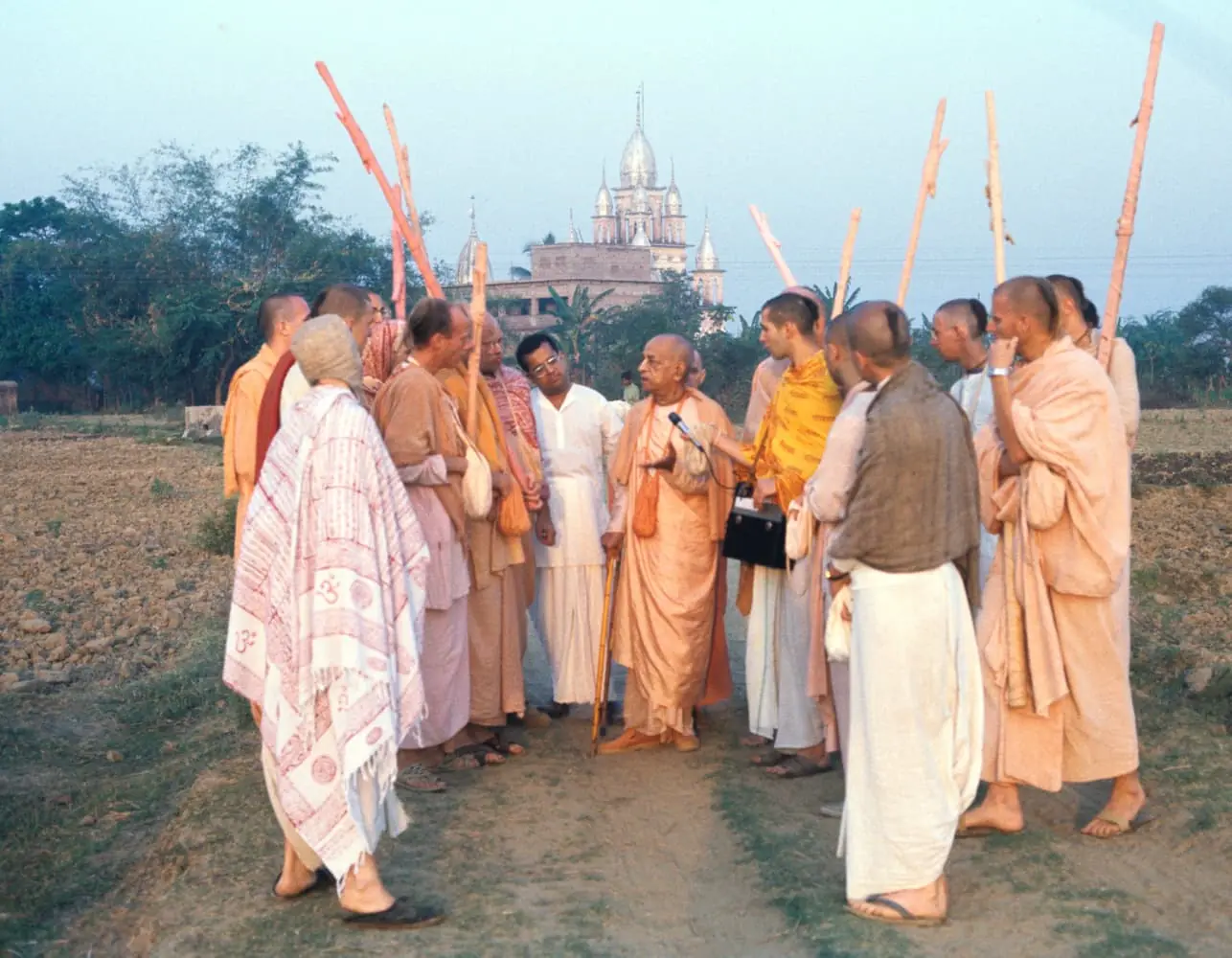
Read More...

TOVP Celebrates the Appearance Day of His Holiness Gopal Krishna Goswami – August 14, 2025
- TOVP.org

On August 14, 2025, ISKCON devotees worldwide will observe the 81st appearance day of His Holiness Gopal Krishna Goswami, our dedicated Prabhupada man, and benefactor of all. His legacy of service and devotion to Srila Prabhupada over his glorious lifetime will never be forgotten, and will remain an enduring example for generations of devotees to come.

We at the TOVP owe him a great debt of gratitude for his service and support of the project since its inception in 2009. He was keen on attending all the major milestone events over the years, and constantly encouraged his disciples to financially contribute to the construction, as he did himself personally. His name will live on as one of the TOVP’s greatest pillars of support.

In his honor, we have inaugurated the Gopal Krishna Goswami Bhakti Ratna Seva Campaign. Bhakti Ratna means ‘Jewel of Devotion’, and is a fitting acronym for Maharaja. Three large medallions (gold, silver and bronze) with his image have been produced for sponsorship, and the proceeds will fulfill his wish to help complete the TOVP, a direct instruction to him from Srila Prabhupada.

Take this opportunity on Gopal Krishna Goswami’s 81st appearance day to both further honor Maharaja in your life and also give to the TOVP so this historic project, the greatest gift to the world from Srila Prabhupada, can be completed.

Visit the Gopal Krishna Goswami Bhakti Ratna Seva Campaign website page today and make your sankalpa to Maharaja to forever serve him in his mission to please Srila Prabhupada.

 Note: All medallions will be shipped to donors in the U.S. and Canada. Other donors may pick up their medallion at the TOVP office in Mayapur, or contact tovpinfo@gmail.com if they are unable to do so.

View, download and share the TOVP Gopal Krishna Goswami 2025 Calendar: U.S. Calendar | India Calendar

TOVP/Mayapur Gopal Krishna Goswami Photo Gallery


TOVP NEWS AND UPDATES – STAY IN TOUCH

Visit: www.tovp.org
Support: https://tovp.org/donate/seva-opportunities
Email: tovpinfo@gmail.com
Facebook: www.facebook.com/tovp.mayapur
YouTube: www.youtube.com/user/tovpinfo
Twitter: https://twitter.com/TOVP2022
Telegram: https://t.me/TOVP_GRAM
WhatsApp: https://s.tovp.org/whatsappcommunity1
Instagram: https://s.tovp.org/tovpinstagram
App: https://s.tovp.org/app
News & Texts: https://s.tovp.org/newstexts
Store: https://tovp.org/tovp-gift-store/

Lord Jagannath Draws Unexpected Crowd to Phoenix Arizona Festival
→ ISKCON News

On June 29, 2025, honoring the divine journey of Lord Jagannath, ISKCON Phoenix joyfully celebrated our Rathayatra festival, aligning the celebration with the same auspicious day as the Rathayatra in Puri, India. While our main Rathayatra celebration typically takes place in February due to the milder weather in Arizona, this year we planned a modest […]

The post Lord Jagannath Draws Unexpected Crowd to Phoenix Arizona Festival appeared first on ISKCON News.

Srila Gopala Bhatta Gosvami ’s Disappearance Day
Giriraj Swami

Today I thought to read a verse and purport about Srila Gopala Bhatta Gosvami from Sri Caitanya-caritamrta, Adi-lila, Chapter Ten, “The Branches of the Caitanya Tree”:

TEXT 105

sri gopala bhatta eka sakha sarvottama
rupa-sanatana-sange yanra prema-alapana

TRANSLATION

Sri Gopala Bhatta Gosvami, the forty-seventh branch, was one of the great and exalted branches of the tree. He always engaged in discourses about love of Godhead in the company of Rupa Gosvami and Sanatana Gosvami.

PURPORT by Srila Prabhupada

Sri Gopala Bhatta Gosvami was the son of Venkata Bhatta, a resident of Sri Rangam. Gopala Bhatta formerly belonged to the disciplic succession of the Ramanuja-sampradaya but later became part of the Gaudiya-sampradaya. In the year 1433 Sakabda (A.D. 1511), when Lord Caitanya Mahaprabhu was touring South India, He stayed for four months during the period of Caturmasya at the house of Venkata Bhatta, who then got the opportunity to serve the Lord to his heart’s content. Gopala Bhatta also got the opportunity to serve the Lord at this time. Sri Gopala Bhatta Gosvami was later initiated by his uncle, the great sannyasi Prabodhananda Sarasvati. Both the father and the mother of Gopala Bhatta Gosvami were extremely fortunate, for they dedicated their entire lives to the service of Lord Caitanya Mahaprabhu. They allowed Gopala Bhatta Gosvami to go to Vrndavana, and they gave up their lives thinking of Sri Caitanya Mahaprabhu. When Lord Caitanya was later informed that Gopala Bhatta Gosvami had gone to Vrndavana and met Sri Rupa and Sanatana Gosvami, He was very pleased, and He advised Sri Rupa and Sanatana to accept Gopala Bhatta Gosvami as their younger brother and take care of him. Sri Sanatana Gosvami, out of his great affection for Gopala Bhatta Gosvami, compiled the Vaisnava smrti named Hari-bhakti-vilasa and published it under his name. Under the instruction of Srila Rupa and Sanatana, Gopala Bhatta Gosvami installed one of the seven principal Deities of Vrndavana, the Radharamana Deity. The sevaits (priests) of the Radharamana temple belong to the Gaudiya-sampradaya.

COMMENT

Actually, one of the families entrusted with the Deity service at the Radha-ramana Mandir has a history of relations with the line of Srila Bhaktivinoda Thakura and Srila Bhaktisiddhanta Sarasvati. Visvambhara Gosvami’s father or grandfather had relations with Srila Bhaktivinoda Thakura, the family maintained relations with Srila Bhaktisiddhanta Sarasvati Thakura, and then Visvambhara Gosvami had very friendly relations with Srila Prabhupada. And he spoke very nicely about Srila Prabhupada. Now Visvambhara Gosvami’s son Padmanabha Gosvami is also very favorable to ISKCON. In fact, ISKCON devotees often honor prasada at his home at the Radha-ramana Mandir. When I took prasada there with His Holiness Tamal Krishna Goswami, Padmanabha Gosvami showed us a letter that Srila Prabhupada had written to his father, Visvambhara Gosvami, about how all Vaishnavas should cooperate. So, not only does the Radha-ramana temple belong to the Gaudiya-sampradaya, but at least some of the sevaits have had close relations with the line of Srila Bhaktivinoda Thakura.

PURPORT (concluded)

When Krsnadasa Kaviraja Gosvami took permission from all the Vaisnavas before writing Sri Caitanya-caritamrta, Gopala Bhatta Gosvami also gave him his blessings, but he requested him not to mention his name in the book. Therefore Krsnadasa Kaviraja Gosvami has mentioned Gopala Bhatta Gosvami only very cautiously in one or two passages of the Caitanya-caritamrta. Srila Jiva Gosvami has written in the beginning of his Tattva-sandarbha, “A devotee from southern India who was born of a brahmana family and was a very intimate friend of Rupa Gosvami and Sanatana Gosvami has written a book that he has not compiled chronologically. Therefore I, a tiny living entity known as jiva, am trying to assort the events of the book chronologically, consulting the direction of great personalities like Madhvacarya, Sridhara Svami, Ramanujacarya, and other senior Vaisnavas in the disciplic succession.” In the beginning of the Bhagavat-sandarbha there are similar statements by Srila Jiva Gosvami. Srila Gopala Bhatta Gosvami compiled a book called Sat-kriya-sara-dipika, edited the Hari-bhakti-vilasa, wrote a foreword to the Sat-sandarbha and a commentary on the Krsna-karnamrta, and installed the Radharamana Deity in Vrndavana. In the Gaura-ganoddesa-dipika (184) it is mentioned that his previous name in the pastimes of Lord Krsna was Ananga-manjari. Sometimes he is also said to have been an incarnation of Guna-manjari. Srinivasa Acarya and Gopinatha Pujari were two of his disciples.

COMMENT

Srila Gopala Bhatta Gosvami ki jaya!

One story about Gopala Bhatta Gosvami is that on the eve of Nrsimha-caturdasi all the other Gosvamis and Vaishnavas in Vrindavan were preparing to worship their Deities and hold festivals. Gopala Bhatta Gosvami had only a salagrama-sila; he didn’t have a Deity with arms and legs and a body that he could dress and decorate. So he was feeling deprived of the opportunity to serve like the other devotees{,} who had Deities they could serve in these ways. And out of Gopala Bhatta Gosvami’s strong desire, a salagrama-sila became manifest in the form of Radha-ramana. Radha-ramana is considered the most beautiful Deity of Krishna. He is the one original Deity of the Gosvamis that has remained in Vrindavan, while the others had to be taken elsewhere to protect Them from the Muslim invaders. And near the temple of Radha-ramana in Vrindavan is the samadhi of Sri Gopala Bhatta Gosvami.

Gopala Bhatta Gosvami’s uncle and siksa-guru was Prabodhananda Sarasvati. His samadhi is also located in Vrindavan, just off the parikrama path near Kaliya-ghata, quite near our Krishna-Balaram Mandir. So, often when we go on parikrama down the path near the Yamuna, we visit Prabodhananda Sarasvati’s samadhi and bhajana-kutira, and then we proceed to Srila Sanatana Gosvami’s samadhi. Srila Sanatana Gosvami was the most senior of the Gosvamis and was also a close associate and instructor of Gopala Bhatta Gosvami. In fact, Gopala Bhatta Gosvami worked with Sanatana Gosvami to produce the great treatise Hari-bhakti-vilasa.

I feel that Gopala Bhatta Gosvami has been especially merciful to me on two occasions. On one, I visited his bhajana-kutira at Sanketa, a place between Nandagrama and Varsana where Radha and Krishna used to meet and sometimes perform rasa-lila. Gopala Bhatta would sit and chant underground in a deep cavern accessible only through a long, narrow passage. At the end of the passage was a somewhat roomier place where Gopala Bhatta used to chant, now marked as his bhajana-sthala. I went there with Tamal Krishna Goswami and others on a very hot day and struggled to crawl through the passage to the bhajana-sthala. It was difficult, but when I finally reached there, Gopala Bhatta Gosvami was very merciful: he allowed me to chant with a glimpse of taste. And after all the devotees emerged from the cavern, I stole back in. I crawled back to Gopala Bhatta’s lotus feet, and I sat there chanting. I will never forget his mercy to me there, and I pray that he will enable me to chant with relish and love.

On the other occasion, during Kartik of 1999, shortly before my surgery, I visited Gopala Bhatta’s samadhi near the Radha-ramana Mandir. We arrived just after raja-bhoga-arati, and the pujari was closing the doors to the samadhi-mandira. But he was kind enough to open them for us and allow us darshan of Gopala Bhatta Gosvami. He gave us some flowers and caranamrta and invited us to stay for prasada. Thus our small party, along with some local sadhus, honored Gopala Bhatta’s maha-maha-prasadam with great relish, and we even stayed to take a little rest before we continued on our way, filled with bliss. So, Gopala Bhatta Gosvami is very kind.

 Years later, when some of my disciples from Bombay went to Vrindavan on pilgrimage, they visited the samadhi. They told the pujaris about me, how my health no longer allowed me to visit Vraja, and asked for some prasada for me. And one of the pujaris kindly gave them a piece of cloth from the samadhi. It is very special. Now, twice a year, once on Gopala Bhatta Gosvami’s appearance day and once on his disappearance day, we bring it out and touch it. So, now we shall pass it around and touch it to our heads and to our hearts—and pray to Gopala Bhatta Gosvami for his sublime mercy.

Thank you.

Hare Krishna.

[A talk by Giriraj Swami on July 31, 2002, Carpinteria, California]


Official Statement Regarding Incident at ISKCON Toronto Rathayatra Parade
→ ISKCON News

July 14, 2025 Official Statement Regarding Incident at ISKCON Toronto Rathayatra Parade By ISKCON Communications North America On Saturday, July 12th, during the annual Rathayatra parade organized by ISKCON Toronto, multiple eggs were thrown from a residential balcony onto the public street where thousands of parade-goers had gathered. One egg struck a female participant on […]

The post Official Statement Regarding Incident at ISKCON Toronto Rathayatra Parade appeared first on ISKCON News.

How Ghana’s Rathayatra Rolls On with Joy and Purpose
→ ISKCON News

The streets of Accra come alive with ecstatic kirtan and dancing during the Rathayatra. Each year, the streets of Accra come alive with vibrant kirtan, smiling devotees, and the majestic presence of Lord Jagannatha on His chariot. What began two decades ago as a humble extension of Ghana’s Food for Life initiative has now become […]

The post How Ghana’s Rathayatra Rolls On with Joy and Purpose appeared first on ISKCON News.

Gopal Bhatta Goswami Disappearance
→ Ramai Swami

Sri Gopala Bhatta Goswami (the son of a Vyenkata Bhatta, a Sri Vaishnava brahmana) appeared in Sri Rangam, South India. Lord Chaitanya once stayed four months in his home, and converted the family to Gaudiya Vaishnavism.

A mere boy at this time, Gopala personally served the Lord. Sri Chaitanya treated him affectionately giving His remnants and blessings to become an acharya.

During His four month stay, Lord Chaitanya developed a close friendship with Vyenkata Bhatta, which Krishna Dasa Kaviraja describes as “sakhya rasa.” 

After receiving initiation from Sri Prabodhananda Saraswati, Gopala Bhatta came to Vrindavana and became a dear friend of Sri Rupa and Sanatana Goswamis. He did bhajana in Vrindavana for forty-five years, mostly at Radha-Kunda.  

On pilgrimage he obtained twelve Shalagrama shilas. Later the Damodara shila manifested Himself as the beautiful Radha Ramana Deity. Since 1542, Radha Ramana has been worshiped with pure devotion following precise sastric rituals.

Lord Chaitanya ordered Gopala Bhatta to write a book to check the spread of pseudo-loving rasas and negligence to vaidhi bhakti. In corroboration with Sri Sanatana Goswami he compiled the Hari-bhakti-vilasa, the authorised book explaining the ritual and devotional practices of the Gaudiya Vaishnava sampradaya. He also wrote Sat-kriya-dipika and the outline for Sri Jiva Goswami’s Sat Sandarbhas.
 
He eternally serves Srimati Radharani as one of Her asta manjaris, Guna-manjari. His samadhi is within Radha Ramana’s temple compound behind the appearance place of the Deity.

Travel Journal#21.27: Paris and Luxembourg
→ Travel Adventures of a Krishna Monk

Diary of a Traveling Sadhaka, Vol. 21, No. 27
By Krishna Kripa Das
(Week 27: July 2–8, 2025)
Paris and Luxembourg
(Sent from Paris on July 13, 2025)

Where I Went and What I Did

The twenty-seventh week of 2025, I lived at ISKCON Paris in Sarcelles, eighteen minutes by train north of Paris itself. The sankirtana devotees were finishing their summer book distribution marathon on July 5, and I would join them for the last few days and chant Hare Krishna for three hours each afternoon, usually from 3 to 6 p.m., except Thursday when we chanted from 5 to 8 p.m. with a group of devotees who do harinama after work. Yashomatinandana Prabhu came out every day. Premamoya Narottama Prabhu, a Bangladeshi student who teaches mrdanga, came out frequently. On Sunday the sankirtana devotees did a home program instead of going out, and I attended a two-hour park kirtan program in Luxembourg with Radhadesh devotees, invited by Yadurani Devi Dasi.


Monday was frustrating as I was tired from my seven-hour journey from Radhadesh, and only Yashomatinandana Prabhu joined me from the temple. The police stopped us twice and two vendors made us relocate. We still chanted for two and a half hours somehow or other. Tuesday was much better.

I share quotes from Srila Prabhupada’s Srimad-Bhagavatam and from his Bhagavatam lectures. I share notes on classes by Aksayananda, Rasa Parayana, Dayal Nitai, and Yashomatinandana Prabhus.

Thanks to Yadurani Devi Dasi for the opportunity to participate in the Luxembourg park kirtan and for assistance with my stay there. Thanks to Sanjeev of Luxembourg for the Ekadasi lunch and the place to rest. Thanks to Shruti for the Ekadasi dinner. Thanks to Gopinath Prabhu of Radhadesh for letting me stay in the ashram there and for the ride there from Luxembourg and the ride to the train station the next morning.

Itinerary

June 19–August 19: Paris 
– August 5–9: Balarama Festival, New Mayapur
August 20: London harinama
August 21–22: Liverpool harinamas
August 23: Liverpool Ratha-yatra
August 24: Manchester harinama
August 25: London harinama and flight to New York

Chanting Hare Krishna in Paris

Premamoya Narottama Prabhu chants Hare Krishna at Les Halles (https://youtu.be/BcLpsmZGq-c):


While Premamoya Narottama Prabhu was chanting Hare Krishna, Ekanath Prabhu swung a passerby (
https://youtu.be/SF5DduUme98):


Premamoya Narottama Prabhu chants Hare Krishna at Les Halles, and several passersby play shakers and dance (
https://youtu.be/f1vkKUAWS04):


Patita Pavana Prabhu chants Hare Krishna at Les Halles, and a kid claps (
https://youtu.be/U94nBDhqNns):


Rohininandana Prabhu chants Hare Krishna at Les Halles, and a girl plays shakers (
https://youtube.com/shorts/MyMObOah0hw?feature=share):


Priyarani Devi Dasi chants Hare Krishna at Les Halles, and a passerby plays shakers (
https://youtu.be/bEj3drwd-pg):


Yashomatinandana Prabhu chants Hare Krishna at Canal Saint-Martin in Paris, and passersby play instruments
(https://youtube.com/shorts/Nh0PVww21_c):


Vrajarenu Prabhu chants Hare Krishna at Canal Saint-Martin (https://youtu.be/rv7ZlzxG34k):


Premamoya Narottama Prabhu chants Hare Krishna at Satya Yoga in Paris (https://youtu.be/HHd19sLnnaU):


Revatinandana Prabhu chants Hare Krishna at Satya Yoga in Paris, and
people dance (https://youtu.be/zRAno-WEPM4):


Later
more people danced (https://youtu.be/WpCGaDpw6Do):


Premamoya Narottama Prabhu chants Hare Krishna at Saint Michel, and devotees dance
(https://youtu.be/k0ecGbhNpEo):


Premamoya Narottama Prabhu chants Hare Krishna at Saint-Michel, and passersby dance with devotees (https://youtu.be/KKXBN2UxbxM):


Rasa Parayana Prabhu chants Hare Krishna near La Sarbonne, and passersby and devotees dance (
https://youtube.com/shorts/uxXGjDifl4g?feature=share):


Subhadra chants Hare Krishna at Kinnekswiss Park in Luxembourg with Radhadesh devotees and locals
(https://youtu.be/19ZqLandUo4):


Krishnabhava chants Hare Krishna at Kinnekswiss Park in Luxembourg with Radhadesh devotees and locals
(https://youtu.be/yb6SD5itdDM):


Jahnava chants Hare Krishna at Kinnekswiss Park in Luxembourg with Radhadesh devotees and locals
(https://youtu.be/FGNCQgl0byo):


Chandrashekhara Acharya Prabhu chants Hare Krishna at Hotel de Ville
in Paris (https://youtu.be/Ka81l9y-dow):


At one point in his kirtan
, a young woman happily played shakers (https://youtube.com/shorts/At5wrvUWu1I?feature=share):


On Tuesday, we did a walking
harinama beginning in a new place for me, Luxembourg Garden in Paris. The walking harinama idea was inspired by the fact the police stopped us in two different locations the previous day. When we are walking and chanting, people do not complain, and thus the police do not stop us.


We chanted at the entrance to Luxembourg Garden for about half an hour, and then we walked through the city,
passing Saint-Michel and Notre Dame, to Les Halles. While we were chanting there a woman was very happy to take a video of us. It turned out she had a cousin who was living in our New Vrindaban temple in West Virginia.

Insights

Srila Prabhupada:

From Srimad-Bhagavatam 3.8.17, purport:

“The human being is so limited in his capacity that without the help of the Supreme he can hardly understand the mystery of the creation, continuance and destruction of the cosmos by the will of the Lord.”

From Srimad-Bhagavatam 3.8.18, purport:

“The most intelligent man is he who tries to find the cause of his personal existence and that of the whole cosmic creation and thus tries to find the ultimate cause. If his attempt is properly executed with penances and perseverance, it is sure to be crowned with success.”

From Srimad-Bhagavatam 3.8.19, purport:

“By dint of one’s personal endeavor one may go nearer to the Lord, but without the Lord's mercy one cannot reach the ultimate point. Such understanding of the Lord is possible only by devotional service.”

From Srimad-Bhagavatam 3.8.21, purport:

“Samadhi involves concentrating the mind upon the supreme cause of all, even if one is unaware of whether His actual nature is personal, impersonal or localized. Concentration of the mind on the Supreme is certainly a form of devotional service. To cease from personal sense endeavors and to concentrate on the supreme cause is a sign of self-surrender, and when self-surrender is present, that is a sure sign of devotional service. Each and every living entity needs to engage in devotional service to the Lord if he wishes to understand the ultimate cause of his existence.”

From Srimad-Bhagavatam 3.8.24, purport:

“Nature’s panoramic beauty, which strikes one with wonder, may be taken as a perverted reflection of the transcendental body of the Lord. One who is therefore attracted by the beauty of the Lord is no longer attracted by the beauty of material nature, although he does not minimize its beauty. In the Bhagavad-gīta (2.59) it is explained that one who is attracted by param, the Supreme, is no longer attracted by anything inferior.”

From Srimad-Bhagavatam 4.24.15, purport:

“A disciple should always meditate on the order of the spiritual master, and that is perfectional meditation.”

From lecture on Srimad-Bhagavatam 7.9.43 in Calcutta on March 23, 1976:

“Without serving Vaiṣṇava, nobody can be delivered, because he is so merciful, he can demand to Krishna, ‘Please, on my sake please excuse him. I’ll take him with me.’ So Krishna grants him, ‘All right, you take them.’”

From a lecture on Śrīmad-Bhagavatam 1.2.5 in Sydney, Australia, on April 3, 1972:

“God is also an individual person as you are individual person, I am individual person, but the difference between God and you and me is this, that you know your business, I know my business, but God knows everyone’s business. That is the difference.”

From a lecture on Śrīmad-Bhagavatam 6.1.1–4, Melbourne, Australia on May 20, 1975:

“In the spiritual world service is always voluntary, some devotees desire to serve Kṛṣṇa as flower; they become flower voluntary, and can change from flower to unlimited forms in the spiritual world including human form if the devotee desires, that is spiritual life, it is always voluntary with no restrictions. If a devotee wants to serve Kṛṣṇa as cow, he serves Kṛṣṇa as cow, as calf, as flower, as plant, as water, as ground, field, or as father, as mother, as friend, as beloved, anything. It is inconceivable, yet a fact.”

Aksayananda Prabhu:

The stories in the Srimad-Bhagavatam are meant to develop a natural attraction for the Supreme Lord.

Once who cannot control his senses cannot comment on Srimad-Bhagavatam.

Srimad-Bhagavatam contains all the other scriptures like Ramayana, Mahabharata, and the Vedanta-sutra.

Although Hariscandra was an exceptional person, he still fell into maya.

We lie when we have a desire that is not authorized.

If we cannot control our senses, we change the sastra. There is a lower planet for those who change the sastra.

It is the tendency in Kali-yuga to act for sense gratification.

Krishna advises in Bhagavad-gita to control the senses.

Laws do not stop the problems arising from interactions between people, but sense control can solve such problems.

If we can control our senses, we can think beyond ourselves.

In Bhagavad-gita Krishna gives rules, but Srimad-Bhagavatam gives stories that can inspire one to control his senses.

Nistha is the stage of bhakti where events cannot disturb our devotion.

By reading Srimad-Bhagavatam, bhava gradually develops.

Ultimately, as we develop spiritually, what we see reminds us of stories from the Bhagavatam.

On Vyasa-puja day, we should consider what we have done throughout the year to please our guru.

Rasa Parayana Prabhu:

Although Ramananda Raya was not a brahmana, Lord Caitanya engaged him in revealing the topmost limit of love of God.

How to associate with devotees is an important lesson in Sri Caitanya-caritamrita.

In Bhagavad-gita, we learn Krishna’s message. In Srimad-Bhagavatam, we see how Krishna and His devotees behave in different situations. Sri Caitanya-caritamrita we learn how to associate with devotees.

If we do not learn how to live in the association of devotees, we will not be able to live in Goloka Vrindavana.

People will not remember your achievements but how you behaved with them.

It is said that each of the followers of Lord Caitanya has the ability to deliver the universe so how nicely we should treat them!

If we cannot figure out how to have a positive relationship with a devotee, at least we should figure out how to not have a negative relationship with the devotee.

Gopal Krishna Goswami created 17 temples in Delhi alone and widely expanded Krishna consciousness in India. He was asked about the reasons for his success. He said he had only two: (1) a strong morning program and (2) avoiding Vaishnava aparadha.

Dayal Nitai Prabhu:

Gandhari is an example of a wife attaining perfection by following her husband.

It is not by escaping from responsibility we can advance in spiritual life.

Krishna showed by His own example that the duty of the brahmacari is to serve the spiritual master.

Janananda Goswami advised us not do sell incense or paintings in Lyon to supplement our income from book distribution. He said that was not good for brahmacaris. You fall down from the brahmana platform to come down to the vaisya platform, and it is not good for your spiritual life, as many examples in our movement in the past attest to.

Comments by me:

Saubhari Muni, although originally renouncing the world as a yogi, showed he was aware of varnasrama. He realized that if he could not be a brahmacari, he should get married, and he understood that the final duty of the grhastha is to renounce that ashram and move on to the vanaprastha ashram.

The practicality of grhasthas maintaining themselves by book distribution was mentioned. I have two stories about that:

One summer I met a devotee in Ireland, who decided when he got married that he should get a job to maintain himself. He got a job and found that he had no time to visit the temple, associate with devotees, or read Prabhupada’s books. He just had enough time to chant his rounds. He decided that was not such a nice life, so he decided to try to maintain his family by book distribution, his former service as a brahmacari. Then he found he had time to go to the temple, associate with devotees, and read Prabhupada’s books as well as to chant his rounds, and he had just enough money to live. He considered that to be an improvement in his life. During Karttika, I met that devotee in Vrindavan, with his wife and kid. I was surprised that by book distribution that he made enough money to bring his whole family to Vrindavan. He said that his temple president needed someone to do shopping for the deities, so he sent him to do that service.

Hare Krishna Dasa from Italy lived near a city of 5,000 people. He had a map of the city on his wall, and for years every day he would do book distribution in a certain region of the city from 9 a.m. to 2 p.m. to maintain himself as a grhastha. When he had visited every region in the city, we would start over again. Many people would greet him on the street because they knew him from his visits.

Yasomatinandana Prabhu:

The Caitanya tree is a growing organism that we are part of.

People are attracted by the simplicity of the Hare Krishna mantra.

Although so many mantras are there, Srila Prabhupada gave us the Pancatattva mantra and the Hare Krishna mantra.

Is my desire to go back to Krishna so strong that I am willing to purify my mind so I can actually go there?

There will always be distractions, but we have to keep focusing our minds on Krishna.

By performing devotional service, we become situated in the mode of goodness, and we can be steady and relish our practice.

Srila Prabhupada has assured us that if we maintain our practice to the end of life, we can go back to Godhead.

From a class on Srimad-Bhagavatam 9.7.2 in Paris on July 8, 2025:

The lists of kings in the Bhagavatam is valuable because Krishna explains that the knowledge of yoga is received by the saintly kings.

Comments by me:

Krishna makes the point that initially one may not have a real desire to attain Him but that by devotional practice that desire will come: “My dear Arjuna, O winner of wealth, if you cannot fix your mind upon Me without deviation, then follow the regulative principles of bhakti-yoga. In this way develop a desire to attain Me.”

To attain Krishna’s abode, we do not have to actually be poor, but we do have to be free from desires for material gain.

-----


There is a popular sticker that you see all over Brussels, like at this Flixbus stop.


It is in French, and because I am studying French, it was attractive to me: “J’existe”. It is philosophical but reveals a lack of complete knowledge. It means “I exist.” That is Krishna’s first point in the Gita:

na jayate mriyate va kadacin

nayam bhutva bhavita va na bhuyah
ajo nityah sasvato ’yam purano
na hanyate hanyamane sarire

“For the soul there is neither birth nor death at any time. He has not come into being, does not come into being, and will not come into being. He is unborn, eternal, ever-existing and primeval. He is not slain when the body is slain.” (Bhagavad-gita 2.20)

I have never come into being, or in other words, “I exist” eternally. The rest of the Gita tells how to attain the best venue for our eternal existence. This venue is described briefly in the Gita, in verses such as this:

avyakto ’ksara ity uktas

tam ahuh paramam gatim
yam prapya na nivartante
tad dhama paramam mama

“That which the Vedantists describe as unmanifest and infallible, that which is known as the supreme destination, that place from which, having attained it, one never returns—that is My supreme abode.” (Bhagavad-gita 8.21)

In Brahma-samhita it is described more elaborately: “I worship that transcendental seat, known as Svetadvipa where as loving consorts the Laksmis in their unalloyed spiritual essence practice the amorous service of the Supreme Lord Krishna as their only lover; where every tree is a transcendental purpose tree; where the soil is the purpose gem, all water is nectar, every word is a song, every gait is a dance, the flute is the favorite attendant, effulgence is full of transcendental bliss and the supreme spiritual entities are all enjoyable and tasty, where numberless milk cows always emit transcendental oceans of milk; where there is eternal existence of transcendental time, who is ever present and without past or future and hence is not subject to the quality of passing away even for the space of half a moment. That realm is known as Goloka only to a very few self-realized souls in this world.” (Brahma-samhita 5.56)

How the abode is attained is described in the Gita in verses like this:

bhaktya mam abhijanati
yavan yaa casmi tattvatah
tato mam tattvato jñatva
visate tad-anantaram

“One can understand Me as I am, as the Supreme Personality of Godhead, only by devotional service. And when one is in full consciousness of Me by such devotion, he can enter into the kingdom of God.” (Bhagavad-gita 18.55)

We wish everybody all success in their devotional service.

In Her Own Words: Vaishnavi Shares Miraculous Escape from Flood Waters
→ ISKCON News

Kamalini Devi Dasi, with her husband, Apurva Dasa, shares new details from her escape from their car surrounded by flood waters. On Tuesday, July 8th, ISKCON News reported on the miraculous escape of Kamalini Devi Dasi, a longtime ISKCON educator and servant, whose car was rapidly overtaken by floodwaters after heavy rainfall in North Carolina. […]

The post In Her Own Words: Vaishnavi Shares Miraculous Escape from Flood Waters appeared first on ISKCON News.

New Navadvip Dham Hosts Harinam Mela on Independence Day Weekend
→ ISKCON News

Over 150 devotees from across Texas and beyond gathered at New Navadvip Dham in McAllen, Texas, for a spiritually uplifting and joy-filled celebration—the first-ever Harinam Kirtan Mela in the Rio Grande Valley, held alongside Independence Day festivities. From July 3rd to 6th, the temple came alive with the sound of the Holy Name, heartfelt association, […]

The post New Navadvip Dham Hosts Harinam Mela on Independence Day Weekend appeared first on ISKCON News.

Is it Maya to Become a Parent?
→ ISKCON News

Being a father or mother in Krsna Consciousness can be a little confusing. On the one hand, there is this small child who appears as our son and gradually grows and develops his intelligence and personality. At the same time, we philosophically understand that the soul is eternal and nobody is actually anyone’s son, since […]

The post Is it Maya to Become a Parent? appeared first on ISKCON News.

Bliss House Devotees Share Kirtan and Culture on CBS Morning Show
→ ISKCON News

Bliss House, a San Antonio-based spiritual outreach, was recently featured on “Great Day SA,” a widely viewed morning show airing on the CBS network. With an estimated audience of 30,000 to 50,000 viewers, the five-minute segment offered a vibrant introduction to the Bhakti-yoga lifestyle as practiced at Bliss House, which has served the San Antonio […]

The post Bliss House Devotees Share Kirtan and Culture on CBS Morning Show appeared first on ISKCON News.

Mahavatar Narsimha Trailer Released; In Theatres July 25, 2025
→ ISKCON News

In January 2025, ISKCON News interviewed Ashwin Kumar about his stereoscopic 3D film Mahavatar Narsimha. To learn more about its origin and inspiration, click here. This month, on July 25th, the Divine Roar will arrive in theatres worldwide. Recognized for its historical significance in Indian animation, the film was selected as one of the top […]

The post Mahavatar Narsimha Trailer Released; In Theatres July 25, 2025 appeared first on ISKCON News.

ISKCON Ministry of Education to Host PAN America Symposium Online July 18
→ ISKCON News

The ISKCON Ministry of Education will host its Annual PAN America Mini-Symposium 2025 on Friday, July 18, bringing together educators, leaders, and practitioners from across the Americas in a two-hour virtual event. The symposium begins at 6:00 PM CDT (4:00 PM PDT / 7:00 PM EDT) and will be conducted online via Zoom, Facebook, and […]

The post ISKCON Ministry of Education to Host PAN America Symposium Online July 18 appeared first on ISKCON News.

Guru Purnima
→ Ramai Swami

Guru Purnima is observed on the full moon day in the month of Ashadha in honour of the sage Vyasadeva by worshipping him for His blessings. Formerly on this day, gurus who were the traditional teachers, were honoured by their pupils.

“When the second millennium (‘Dwarpa Yuga’) overlapped the third (‘Treta Yuga’), the great sage Srila Vyasadeva was born to Parasara Muni in the womb of Satyati, the daughter of Vasu (the fisherman).” (Srimad Bhagavatam 1:4:14.).

In Srila Vyasa’s childhood he was called Krsna, because of his dark complexion, and because he was born on an island at the confluence of the Sati and Mati Rivers he was called Dwaipayana. After dividing the Vedas he got the name Veda Vyasa. 

“The great sage, Srila Vyasa who was fully equipped with knowledge, could see through his transcendental vision the deterioration of everything material, due to the influence of the age.”

“He saw that the sacrifices mentioned in the Vedas were means by which people’s occupations could be purified, and to simplify the process, he divided the one Veda into four, in order to expand them among men. The four divisions of the original sources of knowledge (the Vedas) were made separately, but historical facts and authentic stories mentioned in the Puranas are called the fifth Veda.” (Srimad Bhagavatam 1:4:17-20.).

Reflections on Guru-purnima
Giriraj Swami

Today is Guru-purnima. Srila Prabhupada has explained that the system of honoring the spiritual master is current in all sections of Vedic followers. In the Mayavadi (impersonalist) sects, the disciples offer respect to the spiritual master once a year, on Guru-purnima. And in the Gaudiya Vaishnava sampradaya, the disciples offer homage annually on the appearance day of the spiritual master, called Vyasa-puja because the spiritual master represents Vedavyasa, the empowered incarnation of Krishna who compiled the Vedic literatures, and the bona fide spiritual master presents the same knowledge through disciplic succession. Although Guru-purnima is generally observed by the Mayavadi groups, we shall take the opportunity to discuss the principle of guru—and glorify the acharya-sampradaya.

Guru is a deep subject. We sing, vande ’ham sri-guroh sri-yuta-pada-kamalam sri-gurun vaisnavams ca. We offer respects to the spiritual master singular, to the spiritual masters plural, and to all Vaishnavas. The singular spiritual master is our personal spiritual master, the plural spiritual masters are the predecessor acharyas, and the Vaishnavas are the followers of the spiritual master. We offer respects to them all, because they all come in the same line, the disciplic succession, parampara, from Krishna Himself.

Srila Prabhupada explains, “The offering of respect to the spiritual master means offering respect to all the previous acharyas. Gurun means plural number. All the acharyas, they are not different from one another, because they are coming in the disciplic succession from the original spiritual master and they have no different views.” Thus we offer respects to the predecessors.

Similarly, we offer respects to the followers. Srila Prabhupada explains further, “Spiritual master means they must have many followers, who are all Vaishnavas. They are called prabhus, and the spiritual master is called Prabhupada, because at his lotus feet there are many prabhus. Pada means ‘lotus foot.’ All these Vaishnavas are prabhus. So they are also offered respectful obeisances—not the spiritual master alone, but along with his associates. And these associates, his disciples, are all Vaishnavas. Therefore they should also be offered respectful obeisances.” (SP comment on Mangalacarana, January 8, 1969)

For us in ISKCON, Srila Prabhupada is the main guru; he is the founder-acharya. But he also has his associates—Srila Gour Govinda Swami Maharaja, Srila Tamal Krishna Goswami Maharaja, Srila Sridhar Swami, Srila Bhakti Tirtha Swami, and Srila Bhaktisvarupa Damodara Swami, to name some prominent ones who have departed. And, of course, Prabhupada is being served by so many others today, and we can serve and learn from all of them.

“One who teaches can be treated as spiritual master. . . . So if we take instruction from them, all senior godbrothers may be treated as guru. There is no harm. Actually, you have only one spiritual master, who initiates you, just as you have only one father. But every Vaishnava should be treated as prabhu, master, higher than me, and in this sense, if I learn from him, he may be regarded as guru.” (SP letter dated November 20, 1971)

The original guru is Krishna. He speaks the knowledge of the Bhagavad-gita and enunciates the principles of religion. Dharmam tu saksad bhagavat-pranitam: the principles of dharma—bhagavata-dharma, prema-dharma—are enacted by the Supreme Personality of Godhead. We cannot manufacture dharma. Dharma means “the laws of God,” or “the orders of God.” So, dharmam tu saksad bhagavat-pranitam: the principles of religion are enacted by the Lord Himself. We cannot make religious principles any more than we can make our own laws. Srila Prabhupada gave the example that you can’t just get together with some friends and pass your own laws: “Okay, now I think we should legalize marijuana. Everyone agrees? Good. Passed.” Law means that it must be enacted by the government, by the parliament or legislature. Similarly, dharma is enacted by God.

dharmam tu saksad bhagavat-pranitam
  na vai vidur rsayo napi devah
na siddha-mukhya asura manusyah
  kuto nu vidyadhara-caranadayah

“Real religious principles are enacted by the Supreme Personality of Godhead. Although fully situated in the mode of goodness, even the great rsis who occupy the topmost planets cannot ascertain the real religious principles, nor can the demigods or the leaders of Siddhaloka, to say nothing of the asuras, ordinary human beings, Vidyadharas, and Caranas.” (SB 6.3.19)

The conclusion of the Bhagavad-gita is sarva-dharman parityajya mam ekam saranam vraja—to give up all varieties of dharma and just surrender to Krishna. And to understand the confidential truths about religious principles and the knowledge of the Bhagavad-gita, we need the help of mahajanas, authorities in Krishna consciousness—gurus.

svayambhur naradah sambhuh
  kumarah kapilo manuh
prahlado janako bhismo
  balir vaiyasakir vayam

dvadasaite vijanimo
  dharmam bhagavatam bhatah
guhyam visuddham durbodham
 yam jnatvamrtam asnute

“Lord Brahma, Bhagavan Narada, Lord Siva, the four Kumaras, Lord Kapila [the son of Devahuti], Svayambhuva Manu, Prahlada Maharaja, Janaka Maharaja, Grandfather Bhisma, Bali Maharaja, Sukadeva Gosvami, and I myself [Yamaraja] know the real religious principle. My dear servants, this transcendental religious principle, which is known as bhagavata-dharma, or surrender unto the Supreme Lord and love for Him, is uncontaminated by the material modes of nature. It is very confidential and difficult for ordinary human beings to understand, but if by chance one fortunately understands it, he is immediately liberated, and thus he returns home, back to Godhead.” (SB 6.3.20–21)

This confidential knowledge is given by God in scriptures and passed down through disciplic succession (evam parampara-praptam) to great souls who in turn impart the knowledge to their eager followers. And of all scriptures, Srimad-Bhagavatam is considered the most important, the ripened fruit of the tree of Vedic knowledge.

nigama-kalpa-taror galitam phalam
  suka-mukhad amrta-drava-samyutam
pibata bhagavatam rasam alayam
  muhur aho rasika bhuvi bhavukah

“O expert and thoughtful men, relish Srimad-Bhagavatam, the mature fruit of the desire tree of Vedic literatures. It emanated from the lips of Sri Sukadeva Gosvami. Therefore this fruit has become even more tasteful, although its nectarean juice was already relishable for all, including liberated souls.” (SB 1.1.3)

This nectarean fruit is passed down to us through disciplic succession. In commenting on this verse, Srila Visvanatha Chakravarti Thakura gives the example of a mango tree. To get a ripe mango from the top of a tree, different boys climb onto different branches. The boy at the top plucks the fruit and hands it to the boy on the next branch down, that boy hands it to the one on the next branch, and so on, until finally it reaches the boy on the ground—in the same perfect condition as when it was at the top of the tree. It hasn’t been bruised or broken but has been delivered intact, just as it was.

At the top of the tree is Krishna, and He passes the knowledge down to Brahma. Brahma passes it to Narada, and Narada passes it to Vyasa. (Today is also called Vyasa Purnima because Vyasadeva, who compiled the Vedic literature, appeared on this date.) Vyasa passes it to Madhvacharya, and so on—Chaitanya Mahaprabhu, the Six Gosvamis, and, further down, Srila Bhaktivinoda Thakura, Srila Gaurakisora dasa Babaji Maharaja, Srila Bhaktisiddhanta Sarasvati Thakura, and Srila Prabhupada. And now the followers of Srila Prabhupada are presenting the same knowledge. They follow and present the same teachings—that is their qualification.

About Vedavyasa, Srila Prabhupada wrote, “Vyasadeva was a real person accepted by all authorities, and anyone can judge how wonderful he was to have compiled the Vedic literatures. He is therefore known as Mahamuni. Muni means ‘thoughtful’ or ‘great thinker’ or ‘great poet,’ and maha means still greater. There is no comparison of Vyasadeva with any other writer or thinker or philosopher. Nobody can estimate the scholarly importance of Srila Vyasadeva. He composed many millions of Sanskrit verses, and we try to receive just a fragment of the knowledge in them by our tiny efforts. Srila Vyasadeva therefore summarized the whole Vedic knowledge in Srimad-Bhagavatam, which is known as the ripened fruit of the desire tree of Vedic knowledge. The ripened fruit is received hand to hand through disciplic succession, and anyone who does this work in disciplic succession from Srila Vyasadeva is considered a representative of Vyasadeva, and as such the bona fide spiritual master’s appearance day is worshiped as Vyasa-puja.” (Srila Prabhupada letter dated August 25, 1970)

Today is also the disappearance day of Srila Sanatana Gosvami, the most senior of the Six Gosvamis of Vrindavan. His book Brhad-Bhagavatamrta was the first major work of the Six Gosvamis. Sanatana Gosvami also comes in the disciplic succession from Lord Krishna to Brahma, but he is especially significant because he is a direct follower of Sri Chaitanya Mahaprabhu, who is Krishna Himself. Because Lord Chaitanya is Krishna, He is capable of beginning His own disciplic succession, but because He was acting as a devotee, He chose to take initiation in the disciplic succession from Krishna and Brahma. Still, He is God, and the process by which He imparted knowledge to His immediate followers—Rupa Gosvami and Sanatana Gosvami—is comparable to the way Lord Krishna imparted knowledge to Brahma.

Srila Krishnadasa Kaviraja Gosvami, in his Caitanya-caritamrta, writes of Sanatana’s younger brother Rupa:

vrndavaniyam rasa-keli-vartam
  kalena luptam nija-saktim utkah
sancarya rupe vyatanot punah sa
  prabhur vidhau prag iva loka-srstim

“Before the creation of this cosmic manifestation, the Lord enlightened the heart of Lord Brahma with the details of the creation and manifested the Vedic knowledge. In exactly the same way, the Lord, being anxious to revive the Vrndavana pastimes of Lord Krsna, impregnated the heart of Rupa Gosvami with spiritual potency. By this potency, Srila Rupa Gosvami could revive the activities of Krsna in Vrndavana, activities almost lost to memory. In this way, He spread Krsna consciousness throughout the world.” (Cc Madhya 19.1) Lord Chaitanya also empowered him to write books on bhakti-yoga, and the same could be said about Sanatana Gosvami.

We are followers of the Six Gosvamis—followers of their followers. Srila Narottama dasa Thakura prays,

ei chaya gosai yara-mui tara dasa
tan’-sabara pada-renu mora panca-grasa

“I am the servant of that person who is a servant of the Six Gosvamis. The dust of their holy feet is my five kinds of foodstuffs.”

And:

tandera carana sevi-bhakta-sane vasa
janame janame hoy ei abhilasa

“This is my desire, that birth after birth I may live with those devotees who serve the lotus feet of the Six Gosvamis.”

A few weeks ago, we were fortunate to have four devotees from Dallas, disciples of Tamal Krishna Goswami, visit us in Santa Barbara—Dharma Prabhu and his wife, Urjesvari; her sister, Saibya; and Padma Mataji. Mayapur dasa, Sridhar Swami’s personal servant for many years, was also with us. So we thought it a good occasion to glorify these two stalwart servants of Srila Prabhupada, these two powerful preachers, Tamal Krishna Goswami and Sridhar Swami. And it was very enlivening and purifying. All of the devotees spoke so beautifully—each and every one—and one could really feel Tamal Krishna Goswami’s and Sridhar Swami’s presence and really feel united with Srila Prabhupada and his associates. His Holiness Niranjana Swami also spoke beautifully and led kirtan.

Although we are all godbrothers in that we were all initiated by Srila Prabhupada, still, among Srila Prabhupada’s disciples, there are some who were—and are—leading the movement and showing the way for others to follow. Certainly His Holiness Tamal Krishna Goswami was a great pioneer, and His Holiness Sridhar Swami and the others I mentioned. And even now, devotees are following Srila Prabhupada and leading us and showing us the way. We also are trying to make our little contributions, but still, there are some who are ahead of us, showing the way and making it easier for us to follow. And that is natural; it will always be that way.

At the same time, it is also very personal and individual—through whom Krishna speaks to whom. It is not that everyone has to follow only one particular person. Krishna can manifest Himself—Srila Prabhupada can manifest himself—through different servants, different Vaishnavas, and we should be open to that flow of mercy however, and through whomever, it comes. It is not stereotyped or fixed or rigid. That mercy can come in different ways, and we should be open to it. That is really the principle of guru: Krishna’s instructions come to us through some servant of Krishna, some representative of Krishna—and it is not limited to only one. Krishna can speak to us through many mouths, through many personalities, and we should be open to that guidance. We should take His instructions on our head and follow them. That is how Krishna guides the conditioned souls back home, back to Godhead. He can engage any number of His servants to help us, and God knows we need all the help we can get. So, we shouldn’t be sectarian. We shouldn’t cut ourselves off from any flow of mercy that may come to us by the arrangement of the Lord, or the arrangement of Srila Prabhupada, or the arrangement of any of our spiritual masters.

I always think of the example of Raghunatha dasa Gosvami, because he had so many gurus. Of course, he was a direct associate of Lord Chaitanya Himself, but even then, he was helped by so many well-wishers and guides. First, He was initiated by Yadunandana Acharya, Raghunatha’s family’s spiritual master. Yadunandana Acharya himself was a great Vaishnava, an initiated disciple of Advaita Acharya and an intimate student of Vasudeva Datta. And Balarama Acharya, a dear associate of Haridasa Thakura, was Raghunatha’s family’s priest. Raghunatha learned from him too. Balarama Acharya and Yadunandana Acharya were friends, and both used to host Haridasa Thakura at their homes. For some time, Balarama Acharya provided Haridasa with a thatched hut and prasada, and at that time, while still a student, Raghunatha visited Haridasa Thakura daily, and it is said that because of the mercy Haridasa showed him then, Raghunatha later attained the mercy of Sri Chaitanya Mahaprabhu. Once, Balarama Acharya invited Haridasa Thakura to speak in the assembly of Raghunatha’s family, the Majumadaras, and thus Raghunatha heard from him again about the glories of the holy name.

Eventually, Raghunatha dasa met Nityananda Prabhu at Panihati and got His benediction to become free from all obstacles and attain shelter at the lotus feet of Sri Chaitanya Mahaprabhu. Raghunatha soon escaped from home, traveled by foot to Puri, and attained the merciful shelter of Sri Chaitanya Mahaprabhu—by the mercy of Nityananda Prabhu. Then Chaitanya Mahaprabhu entrusted Raghunatha dasa to Svarupa Damodara Gosvami: “I entrust Raghunatha to you. Please accept him as your son or servant.” Raghunatha was very young then, only about twenty-two. Then the Lord took Raghunatha’s hand and personally placed him in the hands of Svarupa Damodara Gosvami. And so, Raghunatha became Svarupa Damodara’s assistant. Svarupa Damodara was Sri Chaitanya Mahaprabhu’s secretary, and Raghunatha dasa in effect became assistant secretary.

After Chaitanya Mahaprabhu left this world, followed by Svarupa Damodara and almost all of His other intimate associates, Raghunatha dasa felt bereft: “I am all alone. There is no reason to live. How can I live without my prabhus, without all my masters?”

Raghunatha dasa felt so much separation that he decided to go to Vrindavan to see the lotus feet of Rupa and Sanatana and then give up his life by jumping from Govardhana Hill. But the two brothers did not allow him to die. They prevailed upon him to stay with them and speak about Mahaprabhu’s later pastimes. “You should not give up your life,” they told him. “You were with Sri Chaitanya Mahaprabhu in Puri and were witness to so many of His intimate pastimes. You should stay with us and tell us about your experiences with Him.” And they accepted him as their third brother. Especially Sanatana Gosvami gave him shelter and took care of him.

At first, when Raghunatha dasa Gosvami was doing bhajana at Radha-kunda, he didn’t have any residence. And while doing his bhajana, he was pretty much oblivious to everything else. He would chant, but sometimes he could hardly chant, because he would go into a trance. Still, he did chant at least one lakh names every day. But it could happen that he would chant one name and then go into a deep trance, and the pastimes of Krishna would play in his mind. Like that, one day he was chanting Krishna’s name and remembering Krishna’s pastimes and the hot sun was beating down on his head. Srimati Radharani Herself then came and held a cloth over his head, but Raghunatha dasa Gosvami didn’t know it, because he was in deep meditation. But Sanatana Gosvami understood, and he personally built a bhajana-kutira for him. He took care of him in every respect.

In his book Vilapa-kusumanjali Raghunatha dasa Gosvami begins by offering respects to his gurus. In Sanskrit devotional works, authors begin by offering respects to their gurus and worshipable Deities. So, at the beginning, he offers respects to Sanatana Gosvami:

vairagya-yug-bhakti-rasam prayatnair
  apayayan mam anabhipsum andham
krpambudhir yah para-duhkha-duhkhi
  sanatanas tam prabhum asrayami

“I was unwilling to drink the nectar of devotional service possessed of renunciation, but Sanatana Gosvami, out of his causeless mercy, made me drink it, even though I was otherwise unable to do so. Therefore he is an ocean of mercy. He is very compassionate to fallen souls like me, and thus it is my duty to offer my respectful obeisances unto his lotus feet.” (Vilapa-kusumanjali 6)

In this verse, Raghunatha dasa Gosvami describes Sanatana Gosvami with a phrase that Srila Prabhupada often quoted (for all compassionate Vaishnavas): para-duhkha-duhkhi—“he felt sorrow in the sorrow of others.” Raghunatha dasa says, vairagya-yug-bhakti-rasam prayatnair—he gave me the nectar of devotional service enriched with renunciation; anabhipsum andham—but I was unwilling (anabhipsum) to drink it, because I was blind (andham) to my spiritual well-being; so apayayan mam—he forced me to drink it. Sanatana Gosvami is an ocean of mercy (krpambudhi), and therefore I offer my respectful obeisances to him. I take shelter of him, my master (prabhum asrayami).

Srila Prabhupada paraphrased this verse in composing a verse to honor his sannyasa-guru, Srila Bhaktiprajnana Kesava Gosvami Maharaja. He used almost the same words. The idea is that it is very hard to become free from the shackles of family life. Of course, one can be a pure devotee in the grihastha ashrama—that is another thing—but to preach, sannyasa may be advised.

As Srila Prabhupada describes it, he was having dreams—in modern psychological language one might say recurring nightmares—that his guru maharaja was calling him to follow him and preach. And as Prabhupada describes it, he would wake up horrified: “How can I take sannyasa and become a mendicant? How can I leave my wife and children? What will happen then?” It’s a long story, but eventually Prabhupada accepted vanaprastha. He went to Jhansi and began the League of Devotees there. But there was some politics. The wife of the governor wanted the property that Srila Prabhupada had been using for the League of Devotees. She made all efforts to get it for some ladies’ program, and because she was so influential Prabhupada decided not to fight against her. So he left and went to Mathura, where he stayed in the matha of his godbrother Bhaktiprajnana Kesava Gosvami Maharaja. And Kesava Maharaja insisted, “You must take sannyasa.” To fully take up the order of the spiritual master and preach, one must accept the renounced order of life. And Prabhupada did it. He took sannyasa.

Then, in 1968—in the early days of the movement in the West—Srila Prabhupada, in Seattle, got news that His Holiness Kesava Maharaja had passed away. So he held a meeting with the disciples there and spoke about the history, how his guru maharaja and his godbrother had “forced” him to take sannyasa: “My godbrother insisted. Not he insisted—practically my spiritual master insisted through him, that ‘You accept.’ He wanted me to become a preacher, so he forced me through this godbrother: ‘You accept.’ So, unwillingly I accepted.”

Srila Prabhupada saw his guru maharaja working through his godbrother, speaking through his godbrother—another Vaishnava—and he composed this verse, very similar to the one Raghunatha dasa composed for Sanatana Gosvami—but for Kesava Maharaja. Apayayan mam anabhipsum andham. “I was unwilling to take the medicine of bhakti with detachment because I was blind. I could not see my future, that spiritual life is the brightest future. So the Vaishnavas, the spiritual master, they force: ‘You must drink.’ ” Sri-kesava-bhakti-prajnana-nama krpambudhir yas tam aham prapadye: “Sri Bhaktiprajnana Kesava is an ocean of mercy, and I offer my respectful obeisances unto him.”

So, Sanatana Gosvami was a great shelter to Vaishnavas in Vrindavan. He was not only intelligent—all the Gosvamis were most intelligent—but he was very shrewd, very clever. He understood politics and diplomacy. It is said that Rupa Gosvami was very simple but that Sanatana Gosvami was very astute; he could understand people’s motives and intentions. So he was able to protect devotees in the most practical ways, because he had that type of intelligence. And he protected Raghunatha dasa Gosvami on every level.

Then, on the day of Guru-purnima, because Sanatana Gosvami was the most senior of the Gosvamis and the siksa-guru of almost everyone in Vrindavan, the Vaishnavas went to Govardhana to offer him respects. Upon their arrival at his bhajana-kutira at Manasi-ganga, they saw that he was in a trance. He didn’t move at all, and they didn’t want to disturb him. So they waited.

Eventually they understood that he had left, and they all were overwhelmed with separation. They took him on parikrama of Govardhana Hill—he had done parikrama of Govardhana Hill faithfully every day. Then they weren’t sure where to place his body. Jiva Gosvami, who was the leader after Sanatana, decided that they should bring him back to Vrindavan, close to the temple of the Deity of Madana-mohana, who was so dear to him. And that took place on Guru-purnima.

We can see how the devotees helped each other—everyone helped everyone. In Sri Caitanya-caritamrta we find that all the Vaishnavas were always helping each other, and we should learn from their example. We should develop that mood. Of course, help can come in different ways. Sometimes it comes in terms of instruction, and sometimes it comes in practical ways, like Sanatana Gosvami’s building Raghunatha dasa Gosvami’s bhajana-kutira. These exalted devotees were always serving each other—serving Sri Chaitanya Mahaprabhu and serving each other. And that should be our mood: to serve each other, actually help each other, and to learn from each other.

In the Eleventh Canto of Srimad-Bhagavatam we learn how an avadhuta brahman took lessons from others—twenty-four siksa-gurus: from material elements, natural phenomena, plants, animals, even from a prostitute. By his intelligence, he learned from all of them, and he accepted them all as his gurus. He learned from the mountain that a saintly person should devote all his efforts to the service of others and make their welfare the sole reason for his existence (as we learn from Govardhana Hill). From the python he learned that one should give up material endeavor and accept what comes of its own accord—one should remain peaceful and steady, indifferent to material gain but always alert to self-realization. He even learned from Pingala, a prostitute. Because she had no other source of income, Pingala was very anxious for customers. One night she was waiting, waiting, waiting, and still no customer came. Finally, at the end of the night, she felt disgusted with her situation and thus became detached. From Pingala he learned detachment—and attachment for the Supreme Personality of Godhead, whom she accepted as her ultimate shelter and object of love.

So, we can learn from anyone and anything. If we are sincerely trying to serve Krishna and to understand how best to serve Him, the Lord in the heart will give us the intelligence of how to learn from others—even from trees and grass. Chaitanya Mahaprabhu glorified the trees and grass, for from them we learn how to be tolerant and humble. We can learn from anyone and everyone, and everything.

We can learn even from demons—and we are surrounded by them. Big business people, with their advertising and other strategies, are so clever. We should be that shrewd and clever for Krishna. Materialistic leaders figure out how to trap people in their nets and pull them in and keep them. We can learn from such powerful materialists how to attract people and keep them, for Krishna—how to be organized and intelligent, for Krishna. If we are in the proper mood, anything can remind us of devotional service and be used for Krishna’s benefit. Anyone can be a siksa-guru for us if we are absorbed in the mood of serving Krishna, fixed in Krishna consciousness.

But in particular, and especially on occasions like today, we are enjoined to offer respectful obeisances unto our diksa- and siksa-gurus in disciplic succession, from Krishna to Brahma to Narada to Vyasa, from Chaitanya Mahaprabhu to Sanatana Gosvami, from Srila Prabhupada to his followers, which includes all of you.

Thank you very much.

Hare Krishna.

[A talk by Giriraj Swami on Guru-purnima, July 29, 2007, Dallas]

Seva Care Tackles Loneliness in New Talk Series
→ ISKCON News

Seva Care is relaunching its monthly educational talk series designed to raise awareness on key issues related to community wellbeing. The initiative, titled Caring for Our Community, will explore diverse topics intended to inspire thoughtful action and spiritual reflection. Talks will typically take place on the second Tuesday of each month, depending on speaker availability, […]

The post Seva Care Tackles Loneliness in New Talk Series appeared first on ISKCON News.

“Krishna My Best Friend” Online Bhakti Course for Kids Now Enrolling
→ ISKCON News

Bhakti Kids, an initiative of ISKCON Congregational Development Ministry, will be leading an inspiring new online course beginning this week titled Krishna – My Best Friend, designed to help children build a personal and loving relationship with Lord Krishna. The initiative, led by Gourangi Gandharvika Devi Dasi, seeks to cultivate spiritual values, devotional reflection, and […]

The post “Krishna My Best Friend” Online Bhakti Course for Kids Now Enrolling appeared first on ISKCON News.

Ontario, Canada Honors ISKCON Thunder Bay Devotee
→ ISKCON News

Premkishro Das with the June Collinwood Award at Vedic Cultural Centre, ISKCON, Thunder Bay. Premkishor Das (Dr. Prashant A. Jani), a dedicated member of ISKCON Thunder Bay and Director of the Vedic Cultural Centre, has been awarded the June Callwood Outstanding Achievement Award for Voluntarism 2025. This is one of the highest civilian honors presented […]

The post Ontario, Canada Honors ISKCON Thunder Bay Devotee appeared first on ISKCON News.

Kamalini Devi Dasi Saved from Rising Floodwaters by Radha Golokananda’s Mercy
→ ISKCON News

Our beloved Kamalini Devi Dasi, a respected disciple of His Divine Grace A.C. Bhaktivedanta Swami Prabhupada, who has devoted her life to the distribution of his books and the education of our youth, experienced a harrowing brush with death — and a remarkable example of Krishna’s protection — as she made her way to New […]

The post Kamalini Devi Dasi Saved from Rising Floodwaters by Radha Golokananda’s Mercy appeared first on ISKCON News.

Wheels of Devotion: ISKCON Botswana’s 9th Annual Rathayatra Draws Crowds and Hearts
→ ISKCON News

Their Lordships Jagannath, Baladeva, and Subhadra Devi grace the streets of Gaborone from atop Their beautifully decorated chariot, offering darshan to hundreds of joyful onlookers. On June 15th, the streets of Gaborone vibrated with rhythm, color, and spiritual energy as ISKCON Botswana held its 9th Annual Rathayatra, also known as the Festival of Chariots. What […]

The post Wheels of Devotion: ISKCON Botswana’s 9th Annual Rathayatra Draws Crowds and Hearts appeared first on ISKCON News.

Statement from ISKCON Communications North America: Gunfire Damages Utah Krishna Temple
→ ISKCON News

Statement from ISKCON Communications North America: Gunfire Damages Utah Krishna Temple In the early morning hours of June 27 and 28th, approximately 20 to 30 bullets were fired at the International Society for Krishna Consciousness (ISKCON) Temple in Spanish Fork, Utah. Bullet holes were found in the windows, temple hall walls, and intricately hand-carved arches. […]

The post Statement from ISKCON Communications North America: Gunfire Damages Utah Krishna Temple appeared first on ISKCON News.

Sanatana Goswami Disappearance
→ Ramai Swami

Srila Sanatana Gosvami, one of the intimate associates of Sri Caitanya Mahaprabhu, is a well-known personality in Gaudiya Vaishnavism. Mahaprabhu taught the sequence of advancement in devotional service through Sanatana Goswami.

Sanatana Goswami was the oldest and most venerable among the six Goswamis. He propagated the mission of Sri Chaitanya Mahaprabhu. Srila Sanatana Goswami appeared in 1488 AD and lived for 70 years. He spent 27 years in household life and 43 years in Vrindavan as a renunciate

Srila Kavi Karnapura Goswami described the identity of Sanatana Goswami in Gaura-ganodesa-dipika: “Sanatana Goswami who is non-different from Sri Chaitanya Mahaprabhu is a venerable personality. He was formerly known as Rati Manjari and was very dear to Rupa Manjari in Vrindavan. Scholars call her by the name Lavanga Manjari. The famous sage Sanatana among the Catuh sanah entered his body.”

From his childhood, Sanatana was very fond of Shrimad Bhagavatam. At an early age, a Brahmin gave him Srimad Bhagavatam. Sanatana was immersed in an ocean of joy after receiving the Bhagavatam. At a young age, Sanatana studied all scriptures under the guidance of Vidya Vachaspati, the topmost teacher of that time. He was fond of studying Shrimad Bhagavatam. He used to discuss the conclusions of Bhakti with scholars.

Rupa Goswami received the news that Mahaprabhu would travel to Vrindavana through the forest. He wrote a letter to Sanatana Goswami and gave a hint of his journey. After that, he started his journey to Vrindavana with his younger brother, Anupama. Sanatana Goswami was intensely eager to go to Vrindavan and perform Krishna Bhajana. 

As soon as he received Rupa’s letter, he bribed the jail keeper, freed himself from imprisonment by Nawab Hussein Shah and started for Vrindavan. Along the way he stopped at Varanasi where Lord Chaitanya was staying.

Mahaprabhu taught Sanatana Goswami on various topics and ordered him to perform the following services: 

  1. Compilation of Bhakti literature and scriptures and propagation of the unalloyed Bhakti,
  2.  Rediscovering the hidden sacred places of the Lord’s pastimes in Vrindavan,
  3.  Propagation of the daily worship of the deity of Sri Krishna,
  4. Compiling a Vaishnava Smriti (Vaishnava rule book) and introducing Vaishnava etiquettes to establish a Vaishnava society.

One day Sanatana Goswami was going to do madhukari (begging) through the beautiful banks of the Yamuna. He was stumbling, because he was remembering the wonderful glory of the holy Dham. He was thinking “How despicable, lowly, and vile I am! Yet Mahaprabhu is so gracious that He has granted me to reside here.”

Srila Sanatana Goswami was performing intense bhajan in Vrindavana. The deity of Sri Madana Mohana appeared before him. Rupa Goswami, Lokanatha Goswami, Bhugarbha Goswami, Gopala Bhatta Goswami, Raghunatha Bhatta Goswami came from all around. Everyone shed tears of love.

Then the deity was offered Abhisheka (offering milk, yogurt, ghee, honey, etc. to the Deity) and Bhoga (offering foodstuffs to the Deity). The Panda Brahmins came and very happily cooked for the Lord. Gopala Bhatta Goswami himself performed the Abhisheka. Immediately one devotee was sent to Puri to convey the news to Mahaprabhu.

When Sanatana Goswami was in Govardhana, he used to perform Govardhana Parikrama (circumambulation of the holy place) every day. As he grew older, he would get tired going around Govardhana. One day Krishna appeared to him in the form of a cowherd boy. 

That cowherd boy brought him a piece of Govardhana rock that had the footprint of Lord Krishna. Then he said to Sanatana Goswami, “You are old. Why are you working so hard? I am giving you this Govardhan Shila, if you circumambulate it daily, you will get the result of the entire Govardhan parikrama.” After saying this, the boy disappeared.

Sanatana Goswami composed many devotional books and hymns. Among them, four books are particularly notable in Vaishnavism. They are Brihat Bhagavatamrita, Haribhakti Vilasa and its Digdarshini commentary, Lilastava or Dasama Charita & Vaishnavatoshini or commentary on the tenth canto of Srimad Bhagavatam.

Srila Sanatana Goswami concluded his pastimes on Asadhi Purnima Tithi in 1480 Sakabda (558 AD). His samadhi is located next to the old Radha Madana Mohana temple.

Devotees Bring Barsana Eye Camp to Life Through Theatre
→ ISKCON News

A recent theatrical production titled The Promise, performed at ISKCON Chowpatty, has brought renewed focus to the Barsana Medical Camp and Hospital Project—an initiative dedicated to providing free medical services in Vrindavan. Presented as part of the temple’s annual festival, the drama highlighted the spirit of selfless service that defines the project, portraying the sincere […]

The post Devotees Bring Barsana Eye Camp to Life Through Theatre appeared first on ISKCON News.