 WE SHOW WHAT WE LOVE BY WHAT WE GIVE OUR ATTENTION TO and WHAT WE LOVE IS WHO WE BECOME: Truth is simple, yet profound. Please join me in thinking about and unpacking these truths in a practical way. I find a number of applications both in a negative and positive sense. The idea that we demonstrate what we love by what we give attention to is another way of explaining the law of attraction, of which the ultimate purpose and expression of, is the principle behind meditation and the goals of bhakti. Another way of saying this is that what we focus on increases in power, or as Emerson taught, “We become what we think about all day long.”
If you feel that what you’re giving your main attention to isn’t what you really love, then you need to make some adjustments in your life so you CAN give attention to what you truly love. Just like some people say they love God, or their spouse, children, or family, but don’t give them any time or energy. As it is said, “Love is as love does.” We only have so much energy or power of focus, so we have to use it judiciously with the knowledge that we become what we are absorbed in and giving most of our energy to. Is our outer life congruent with our inner one? For many of us, our work is in this kind of honest introspection, for it holds the key to being all we are capable of, and reveals what we are here to do.


 By Anand Caitanya das


 By Iskcon vrindavan

 By Mayapur Sasi dasa


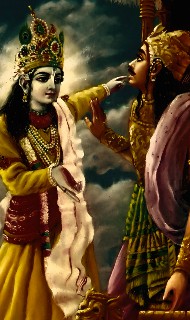 By Kalakantha Dasa
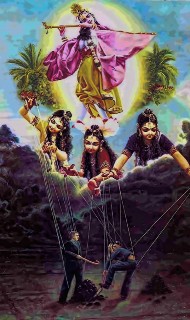 By Burijana dasa



 By Purushottam Nitai Das
 Today being Ekadasi, I was considering whether or not to go out on an errand, and I recalled an incident that took place on Ekadasi in Madras in 1971. Achyutananda, Bhavananda, and I were based in a supporter’s house, and Bhavananda and I were in the mood to go out and preach. Acyutananda, however, said, “No, it’s Ekadasi. We shouldn’t go out. It’s inauspicious. And besides, it looks like rain.” But we thought, “Oh boy, he is so attached to external rules and regulations. We have the real spirit of preaching. We are not going to worry about Ekadasi or some rain.”
When we went out, there was only a light drizzle, but within minutes the sky poured down rain. And the rain didn’t stop; it came down heavier and heavier. In Madras then, at least where we were walking, there was not much of a drainage system—just an open ditch two or three feet deep, lined with concrete. And as the storm continued, the channel filled with water, and soon we couldn’t distinguish between the water on the street, the water in the ditch, and the water in the fields beyond.


