SB 08.08.04-7 Living With Krishna 2013-05-31
Lecture – Srimad Bhagavatam 8.8.4-7 Living With Krishna 2013-05-31
Websites from the ISKCON Universe
SB 08.08.04-7 Living With Krishna 2013-05-31
Lecture – Srimad Bhagavatam 8.8.4-7 Living With Krishna 2013-05-31
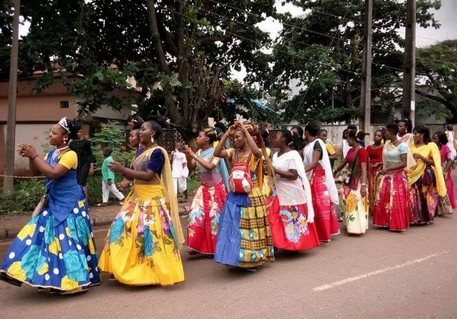 Mahavrata Devi Dasi: it was fun filled as Lagos Nigeria, host this year Rathayatra festival. The four days event was filled with devotional atmosphere, as devotees all over West Africa and beyond converge in the beautiful city of Lagos to worship lord Jaganath. The event which took place on the 23rd of August 2018, saw people from all walks of lives coming together both devotees and non devotees to chant the maha mantra, dancing and singing as lord Jaganath goes out on the street.

Auckland NZ: Giving out the mercy!! (Album of photos)
Oh holy names! You destroy the entirety of the suffering of Your surrend...

Revisiting the Still Point!
Today I would like to describe what has to happen for a normal conditioned soul to become a devotee. I would like to present the dynamics of transformation – how they are explained in the Vedas.
It is not an easy transformation. Someone who wants to keep things the way they are cannot really enter into spiritual life and undergo transformation. Sometimes spiritual life is seen as an addition to ordinary life, but if we take it seriously it becomes our life and the ordinary one dissolves itself.

Siberian Altai Festival (Album of photos)
Bhakti Chaitanya Swami! Some days ago we were in the Altai Mountains in Siberia for ...
 By Kripamoya Dasa
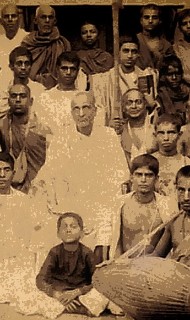
The original roots of an organisation – the regional headquarters or a national office – serve its branches and the branches serve the head office, or in our case the head temple or national ISKCON structure. If the head office provides nothing for the branches, they become weak and stop growing. If the branches provide nothing for head office it also becomes weak, or in many cases, begins to conserve valuable resources for itself. It gets weak all the same; it just takes a little more time. Only by each part of an organisation performing mutual service for the other parts can natural growth happen. How do they work together? Continue reading "What is the relationship of the small group of devotees to ISKCON?
→ Dandavats"
 By Yamuna Sundari devi dasi
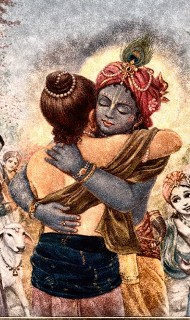
You have to tear yourself between what you think is real life and your spiritual application. But that’s only because you’re in the illusion that whatever you’re doing is real because you feel you need to do it, not because it’s connected to Krishna. And this is an illusion because that’s not true – it’s that simple. So if you want to progress, it means that whatever you’re doing now – it doesn’t matter what it is – you have to see Krishna in it. That’s the only definition of Maya: that which you think that functions without Krishna. Continue reading "Material and Spiritual – What’s the balance?
→ Dandavats"

From Back to Godhead
By Nikunja Vilasini Devi Dasi
Is life meaningless until we give it meaning?
A young woman from South Africa, where I live, is a candidate for the Mars One project, the brainchild of a Netherlands-based group hoping to set up a colony on Mars by 2025. She anticipates years of vigorous training, many grueling hours of intense research, an eight-month-long journey in a confined spacecraft, and difficult living conditions on a strange planet. She is excited to be part of the first human settlement on Mars, despite the stipulation of never returning to Earth. What would impel her to undertake such a journey – literally the journey of her life?
The meaning we give to life determines the path we take and how we take it. The renowned Austrian neurologist and psychotherapist Dr. Viktor E. Frankl discovered this phenomenon during the Second World War as a prisoner in a Nazi concentration camp. In his book Man’s Search for Meaning, he describes how he, unlike most of his companions, survived: he was able to endure ruthless torture by his oppressors by giving meaning to his life. Visions of his wife and thoughts of seeing her again after the war gave him courage and the will to fight, as did dreaming of someday lecturing about the psychological lessons from his experiences. Thus, he believed that the primary and most powerful motivating force in humans is to find meaning in life.
Years later, Frankl wrote a sequel, Man’s Search for Ultimate Meaning, which addressed a person’s spiritual rather than existential well-being. He concluded that a religious sense is rooted in every person’s unconscious depths and that each person has a “latent intuition and yearning for the transcendent.” This book, however, was not as convincing as the first, because of a vague presentation of spiritual phenomena and a lack of practical application. Still, its essential message is evident in man’s ongoing quest for spiritual understanding.
Srila Prabhupada Comes to Give Meaning
The yearning for transcendence was evident on a large scale during the 1960s, when young people, especially in the West, were looking for life’s ultimate meaning through various spiritual practices. While most thought that trying to enjoy life was the ultimate meaning to their existence, many looked to the East for spiritual direction. They discovered hatha-yoga and other forms of meditation and sought spiritual experiences through LSD and other drugs. The attempts to find meaning by both the sense enjoyers and the spiritual seekers resulted in dissatisfaction and disappointment. Yet the East did not abandon them. His Divine Grace A. C. Bhaktivedanta Swami Prabhupada survived two heart attacks onboard a cargo ship from India to bring them a rare gift. He himself was on a quest – not to find meaning but to give it.
Srila Prabhupada knew that the yearning of the soul is to find meaning beyond the fight for survival or the fulfillment of material needs and desires. He taught that the soul is our true identity and is spiritual by nature. If we neglect its quest and simply nurture the material body, we will starve spiritually. He revealed that only ultimate meaning can provide sustenance for the soul.
Srila Prabhupada did not need to fabricate an idea based on his own thoughts or whims. He understood and realized spiritual subjects from authentic Vedic scriptures and previous spiritual teachers. His message was lucid and complete, and the proof was the inspiration people received from his example. He lived what he taught, and although his followers did not at first completely understand all his teachings, by following them they were able to “stay high forever” (as an early ISKCON invitation announced) without the use of stimulants or psychedelic drugs. They could see that Srila Prabhupada was genuinely concerned about their spiritual welfare and would risk his life to share with them life’s ultimate meaning.
Srila Prabhupada’s presentation of our ultimate purpose is simple yet profound. First he explained that life is not finished by the death of the body. Our present human life – only a moment in our journey through millions of species of life – is a platform from which to seek answers to the questions about life’s ultimate meaning and purpose.
Srila Prabhupada elaborated that if we give life only material, temporary meaning, it has no real purpose. In a lecture on Srimad-Bhagavatam (3.26.6), he said:
One should first of all understand that this material existence is anartham. Anartham means purposeless life. There is no purpose. Real purpose should be how to get out of the spell of material nature. That is real purpose. They do not know. They are taking very seriously some temporary purpose of life, which will be changed with the change of body. Now, as human being, I am manufacturing so many purposes of life, but as soon as the body is changed and I get the body of a cat or dog or tree, the whole purpose is changed. Therefore it is purposeless life, anartham. There is no meaning of this purpose. Because everything will be changed with the change of your body. Therefore they do not . . . They shudder to think, “We have got next life.” They therefore deny – “No, there is no next life. [After] this life [everything] is finished.”
– Bombay, December 18, 1974
In contrast, Srila Prabhupada told of the child saint Prahlada Maharaja, who describes human life as artha-dam, full of meaning. (Srimad-Bhagavatam 7.6.1)
Like Rebellious Children
From the scriptures that Srila Prabhupada brought to America, we learn that as humans we are meant to delve into higher realms of thought – to understand the soul’s journey through life and to its ultimate destination. Spiritual purpose extends beyond our journey on the material plane. It involves our connection with the source of our divine nature, the Supreme Person, our eternal loving father. To illustrate this point, Srila Prabhupada often gave the example of a lost boy looking for his father. No matter what material arrangements we may make for the child’s safety and well-being, no matter how much we lavish him with material riches or possessions, he will be happy only when he is reunited with his father. In the same way, we are separated from our original father, Krishna, trying to find solace in the temporary pleasures of this world. Only when we find Him and connect with Him in love will we taste happiness that truly fulfills us.
A rebellious child may return to his wealthy father with selfish interests, seeking material gain, but the father will still welcome him, care for him, and forgive him for his past misdeeds. If the child remains loyal, eventually he will receive a handsome inheritance. Similarly, our defiance to Krishna has separated us from Him and made us homeless. When we recognize our misfortune and return to Krishna even with selfish desires, He will welcome us back and forgive us for our disloyalty. As we revive our love for Him and learn to love Him unconditionally as He loves us, following His instructions and guidance, He will be pleased and eventually award us the inheritance of returning home to His spiritual kingdom.
Srila Prabhupada emphasized how love for God is inherent within us. We are parts of Krishna, and although we are infinitesimal and He is unlimited, we cannot be separated from Him, the source of our existence – just as sunrays cannot be separated from the resplendent sun. Our position as His servants increases our brilliance, and if we turn away from Him, we will feel empty and incomplete.
Srila Prabhupada explained that we are like patients suffering from amnesia. Chanting Krishna’s holy names will cure the forgetfulness of our relationship with Krishna and remove from our heart undesirable traces of dirt that cloud our love for Him. When we purify our mind and consciousness by chanting Krishna’s sublime names, we realize who we are and where we belong. We accelerate our spiritual journey.
The Example of Dhruva
The Srimad-Bhagavatam relates the true story of a young prince who, though seeking the approval and favor of his earthly father, received the audience of his eternal father. Five-year-old Dhruva was enraged when his envious stepmother insulted him for trying to sit on his father’s lap. Dhruva was even more infuriated when he watched his father favor his half-brother and stepmother. Intent on revenge and material success, on his mother’s advice he decided to leave home to seek Lord Vishnu. His life’s meaning and objective were clear to him. He wanted to attain a position greater than that of Lord Brahma, the creator of the universe.
After leaving his mother, Dhruva met Narada Muni, who became his guru and directed him how to please the Supreme Lord so that his wishes would be fulfilled. Narada understood that Dhruva’s pain stemmed from material attachment and illusion, and he gave the cure. He advised Dhruva to serve the Lord by devotion and by meditating on His divine form.
By fasting and performing arduous austerities, Dhruva strictly followed the instructions of his guru. His determination to win the Lord’s favor was so intense that at the end of six months Lord Vishnu appeared and made him king of the polestar, which far exceeds the opulence and grandeur of any other planet.
Dhruva was elated to see his Lord face to face, but he felt ashamed.
“O my Lord,” he said, “because I was seeking an opulent material position, I was performing severe types of penance and austerity. Now I have gotten You, who are very difficult for the great demigods, saintly persons, and kings to attain. I was searching after a piece of glass, but instead I have found a most valuable jewel. Therefore I am so satisfied that I do not wish to ask any benediction from You.” (Hari-bhakti-sudhodaya 7.28)
Srila Prabhupada’s Success
Just as Narada had guided Dhruva, Srila Prabhupada encouraged people to serve God, thus delivering the remedy for their unsatisfied hearts. Whether they were full of material desires, just curious, or seeking genuine spiritual cultivation, the practice of bhakti-yoga – the means to rekindle one’s love for Krishna – gave them lasting happiness and satisfaction. Serious practitioners were able to give up their bad habits and addictions. Having received a valuable jewel, they lost their attraction to broken glass.
Srila Prabhupada succeeded in uniting all kinds of people with the common purpose of finding their way back to Krishna. Clearly, Srila Prabhupada’s selfless actions and sacrifices to awaken people from their amnesia-like condition stemmed from his pure love for Krishna. From that spotless love arose compassion for his brothers and sisters and eagerness to direct them to their eternal father.
Srila Prabhupada’s mission to reclaim lost souls had begun when he met his spiritual master, Srila Bhaktisiddhanta Sarasvati, well before he decided to journey to America. His guru had enlightened him with life’s ultimate purpose and instructed him to share it with others. Carrying out this instruction became Srila Prabhupada’s lifelong work and purpose. His endeavor to publish this magazine, Back to Godhead, is one example of his struggle to please his guru by distributing the timeless Vedic wisdom. He had no resources, no money, no contributors. As early as 1944 in Calcutta, he singlehandedly wrote the articles, typed them, collected donations for printing, obtained paper (a scarce wartime commodity), oversaw the printing, and eventually distributed the magazines when Calcutta was in the middle of a war zone.
In later years, Srila Prabhupada continued with the publication and once even suffered heatstroke while delivering copies of the magazine during the scorching Delhi summer. The reason for his perseverance amidst adversity is in the title he gave the magazine: Back to Godhead. He felt an urgency to reveal life’s ultimate purpose of going back to Godhead, our eternal home. Turning back to God is the sole purpose of human existence, he stressed. And the motto he chose for the cover of the magazine showed that “Godhead” is also a state of consciousness: Godhead is light. Nescience is darkness. Where there is Godhead there is no nescience.
Lord Krishna Himself guided His devotees the Pandavas in the ultimate meaning of life and on how to be victorious. They were powerful kshatriyas – warriors of the highest caliber, highly qualified in material and spiritual knowledge. But when it was time for Arjuna to perform his duty on the battlefield and rid the world of the unrighteous, he was reluctant and confused. Krishna removed his ignorance by advising him on the purpose of his life and the need to do his duty with full consciousness of Him. Krishna explained that we should not abandon our duties, talents, wealth, or possessions but should give them true meaning by using them for His pleasure. In this way we will always connect with Him through loving service. Krishna promised Arjuna, “For one who sees Me everywhere and sees everything in Me, I am never lost, nor is he ever lost to Me.” (Gita 6.30)
In the journey of life, we may seek meaning by accomplishing a variety of tasks or engaging in different activities. We may even overcome challenges by giving them meaning, as Viktor Frankl suggested. But we cannot neglect the ultimate meaning of life. As lost children separated from our eternal father, we would be foolish to reject our rightful inheritance.
 “Someone may say. ‘What is wrong with taking birth in this material world? I have taken birth here and I am happy.’ There could be some truth to that but our pleasure is always mixed with pain. In this physical body we cannot experience pure unadulterated pleasure. Of course, the pleasure we experience from bringing the senses in contact with the sense objects is a relatively low grade of pleasure anyway if you compare it with the spiritual pleasure that devotees experience. Even if you take it as pleasure, it is temporary. We want everlasting pleasure and that can come only in a spiritual body. We are actually the spirit soul. We are not the body. As long as the soul is in the body there is life. We say the body is alive but the body is never actually alive because it is a machine and we are the operators. If the spirit soul leaves the machine it will not work any more. That spirit soul is by nature sat cit ananda vigraha — eternal, full of bliss and full of knowledge. The body is by nature the opposite — temporary, full of ignorance and suffering.”
Srimad-Bhagavatam 2.1.11 (Right click to download)
Podcast

The post Bhagavatam tenth canto study 26 – 10.5.1-6 Let celebration center on purification, not gratification appeared first on The Spiritual Scientist.
Answer Podcast
Transcription :
Transcribed by: Keshavgopal Das
Question: Is the voice of conscience always the voice of God?
Answer: God sometimes speaks to us through the voice of conscience. It does not mean that whatever the conscience speaks to us is always the voice of God. Sometimes, the voice of conscience, because of our conditioning, become disconnected with God.
Basically, it’s a matter of reciprocation. Just like radio (now a days FM), the more we tune in to the frequency the better we get the broadcast. The more we tune out of the station the less we get the broadcast. In the radio sets, there is a main tuning button and a fine-tuning button. The main tuning button changes the frequency more rapidly, but the fine-tuning button will change the frequency slowly to get more clarity of the sound. Similarly, although God is present within us, he speaks to us. However, some of us may be completely tuned out of God. If our consciousness is working at an entirely different frequency, then we cannot hear the voice of God.
For example, a shining jewel is effulgent in itself, but if it is covered by some paper, its effulgence will come out only partially. If it is covered with a cloth the effulgence may come out even less. If a jewel is covered in a stone box, the effulgence may not come out at all. Similarly, we may have different level of conditionings. If the conscience is deeply covered like a stone box on a jewel, the people may not even know that there is jewel inside.
Some people may be so conditioned that they may not feel any presence of God at all. That is why, we first will have to tune ourselves to God. That tuning comes by living a life in harmony with God’s ways. God, before he reveals himself through the inner voice, first reveals himself through the outer voice. The outer voice is the word of God which comes through spiritual teachers, saintly people, books etc. To the extent we align our life to the principles of morality and spirituality, to that extent the gross tuning happens. We cover the right stations and as we refine our consciousness by spiritual practices further then only we tune in to the inner voice.
God is present within us to guide us but if we are not interested in the guidance then he will not force his guidance on us. God speaks to us through the voice of conscience but that does not mean whatever voice is coming within us is the voice of God. That voice may be socially, culturally, educationally conditioned and it may be a distorted voice not the divine voice.
End of transcription.
The post Is the voice of conscience always the voice of God? appeared first on The Spiritual Scientist.

ISV Harinaam in Palo Alto - August 17th 2018 (Album of photos)
Srila Prabhupada: It is the duty of the mahatmas to chant the H...

(Kadamba Kanana Swami, October 2009, Vrindavan, India, Lecture)
Love means to put our ideas aside for someone else. When we love someone, we will put our own agenda aside and just try to please that person and we will only do for that person what he desires. So, our love for Prabhupada has to show in how much we are ready to put our own agenda aside and embrace his agenda and do what is dear to him. That is where our love will show…
The article " Our love for Prabhupada " was published on KKSBlog.

Rathayatra Festival by ISKCON Latvia (Riga etc) (Album of photos)
Srila Prabhupada: “Even while engaged in various activities, devotees whose minds are completely absorbed at Your lotus feet, and who constantly hear, chant, contemplate and cause others to remember Your transcendental names and forms, are always on the transcendental platform, and thus they can understand the Supreme Personality of Godhead. (Srimad-Bhagavatam, 10.2.37).
Find them here: https://goo.gl/jYKEPY

UCF Orlando 2018 - Festival of Chariots (Album of photos)
Srila Prabhupada: The mango fruit is different from the name of the mango. One cannot taste the mango fruit simply by chanting, “Mango, mango, mango.” But the devotee who knows that there is no difference between the name and form of the Lord chants Hare Krishna, and realizes that he is always in Krishna’s company. (Srimad-Bhagavatam, 10.2.36 Purport).
Find them here: https://goo.gl/vHQ5Qc
 By Radhanath Swami
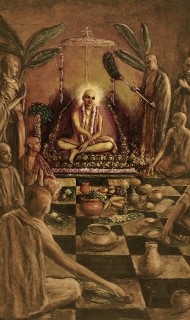
Shivananda Sen, he was taking all the 200-300 devotees from Bengal to Puri. They were walking so many days. And a little dog just started following. And that dog… he wasn’t a kind of pedigree, beautiful kind of dog. He was just the kind of dogs that you find in the streets of India. He followed. He followed. And Shivananda Sen just saw with such compassion – “If this spirit soul in this dog, if he sees Lord Chaitanya, how much he will benefit! I must serve him nicely.” Continue reading "Differentiating material and spiritual attachments
→ Dandavats"
 By Citraka dasa
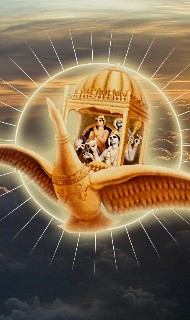
"Prabhus," the temple president said, "I have incredible news. I have just been told, without any room for doubt or question, the following. A pure devotee is amongst you!" Vaishnava das, a faithful servant of Srila Prabhupada, for many years serving as temple president in a temple community of devotees, had just returned from a visit to a nearby hut which an older sannyasi had chosen as his base for his writing in preparing for his next preaching tour duties. He had approached him with heavy heart to get some advice for the difficult times his temple was going through. A famous Iskcon temple had fallen on hard times. Continue reading "My dear fellow prabhu/mataji, is it you the pure devotee? An ancient story retold for the devotees
→ Dandavats"
 By Kesava Krsna dasa
The dialogue of Bhagavad-Gita was transmitted as a live commentary from the heart of Sanjaya to Dhrtarastra. Such mystical ability did not require communication masts or radio waves, but the grace of Guru, in this case Srila Vyasadeva. Srila Prabhupada writes: “….one has to understand Krsna not directly but through the medium of the spiritual master. The spiritual master is the transcendental via medium, although it is true that the experience is still direct. This is the mystery of the disciplic succession. Therefore by the grace of Vyasa, Sanjaya’s senses were purified, and he could see and hear Krsna directly." Continue reading "Mystic Understanding
→ Dandavats"
Podcast
The post Bhagavatam tenth canto study 25 – 10.4.38-46 Bad disposition with bad association is brutally bad appeared first on The Spiritual Scientist.
Bhagavad-gita verse-by-verse podcast
The post Gita 18.68 The bhakti cure cures more those who share the cure more appeared first on The Spiritual Scientist.
Answer Podcast
The post Where does hostility towards God and the godly come from? appeared first on The Spiritual Scientist.
 Dhruva Maharaja dasa: Lord Caitanya’s teachings to Rupa Gosvami at Prayag narrated in Caitanya-caritamrta Madhya-lila Chapter 19 are like a treasure map leading one to love for Radha-Krsna in Goloka Vrindavana. The path taught by Sri Caitanya Mahaprabhu begins with conditioned souls wandering in the material world (Texts 135-147) and reveals the course they should follow, symptoms detailing their progress, obstacles along the way, and finally the jewels of bliss in various forms (bhavas) derived from following this map. As an offering for Srila Prabhupada's Vyasa Puja this year I recorded Texts 135-257 with his purports as a 3 hour audiobook, and want to share it with devotees. Please visit http://sadhusangaonline.com and choose an option: listen online — download the files — or subscribe to the podcast.

(Kadamba Kanana Swami, 17 August 2014, Goloka-dhama, Germany, Janmastami, Srimad Bhagavatam 10.41.6-10)
We remember the pastime of when Krsna first came to Mathura and he met a garland-maker, Sudama, who offered Krsna many nice garlands, sandalwood and other things. That garland-maker actually used go to Vrindavan regularly to collect flowers, so he had previously met Krsna and made offerings to Krsna with flowers, so that garland-maker was already recognized by Krsna as a devotee. At the end, he adorned Krsna and Balarama with beautiful garlands and they looked very beautiful. Then the two Lords offered to the surrendered Sudama, who was bowing before them, whatever benediction he desired. Sudama asked the Lord for unshakable devotion – devotion that could not be destroyed by anything. Then he asked the Lord for friendship with the Lord’s devotees and for transcendental compassion for all living beings. So this garland-maker was very intelligent. What would we ask for if we would suddenly, unexpectedly meet Krsna? What would we ask? It would not be so easy, ‘Well, Krsna, okay, give me love of God!’ But we can see the example of Sudama who was thinking much deeper about the matter than we are. Love of God is very good but Sudama asked to be given unshakable devotion, as he knew maya is very strong and did not want be affected by anything. Unshakable devotion means love of God!
This is very nice – this garland-maker who seems to be, in a way, a background personality; there is not a whole chapter in Srimad Bhagavatam dedicated to the garland-maker who offered some garlands to Krsna. But just see how profound his thinking is and how important unshakable devotion is, how important friendship with the devotees of the Lord are and how important transcendental compassion for all living beings is.
To approach Krsna we require blessings. Janmastami is an opportunity to approach Krsna and to really enter into Krsna’s reality. We are going to spend time remembering various pastimes of Krsna over the next few days and all these activities are actually taking us into Vrindavan because it is through remembering the activities of Krsna that we are getting entrance; as Jiva Gosvami explains, Vrindavan is a state of consciousness. So we are looking for blessings just as Sudama received benedictions from the Lord and asked for the unshakable devotion. Like this, we are gradually preparing ourselves so may we all be blessed by such a meditation of Sudama.
The fact is that by committing ourselves to Krsna, by focusing, by giving ourselves, by making offerings to Krsna – even if only for a day: chanting, cooking, hearing, intensely focusing on Krsna the entire day – then we will find that our relationship with Krsna has become so much nourished and strengthened that we realize that this Janmastami is not just a festival where we get enlivened by the association of devotees and a wonderful program until the next enlivening festival. No, we actually realize that if we really make a commitment to focus on Krsna, to really get serious, just for a day, then this Janmastami makes a permanent change in our spiritual life. We are permanently coming closer to Krsna, so in this way, each Janmastami is another step closer to Krsna.
Janmastami is particularly meant for us as it is an opportunity to connect in a very serious way with Krsna and in service to him, because then it will be a great source of strength that will benedict us in our spiritual life. We build on that and then we surrender again and in this way we build up our spiritual strength.
Scriptures recommend performing of naimitika kriya – exceptional devotion practice, or special spiritual activity during special occasions that brings new life and that we bring back to our everyday routine devotional practices of nitya kriya. So doing something special on this Janmastami can renew our everyday practice, bring new life and at the same time because we have for one day functioned on a higher level of surrender than usual, we have come one step closer to making that permanent and that has the lasting effect. With this meditation we can begin our Janmastami celebration and get ready to come before Krsna. We are anticipating with great eagerness Krsna’s appearance day and hope everyone will have a wonderful Janmastami. Janmastami that will make all the difference!
The article " Janmastami is coming " was published on KKSBlog.

Otaki retreat center New Zealand 2018 (Album of photos)
Bhakti Explosion Retreat.
A wonderful weekend with HH Vedavyasapr...

First annual report of Bhaktivedanta Academy Mayapur.
We are very happy to present our annual report on the 2017-18 school year, corresponding to the Gaurabda year 531. Inside you can find the latest information about the development of the Bhaktivedanta Academy project on all its fronts. The report includes the following: Introduction Dean’s Letter Pedagogy and Didactics Leadership Curriculum Development Academic Results Year Highlights Varnasrama College Financial Report Student Testimonies
Bhaktivedanta Academy provides spiritual education through academic classes and hands-on activities in a natural outdoor campus which could rival a botanical garden. Our holistic experiential approach inspires students to become leaders in preaching Krishna consciousness.
Find it here: https://goo.gl/pfHLxx

A very nice choreographical Harinama (3 min video)
Srila Prabhupada: While the body is fit, why should we not chant the holy n...
 By Sri Nandanandana dasa
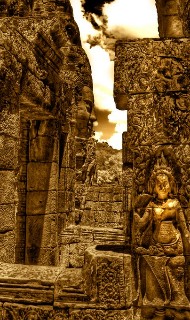
Many geneticists view that modern man developed and came out of Africa where they migrated across lands to settle in ancient India. From there they spread out in all directions, even into Europe. This is called the “Out of Africa” theory. This certainly helps contradict the Aryan Invasion Theory, which proposes that the Vedic Aryans were not indigenous to the region of India, but came from the Caucasus Mountains, bringing their culture into India. However, over the past several years, an increasing number of finds have been made that suggest modern humans also lived in other regions besides Africa, and at older dates. Continue reading "The Out of Africa Theory Versus the Vedic View
→ Dandavats"
 By Giriraj Swami
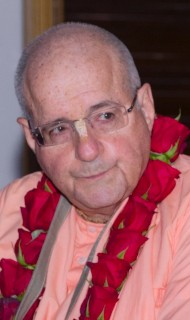
Someone could question, “Why should Krishna listen to the prayers of a devotee? So many people are praying to Krishna; why should Krishna listen especially to a devotee? Is that not also partiality?” Srila Visvanatha Cakravarti Thakura says that of all of Krishna’s qualities, the quality of being affectionate to His devotees, bhakta-vatsalya, is considered the supermost, the emperor that conquers over all the Lord’s other qualities and reconciles all contradictions. So, being partial to His devotees is not a fault (dusanam) in Krishna, but an ornament (bhusanam)—His most exalted quality. He has no desire other than to please His devotees. Just as the devotees have no desire other than to please Krishna, Krishna has no desire other than to please His devotees. Continue reading "Bhakti Comes from Bhakti
→ Dandavats"
 By Parvati devi dasi
Caturmasya and Monsoon is upon us, and the Samadhi Dome is quite damp inside because there was leaking from the Kalash base at the top. We repaired that. But we needed a de-humidifier, which is not a cheap. The Museum roof leaked too, because of damage during a hailstone storm some months before, aggravated by monkeys sporting up there. We’ll have to replace the fiberglass. Vyasa Puja is coming up soon. Srila Prabhupada is sitting right here in Vrndavan in his divine eternal resting place. Continue reading "Srila Prabhupada Samadhi Mandir, Vrndavana
→ Dandavats"

Srimad Bhagavatam reigns supreme!
On Monday Divya Naam Das and his family went out door to door in Pinner. Given that it was the first day of the month of Bhadra they went out with the specific objective of wanting to try and glorify Srimad Bhagavatam to some receptive souls. It was not long before they met one such family to whom they presented the glories of Bhagavatam and the family immediately welcomed a full set of the Srimad Bhagavatam including the golden throne into their home. It was an exhilarating experience to see the magic of Srimad Bhagavatam and Srila Prabhupada work in front of their eyes. The wonderful family gave £199 donation for the set and throne.


Bhagavad-gita verse-by-verse podcast
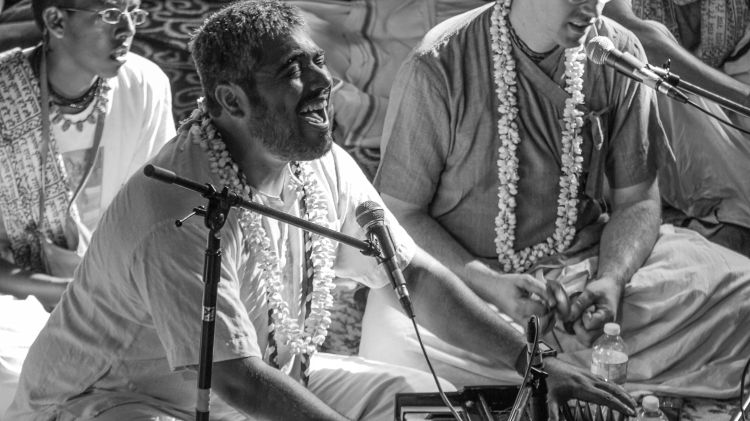
The post Gita 18.67 Though ultimately every heart longs for divine love, not every heart is presently ready for divine love appeared first on The Spiritual Scientist.
Podcast
The post Bhagavatam tenth canto study 24 – 10.4.25-37 Kamsa’s change of heart doesn’t last for long appeared first on The Spiritual Scientist.